

Water Treatment Systems for Resorts
Protect guest comfort and the systems behind it with treatment designed around your resort’s source water, changing demand and every major use point.
What water treatment does a resort need?
Request a Resort Water AssessmentHow does water quality affect resort operations?
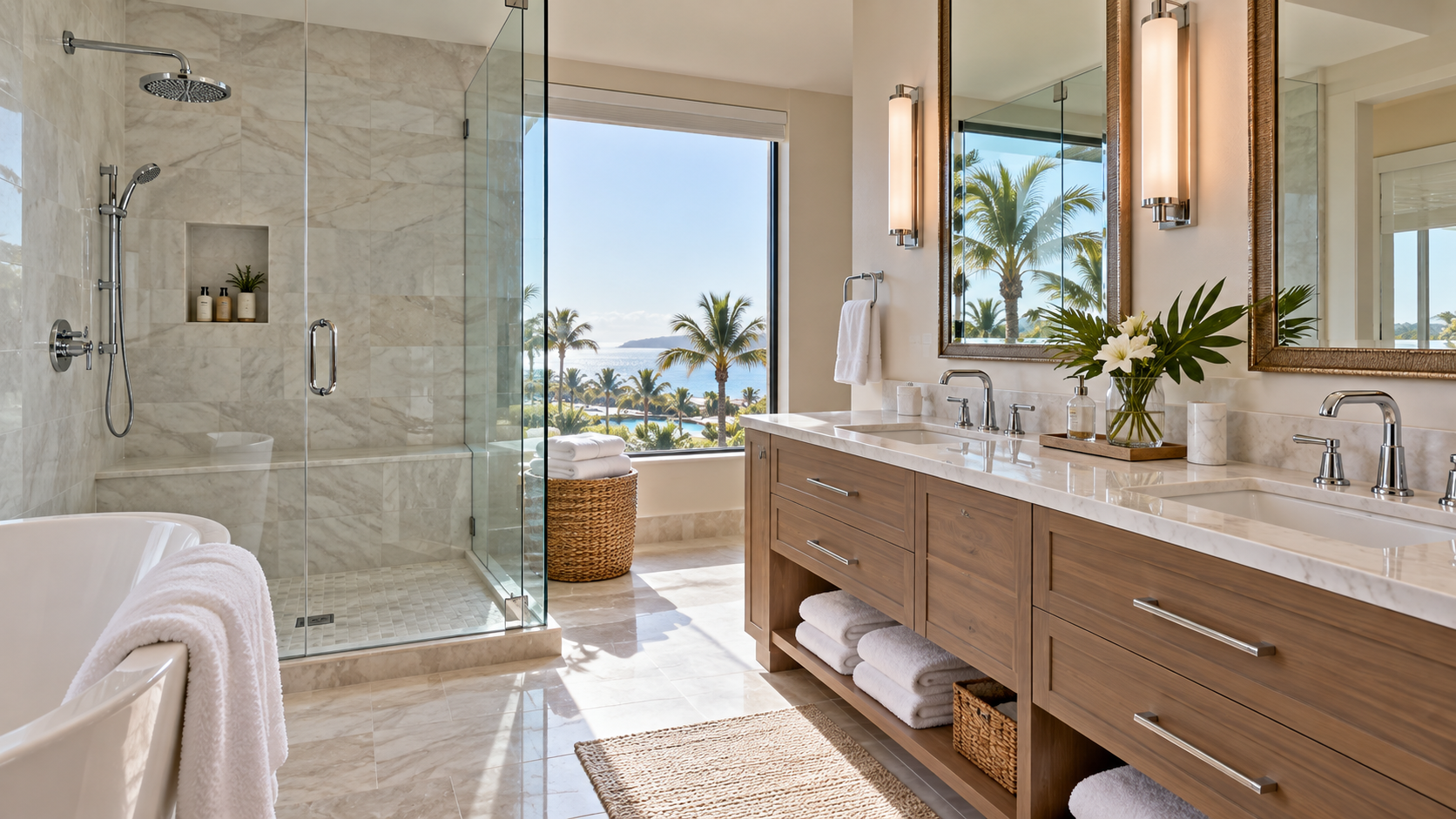
Guest accommodations & laundry
Hardness can leave spotting on fixtures and glass, consume detergent and contribute to deposits in water heaters and laundry equipment. Treatment should support the guest experience while matching the property’s actual water chemistry and seasonal production demand.
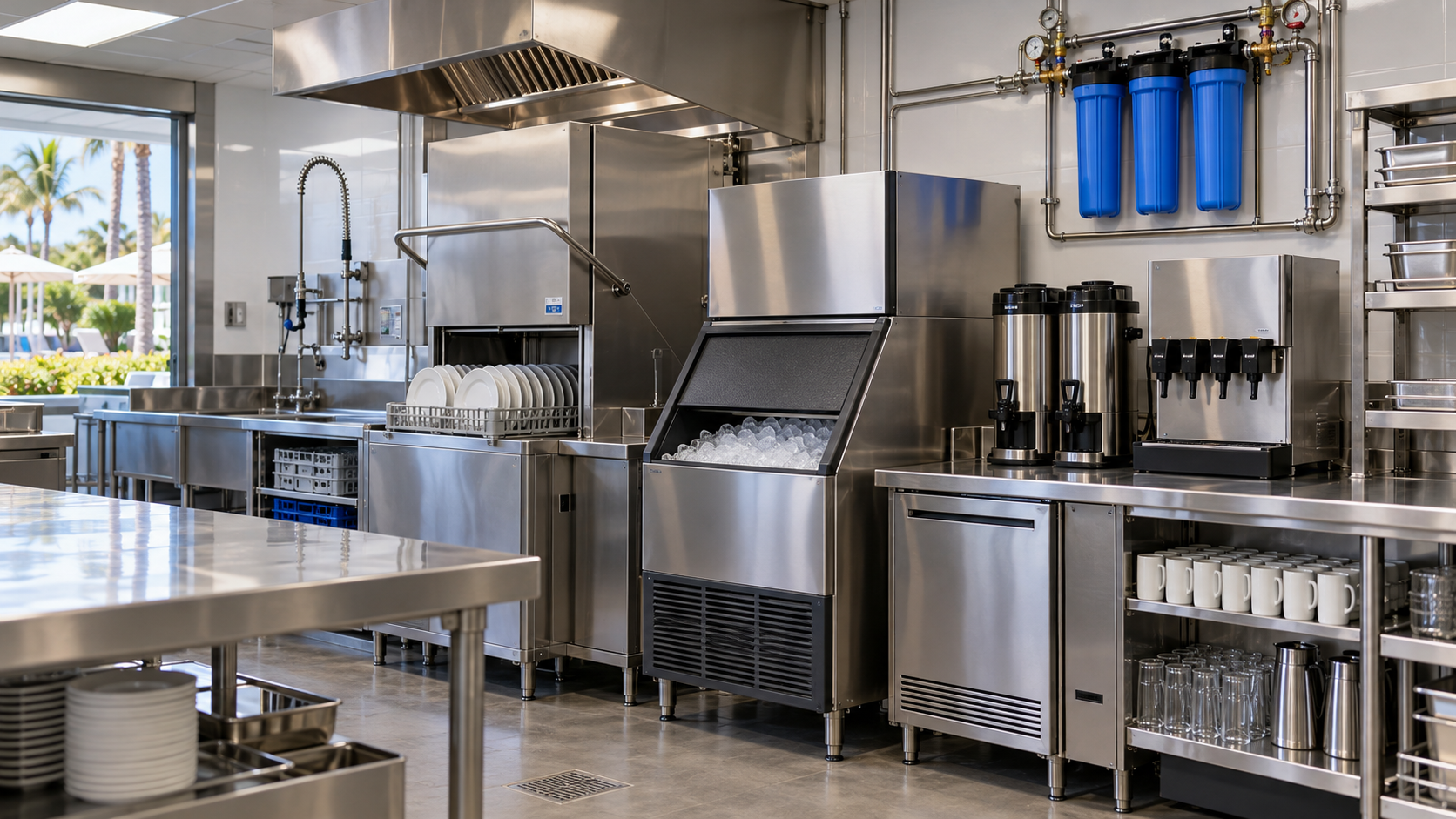
Culinary, ice & beverage service
Restaurants, bars, ice machines, coffee equipment and warewashing systems may need different water quality at different use points. Filtration, softening or reverse osmosis should be selected from testing and manufacturer requirements—not assumed from the menu or room count.
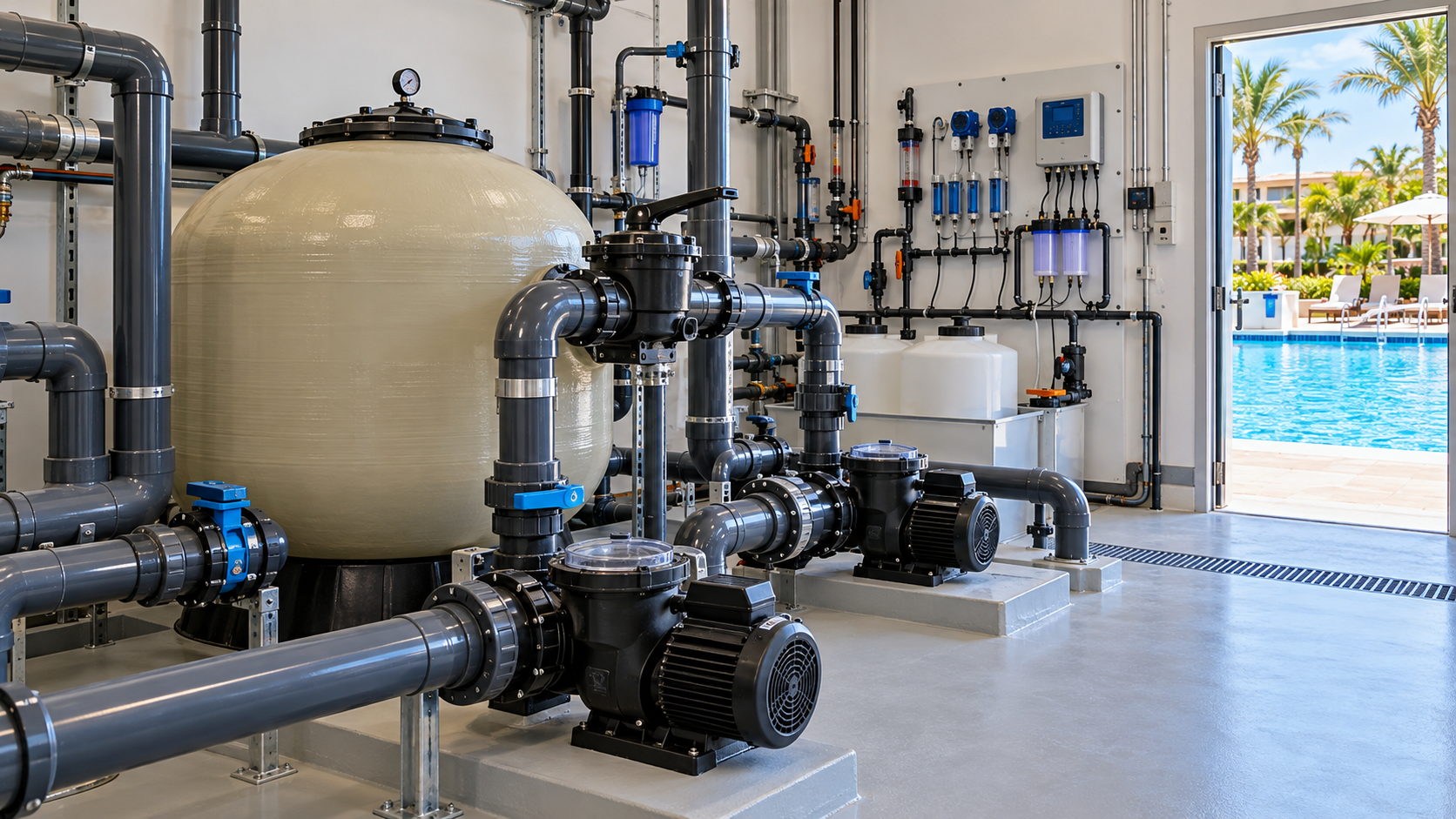
Pools, spas & recreation water
Aquatic venues require their own circulation, filtration, disinfectant and pH controls. Source-water pretreatment can help address hardness or metals that affect operations, but it does not replace the pool or spa’s required treatment and monitoring program.
Choose the right solution for every resort use point
Ideal Water Solutions evaluates incoming-water chemistry, seasonal occupancy, peak flow, affected equipment and service access. That makes it possible to match each use point with an appropriate treatment approach and avoid treating water beyond what the application requires.
Water softening
For hardness scale in selected hot-water, guest-accommodation, laundry and cleaning applications.
Filtration
For sediment, chlorine, taste, odor or other identified concerns in guest, culinary and equipment applications.
Reverse osmosis
For selected applications that require lower dissolved-mineral water, after evaluating pretreatment, storage, recovery and reject-water needs.
Managed salt delivery and service
To help maintain softening capacity as occupancy and operating demand change.
What we evaluate before recommending a system
Measured water chemistry; peak and average flow; seasonal volume changes; pressure; drain and electrical access; available space; equipment requirements; redundancy; and operating considerations such as salt, water, sewer, filters and service.
Water testing & resultsTell us about your resort’s water challenge.
Whether you are protecting guest accommodations and laundry, supporting culinary and ice service, addressing scale, or planning a new system, our team can help define the right next step. Complete the form below to request a resort water assessment.
Questions resort operators ask about water quality
Does every resort need the same water quality?
No. A resort commonly has different water-quality needs at different use points. Guest accommodations, laundry, kitchens, ice machines, beverage equipment, boilers and pools or spas should be evaluated against incoming-water chemistry, equipment requirements and operating goals.
How can water treatment help guest accommodations and laundry?
When hardness is creating scale, spotting or soap inefficiency, softening can help protect hot-water equipment, fixtures and laundry systems. The correct design should account for peak occupancy, production demand and the laundry’s chemical program—not room count alone.
Are pools and spas treated by the same system as the rest of the resort?
Not usually. Pools and spas require dedicated circulation, filtration, disinfectant and pH controls. Source-water pretreatment may help address hardness or metals, but it does not replace the aquatic venue’s required treatment, monitoring or operating program.
When does a resort need reverse osmosis?
Reverse osmosis may be appropriate for selected drinking-water, ice, specialty beverage or sensitive-equipment applications that need lower dissolved-mineral water. It should be evaluated with pretreatment, storage, recovery, reject-water and equipment requirements in mind.
How do seasonal occupancy changes affect system sizing?
Seasonal demand can change daily volume, peak flow and regeneration frequency. A treatment design should consider average and peak occupancy, dining and event activity, laundry production, redundancy and service access so capacity remains available during the property’s busiest periods.