

Water Treatment for Breweries
Give the brewhouse a defined water profile while keeping cleaning and utility supplies suited to their own jobs.
Does a brewery need reverse osmosis for brewing water?
DISCUSS YOUR BREWERY’S WATERDifferentiate recipe water from production support
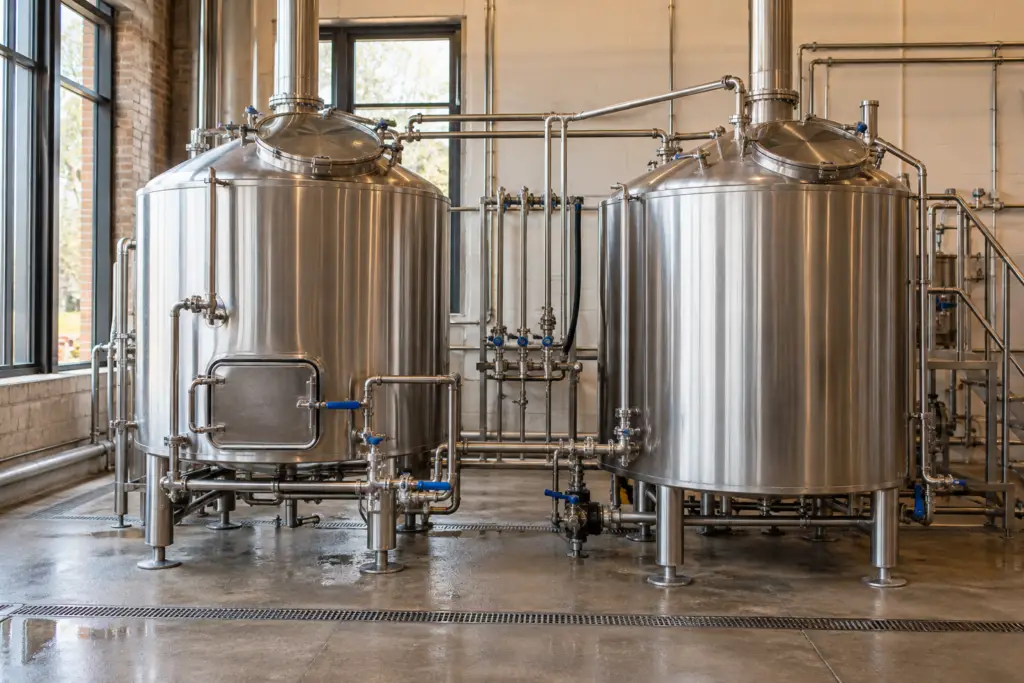
Brewing liquor
Measure hardness, alkalinity and the ions relevant to the brewer’s target. Document blending and additions so changes in source water can be distinguished from recipe or process changes.
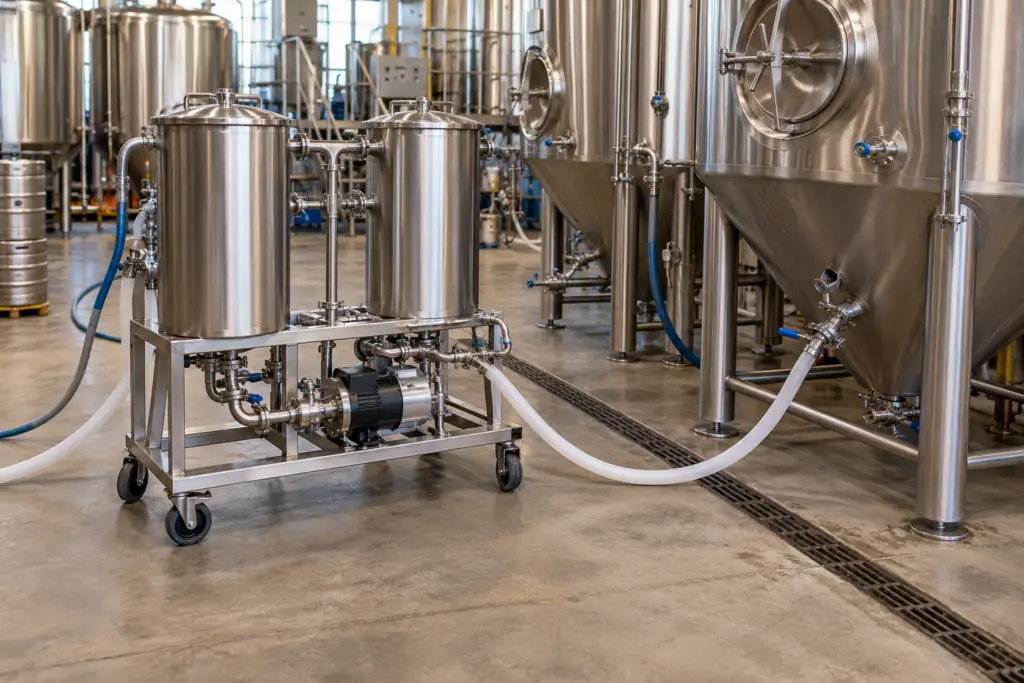
Clean-in-place water
Discuss water chemistry and rinse requirements with the cleaning-chemical supplier. Treatment must fit the established CIP program, including flow, temperature and the timing of cleaning between batches.
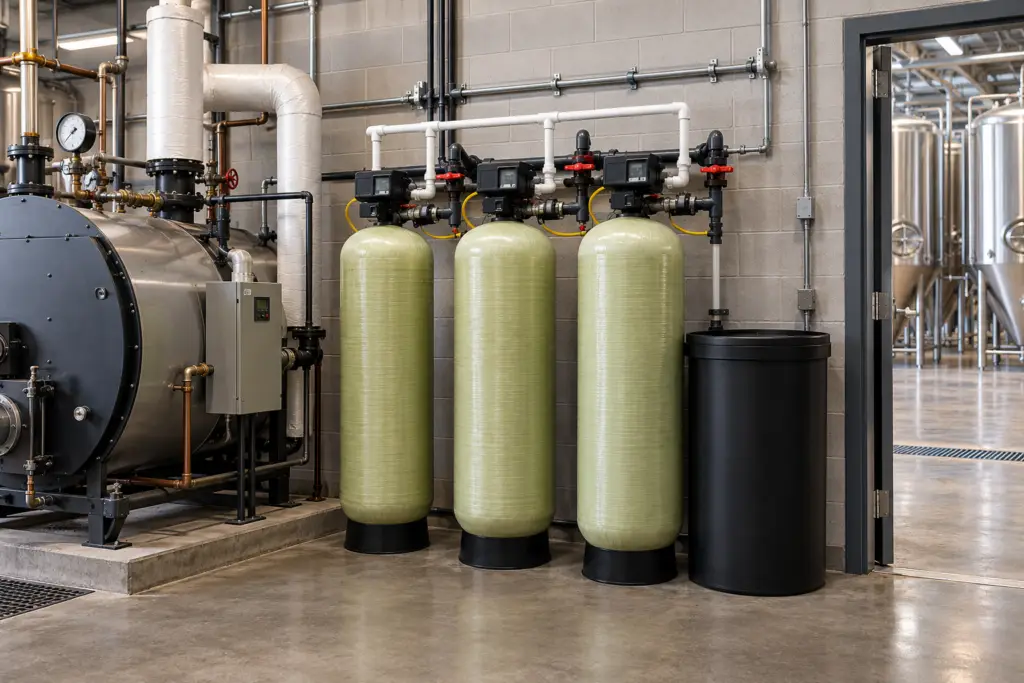
Boiler makeup
Hardness control may be one part of boiler pretreatment. Feedwater specifications, condensate return and the boiler-water program determine additional requirements and the capacity needed during brewing.
Build each stream around a defined target
Ideal Water Solutions can work from the brewer’s water profile and utility specifications to compare treatment options. Production rate, tank refill time and verification at the point of delivery belong in the design.
Filtration
Select carbon or other media for the measured source condition, including the actual disinfectant used, with capacity appropriate to brewhouse fill rates.
Reverse osmosis
Where recipe flexibility requires a lower-mineral base, evaluate RO with storage, blending, monitoring and concentrate handling under the brewery’s quality program.
Water softening
Consider softening for hardness-sensitive utility or cleaning feeds. Confirm the brewing recipe separately before sending softened water to the brewhouse.
Consulting & planning
Coordinate brew days, CIP cycles and future vessel additions so treatment production and storage can meet the brewery’s operating sequence.
Compare the target profile with a full brew day
Bring current water analysis, brewing targets, batch volumes and fill-time requirements. Add the CIP schedule and boiler specifications. This establishes where chemistry differs and when competing demands could constrain production.
REVIEW BREWING-WATER TESTINGShare your brewing-water target
Tell us your batch size, production schedule and whether you need a new profile or help investigating a change in existing water.
Brewhouse water questions
Is softened water the same as an RO brewing base?
No. Conventional sodium-cycle softening exchanges calcium and magnesium for sodium. It does not create the same mineral profile as RO. Confirm recipe requirements before substituting one supply for the other.
Can one treatment system support several beer styles?
Possibly. A defined base profile with controlled blending or additions may support multiple recipes. The brewer should set and verify the targets rather than relying on an equipment setting alone.
Why check the municipal disinfectant type?
Chlorine and chloramine can require different treatment design and contact time. Obtain current supplier information and verify the delivered water instead of assuming any carbon cartridge will meet the brewing target.
Should RO capacity equal the brewhouse fill rate?
Not necessarily if properly managed storage supplies the short peak. Evaluate production over the brew schedule, tank turnover and required delivery flow together, including cleaning demand.
What should be checked when the brewing-water profile drifts during a production day?
Compare source water, treated output and the final blended supply using the brewery’s established methods. Review bypass settings, media service history, demand and recorded mineral additions. This helps distinguish a source change or treatment issue from a blending or recipe adjustment.
How should water-treatment settings be recorded alongside brewing recipes?
Keep source and delivered-water results with blend settings, mineral additions, treatment service dates and the relevant batch or brew-day record. Record who authorized changes. That history makes a repeatability investigation more useful than comparing finished beer with an undocumented water adjustment.