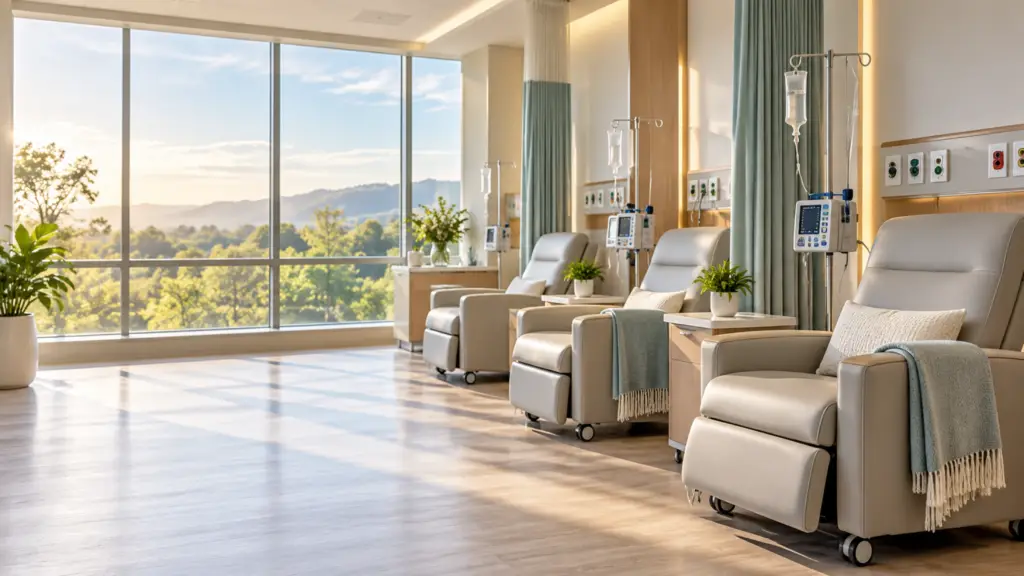
Plan facility water maintenance around patients and staff who remain in treatment areas for extended visits.
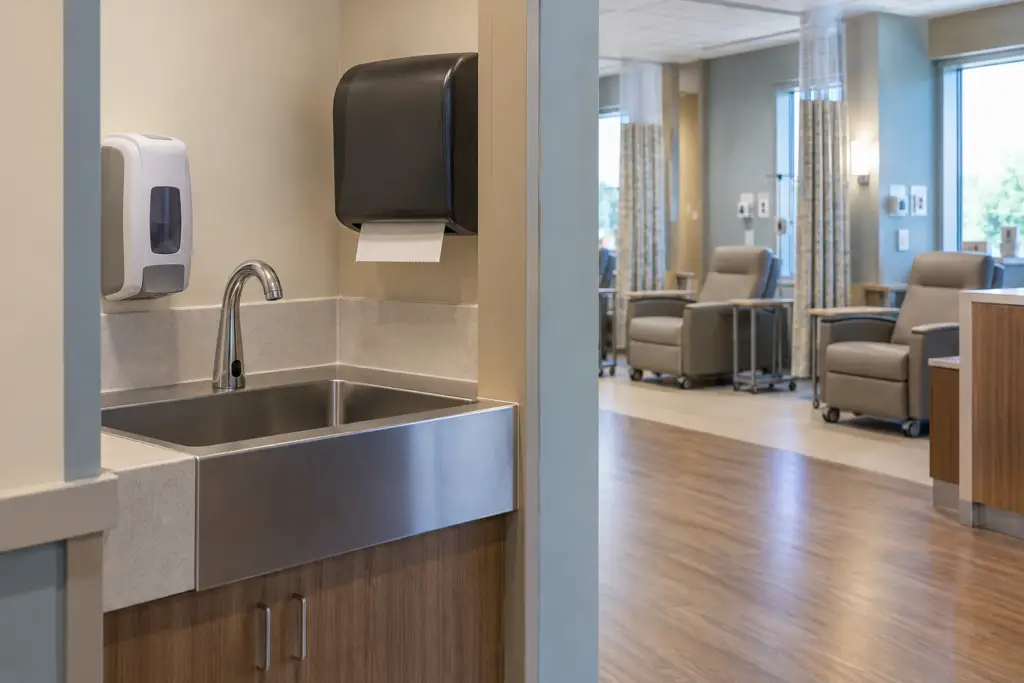
Investigate fixture restrictions or deposits at their source. Record which treatment areas share the branch so any proposed isolation can be assessed within facility procedures.
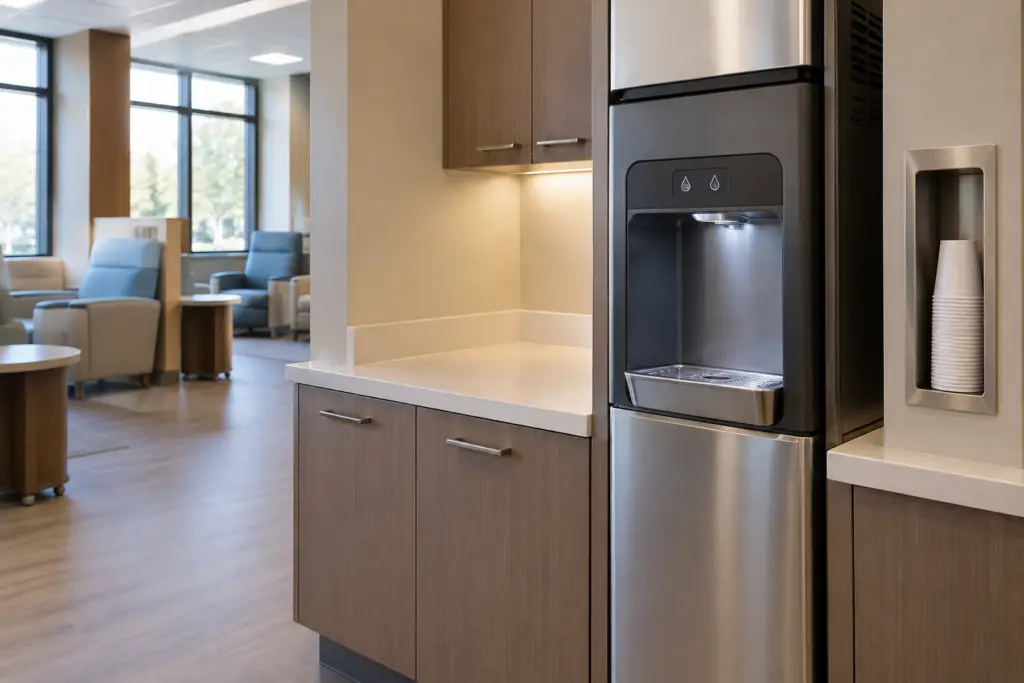
Ice and drinking-water equipment need appropriate inlet water and ongoing cleaning. Evaluate a reported taste or equipment concern with the center’s designated staff and manufacturer instructions.
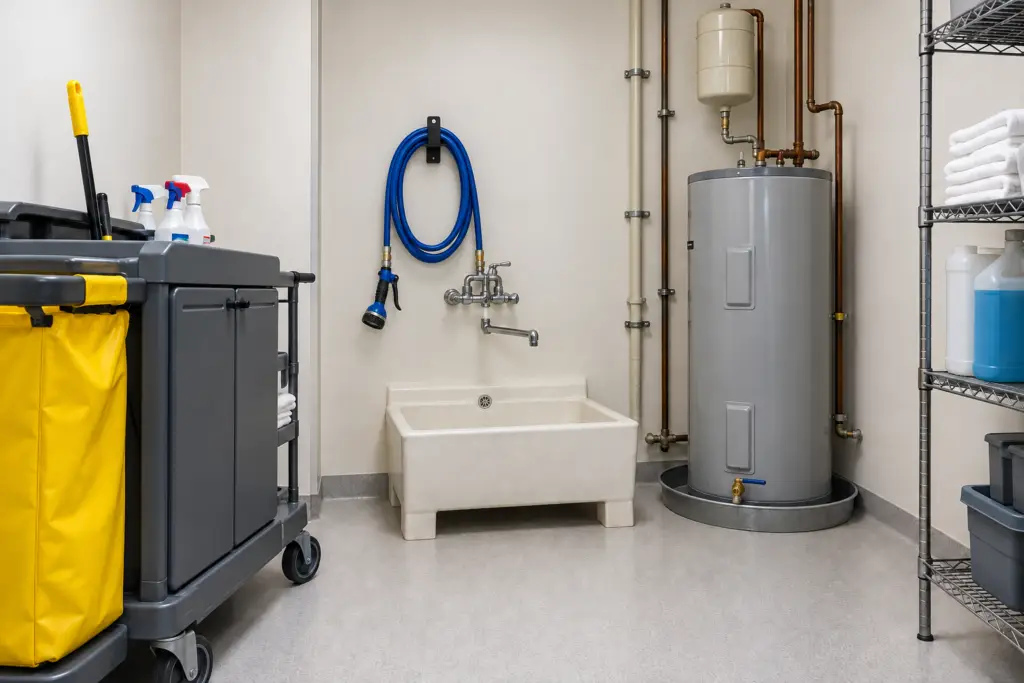
Utility sinks and heaters support repeated environmental-services tasks. Distinguish a chemistry issue from supply capacity or equipment condition before proposing new treatment.
Ideal Water Solutions can help investigate the affected branch and plan maintainable treatment where justified. Coordinate the work with facility leadership and the center’s applicable water-management procedures.
Use targeted source and outlet samples to investigate the reported facility concern and determine whether added treatment is warranted.
Consider specified treatment for a refreshment appliance or identified drinking-water concern, with an assigned service owner and accessible replacement point.
Inspect existing treatment when flow changes or service issues affect support areas during occupied hours.
Coordinate isolation and access around extended appointments, restroom availability and the center’s approved continuity arrangements.
Share patient-service hours, affected room locations, equipment details and available water results. Identify clinical or pharmacy activities governed separately so the facility-water scope and responsible contacts remain clear.
PLAN A FACILITY-WATER ASSESSMENTDescribe the fixture or appliance concern, your operating hours and the facilities contact who can coordinate access around patient visits.
Can filtered building water be used to prepare infusion medication?
Do not infer that use from building treatment. Medication preparation requires the specified products and procedures under qualified pharmacy or clinical oversight, separate from ordinary facility-water improvements.
Does an on-site pharmacy change the project scope?
It may introduce separately governed requirements. Identify its responsible qualified personnel and written specifications before including pharmacy-related water connections in an infrastructure project.
How should a new refreshment station be added near treatment bays?
Confirm the appliance’s inlet requirements and the facility’s location and water-program requirements. Provide a service route that allows cartridge replacement and maintenance without interfering with treatment-area operations.
Why might a midday shutdown be difficult even with few arrivals?
Patients may still be receiving lengthy treatment. Assess actual occupancy and support-space needs with center leadership rather than using appointment arrival counts alone.
Who should receive reports of unusual taste or odor in refreshment water?
Use the facility’s designated reporting contact and procedures. Record the appliance, location and time so the responsible team can investigate the supply and equipment rather than assuming a cartridge change will resolve the concern.
What maintenance responsibilities should be agreed for leased patient-refreshment equipment?
Specify who maintains the appliance and its filter, records service and responds to complaints. Coordinate access with the center’s operating procedures and keep manufacturer instructions available. The lease should make the equipment-service boundary clear while the facility retains its applicable water-program responsibilities.
