
Specify the water entering your product, cleaning process and utilities within one coordinated plant plan.
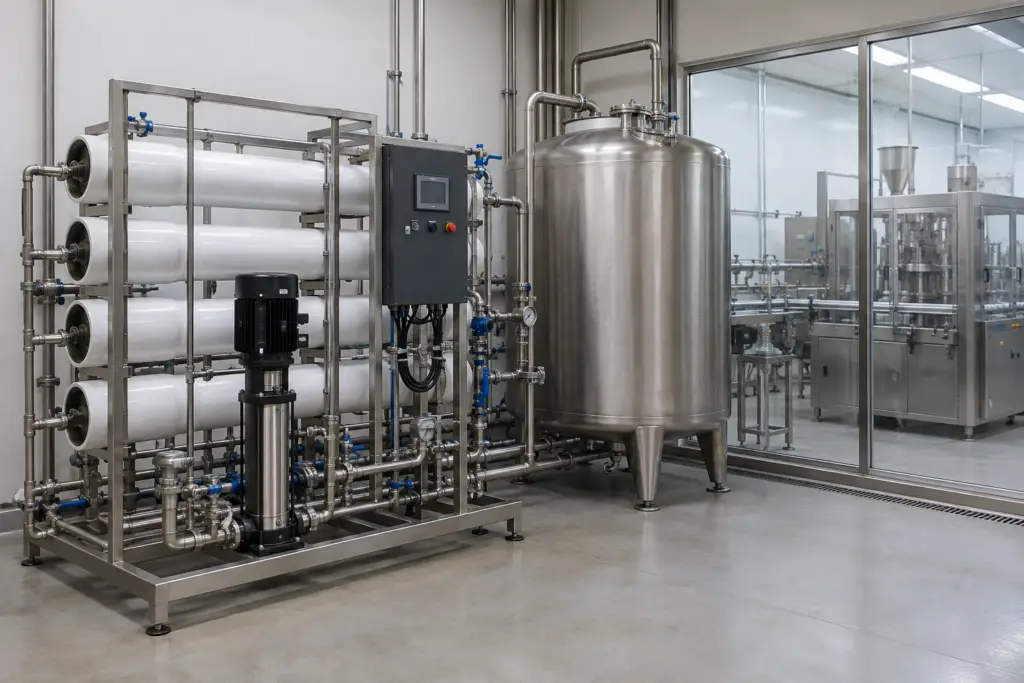
Document the water specification approved for each product or contact step. Include seasonal source variation and verification at delivery when consistency is important to the process.
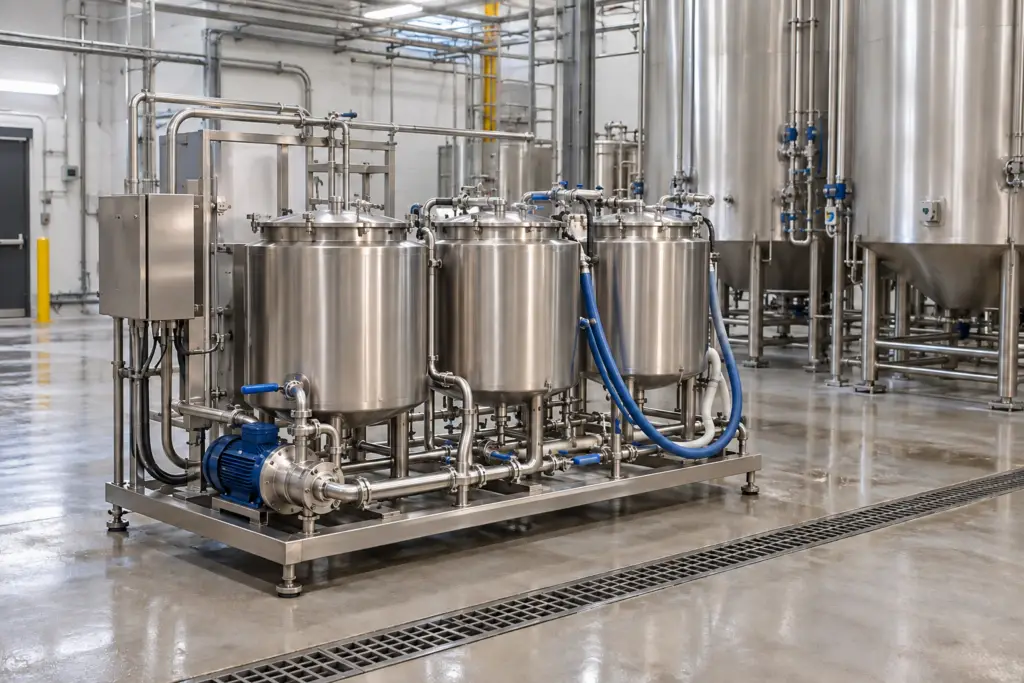
Coordinate water chemistry and rinse requirements with the approved cleaning program and chemical supplier. Capture the flow and timing of CIP cycles that overlap with production.
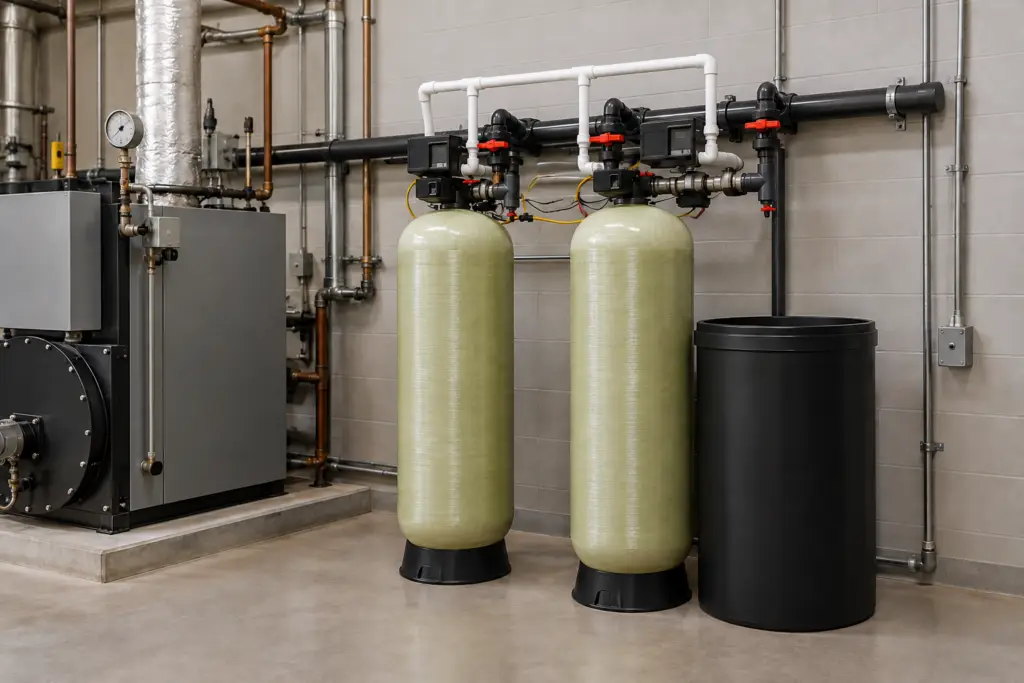
Identify each utility’s quality requirements and any product-contact implications. Makeup treatment must be reviewed within the relevant equipment and plant operating program.
Ideal Water Solutions can support a defined infrastructure scope with the plant’s quality and engineering teams. Selection should include operating limits, maintenance and the verification needed before production use.
Target identified particles or other constituents using media selected for the application and the plant’s approved quality requirements.
Where a product specification requires lower dissolved minerals, evaluate RO with appropriate pretreatment, storage, distribution and acceptance testing.
Consider hardness reduction for specified cleaning or utility feeds, with compatibility confirmed by the relevant process and chemical-program owners.
Coordinate product-water boundaries, CIP demand, hygienic design requirements and discharge with production expansion or equipment replacement.
Bring product and equipment requirements, process diagrams, source analysis and production schedules. Identify quality, sanitation and engineering owners, including the required verification and change-approval process for the affected water stream.
DEFINE THE WATER-TESTING PLANTell us the required water characteristics, production rate and project stage, and identify the quality or engineering contact coordinating the work.
Does an RO system make water suitable for every food product?
No. Suitability depends on the product specification and the complete operated system. Required verification, hygienic practices and the plant’s quality controls remain necessary.
Can CIP and ingredient water share a supply?
They may where their requirements and combined demand are compatible. Review the approved cleaning and product specifications, distribution design and controls before sharing the feed.
Who approves a change in ingredient-water treatment?
Follow the plant’s formal change process with the responsible quality and production teams. Establish the required evaluation and acceptance criteria before introducing the changed supply into routine production.
Should seasonal source changes be included in design?
Yes, where they are relevant to the specified quality or treatment performance. Use representative source data and define the monitoring or adjustment needed within the plant program.
Does utility steam always have the same requirements as product-contact steam?
Do not assume that. Identify the actual use and the applicable equipment and process specification so treatment and controls are assigned to the appropriate steam system.
What information is needed when ingredient-water results fall outside approved limits?
Record the sampling point, result, time, affected water stream and potentially connected production lots. Escalate through the plant’s quality procedures so responsible personnel determine investigation, product disposition and release. Do not infer ingredient-water acceptability from appearance or a passing result at a different connection.
How can water-system changes be linked to production records?
Record the date and time of treatment adjustments, component changes, source switches and verification, identifying the connections served. Link that information to the plant’s relevant batch or lot records. The quality team defines the traceability required for its products and processes.
