
Match water chemistry to the quench, cooling and finishing duties that support the extrusion line.
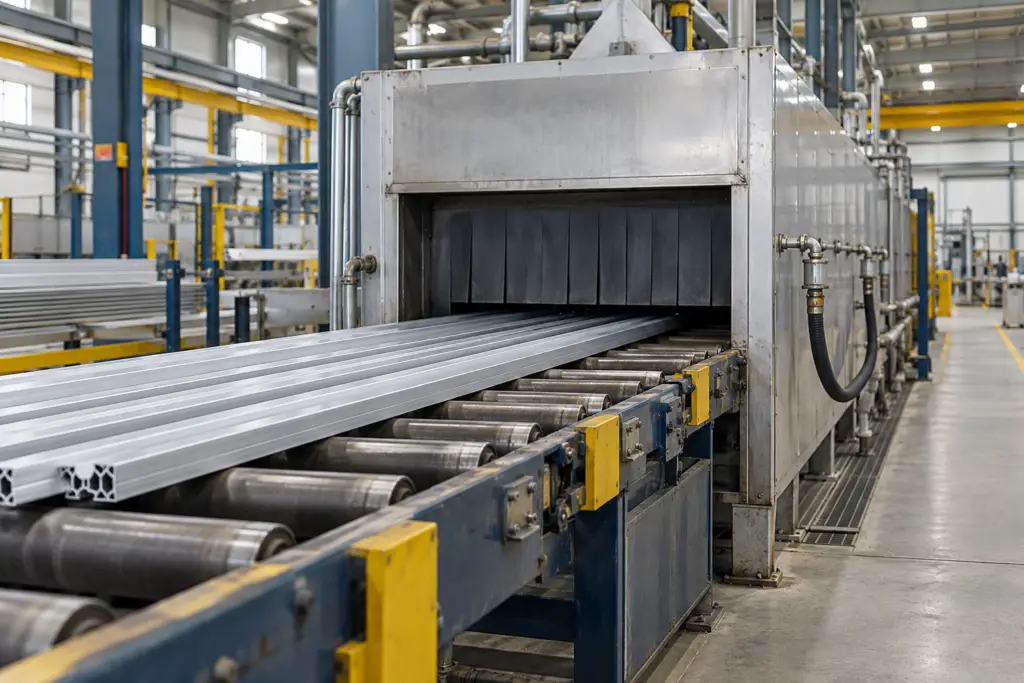
Use the line’s process and equipment specifications to define quench-water requirements. Investigate chemistry and contamination alongside flow, temperature and the approved quench process.
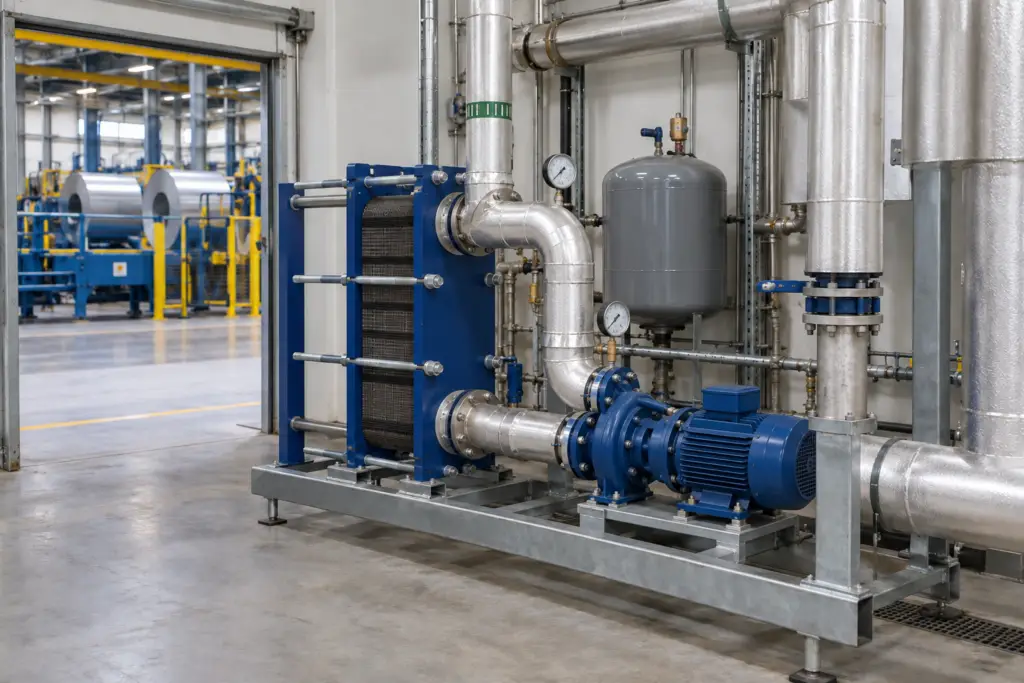
Identify open and closed circuits, their materials and any approved additives. Review deposits or restrictions within the complete cooling program before altering makeup chemistry.
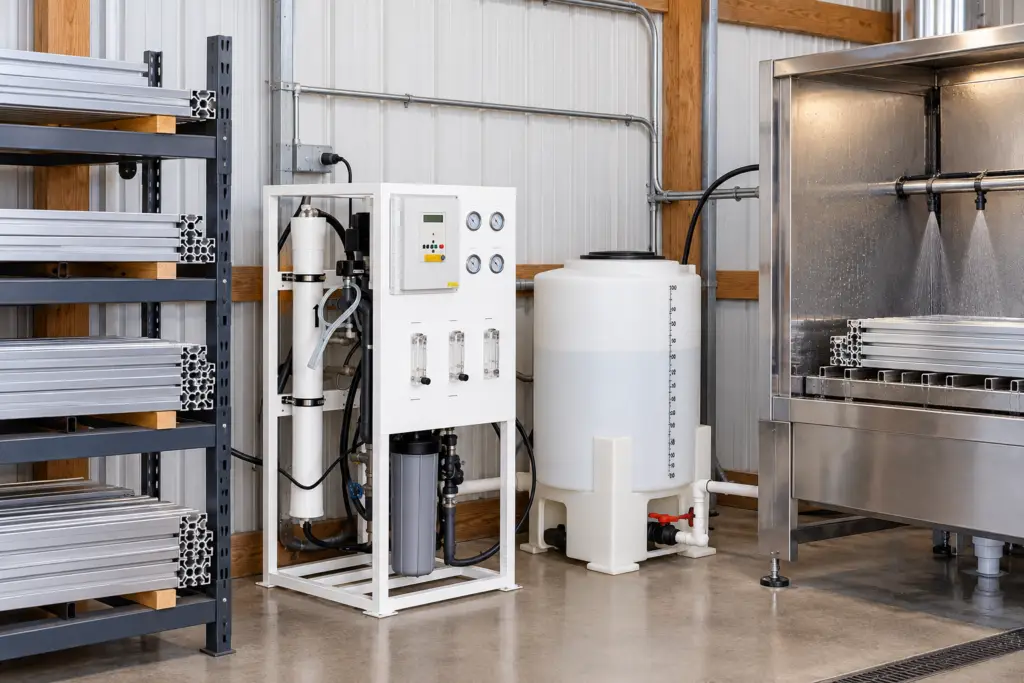
Where extrusions are washed or prepared for finishing, use that process’s rinse-water limits. A water grade suitable for cooling may not suit the specified surface-preparation step.
Ideal Water Solutions can assess defined feed requirements with plant engineering. Recommendations should state where water enters the system and which operating conditions must be verified after a change.
Consider particle control for characterized contamination in the appropriate feed or circuit, with flow and equipment compatibility established.
Evaluate hardness reduction where the cooling or utility specification supports it, taking loop chemistry and materials into account.
Lower-mineral water may suit a documented finishing-rinse or fill specification. Confirm the complete target and required conditioning before selecting RO.
Coordinate circuit separation, production expansion and maintenance access with the extrusion plant’s equipment and process owners.
Share schematics, equipment limits, operating temperatures, makeup demand and production patterns. Include deposit or contamination findings so the review can separate chemistry, circulation and heat-load issues.
CHARACTERIZE THE AFFECTED WATER STREAMIdentify the quench, cooling or finishing duty, the observed concern and the engineering contact responsible for its operating specification.
Will softening increase an undersized cooling system’s capacity?
It does not add pump flow or heat-exchanger capacity. Investigate thermal and hydraulic performance independently, while assessing any confirmed deposits and their relationship to chemistry.
Can all extrusion alloys use the same quench-water specification?
Use the approved process requirements for the actual alloy and product. Water changes should be reviewed with the process and equipment specialists rather than generalized across all production.
Can closed-loop fill water be selected from hardness alone?
No. Materials, additives and the vendor’s complete fluid requirements also matter. Establish the full fill specification before selecting softened or low-mineral water.
How does a second press affect treatment sizing?
Assess simultaneous circuit makeup and any new finishing demand, along with the added thermal load. Separate ongoing makeup requirements from initial filling and maintenance volumes.
Should cooling-water samples be taken only at the source?
Include the sampling locations specified by the operating program. Comparing makeup and circulating conditions helps identify changes introduced within the circuit.
Does a recirculating quench system need a different assessment from a once-through supply?
Yes. Recirculation adds operating-fluid conditions, contamination and makeup practices to the source-water assessment. Compare incoming water with the working circuit under the line’s specifications. A treatment unit sized only for total circulating flow or only for initial filling can miss the actual duty.
How should lubricant contamination be distinguished from incoming-water chemistry?
Compare source, makeup and operating-circuit samples using analyses suited to the suspected material. Review nearby process fluids, leaks and maintenance events with the production team. A change found only in the circuit calls for investigation of process entry points as well as any treatment response.
