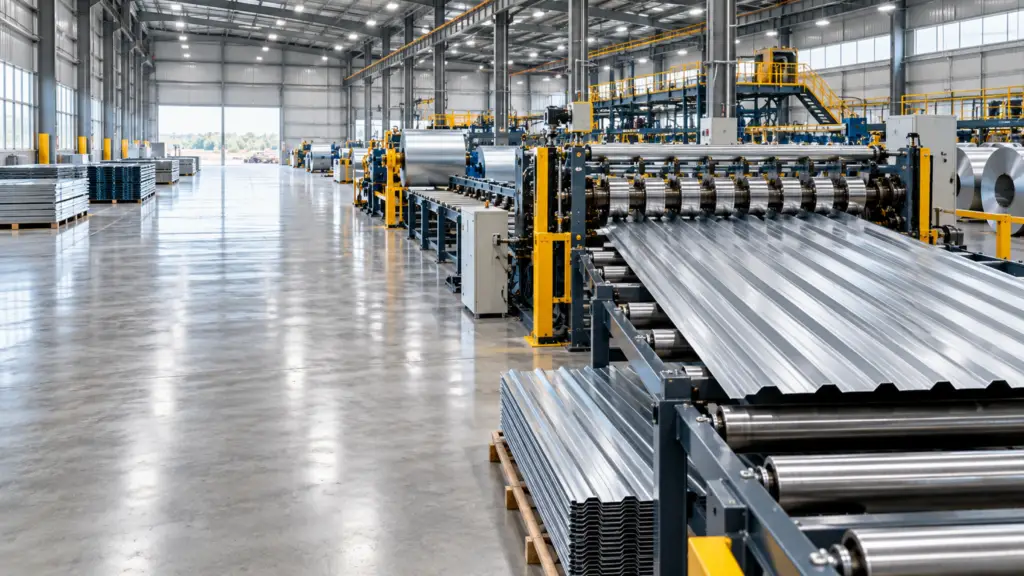
Plan water around your panel-production workflow and the finishing steps your plant performs in house.
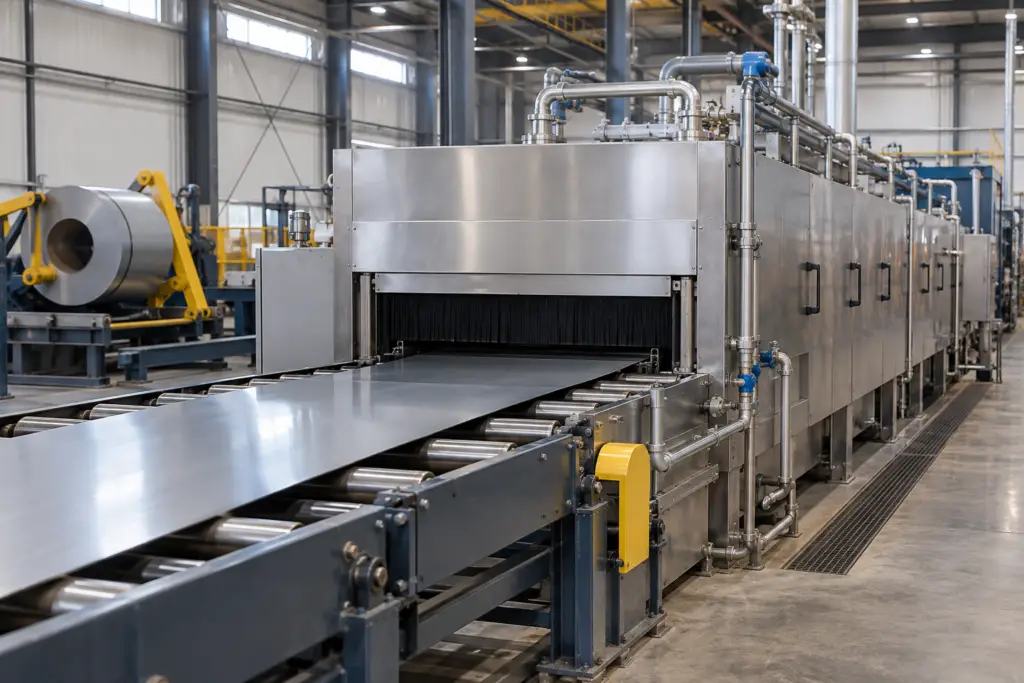
If performed on site, review bath and spray-water requirements with the chemical supplier. Confirm the substrate and cleaning sequence before assigning a treatment target.
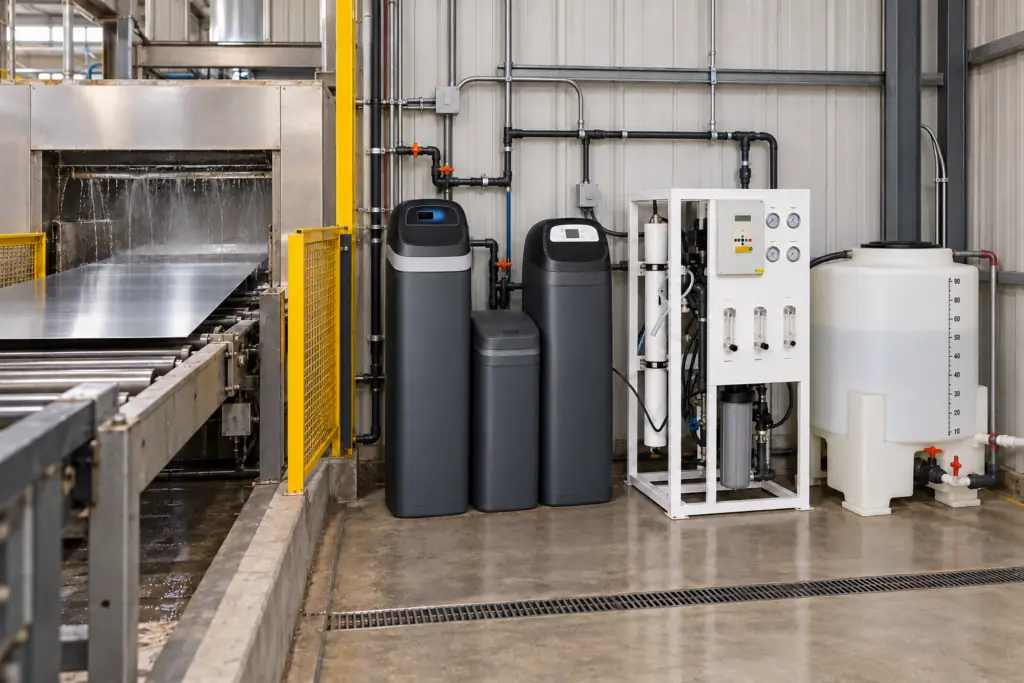
Where rinsing precedes coating, define the required delivered-water quality and flow at operating line speed. Evaluate surface residue with the full finishing process rather than water alone.
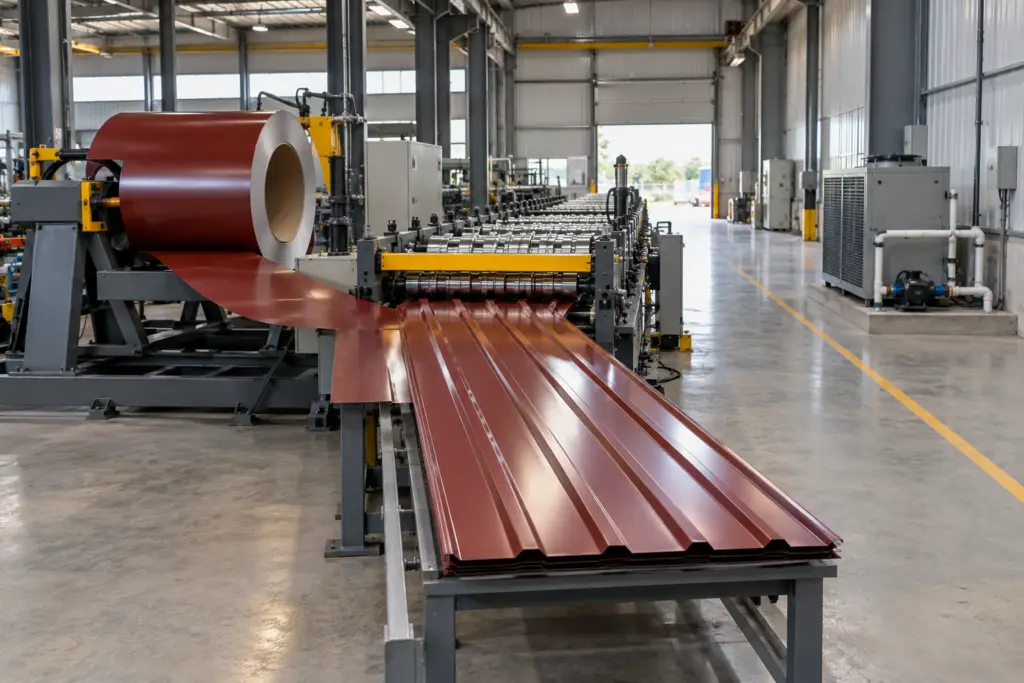
For plants using prefinished stock, focus on actual water-connected cooling, cleaning and utility equipment. Avoid adding a finishing-water system for a process the site does not perform.
Ideal Water Solutions can assess the documented water requirements with production and quality staff. The scope should distinguish product-surface duties from ordinary equipment support.
Target identified particles on the relevant feed or spray circuit, with nozzle requirements and service flow established for the line.
Consider RO when an on-site coating or rinse specification calls for lower dissolved minerals, including storage and line-speed demand.
Use hardness reduction where specified for compatible utility or process equipment, with the chemical and equipment suppliers confirming suitability.
Define the water scope for added finishing capability, a new panel line or a change from purchased coated stock to in-house processing.
Share whether stock arrives coated, the wet-process sequence, supplier requirements and line speeds. Add source results and any surface-quality observations so the assessment targets the stages your plant controls.
PLAN PRODUCTION-WATER TESTINGDescribe the metal and coating workflow, the affected equipment and the quality or engineering contact for the project.
We buy painted coil. Do we need purified final-rinse water?
Not for a finishing step that is not performed on site. Inventory the water-connected equipment you do operate and assess its specifications before proposing a rinse-water system.
Can a water change be credited with improved coating durability?
Only with appropriate process evaluation and evidence. Durability depends on the complete substrate, preparation and coating system, so treatment alone should not carry that claim.
How does higher line speed affect rinse-water planning?
Review required flow, contact conditions and the approved process specification at the proposed speed. Treatment production and storage must support the resulting demand without assuming the existing arrangement is sufficient.
Should aluminum and steel product lines share one water target?
Confirm their respective pretreatment and coating requirements with the process suppliers. A shared feed is appropriate only where the specified conditions are compatible.
What changes when in-house coating is added to a forming plant?
The project introduces process-specific water, storage, monitoring and discharge questions. Establish those requirements with the coating and equipment suppliers before finalizing treatment or utility connections.
What changes when a panel plant switches pretreatment or coating suppliers?
Obtain the new supplier’s written water and stage-control requirements, then compare them with delivered-water results and the existing line arrangement. Review monitoring and acceptance criteria before the change. The previous supplier’s treatment target should not be assumed suitable for a new chemical system.
