
Plan water quality and delivery together across the wells, tanks and distant connections your ranch depends on.
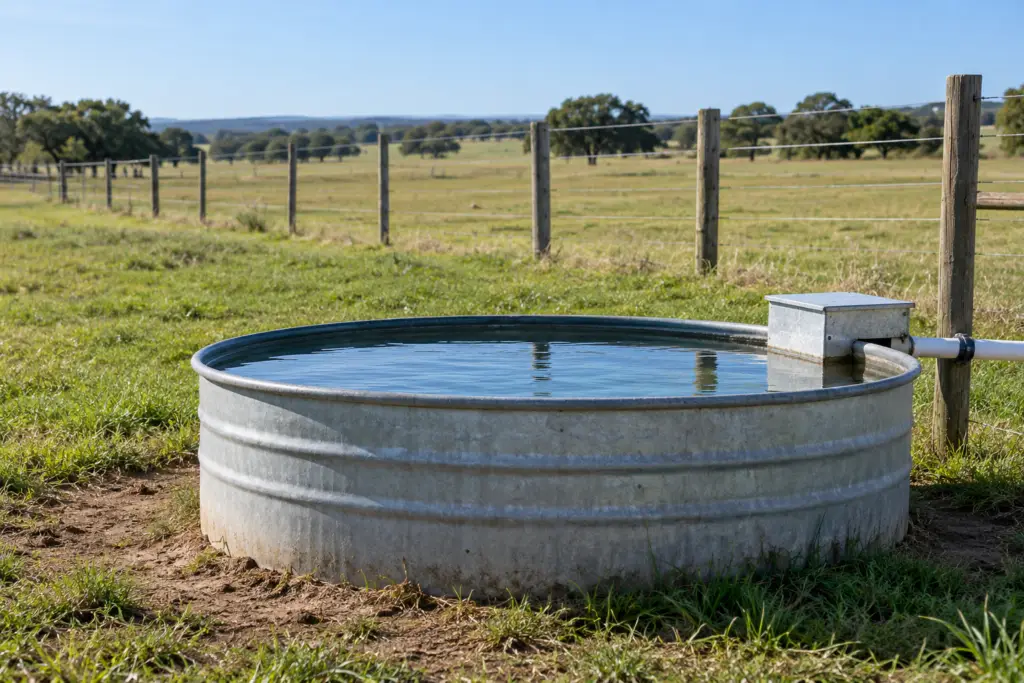
Check refill capacity and delivered conditions at distant troughs. Note which source serves each point and distinguish low flow from a measured water-quality concern.
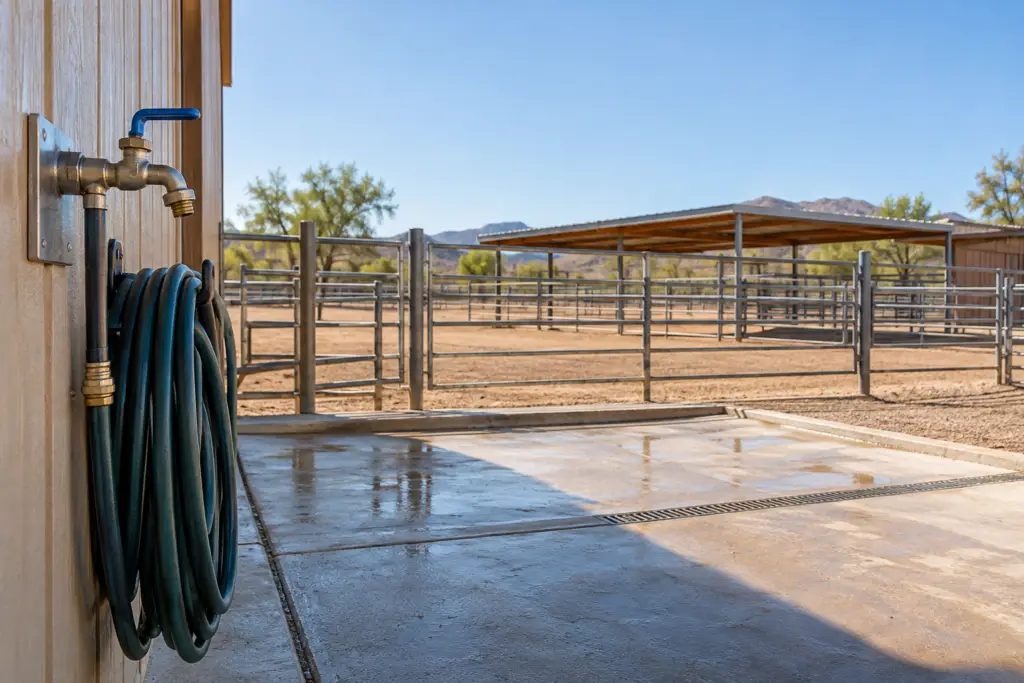
Cleaning and equipment demand can compete with stock-water delivery. Identify any specified wash-water requirement and schedule overlap before extending a shared treatment branch.
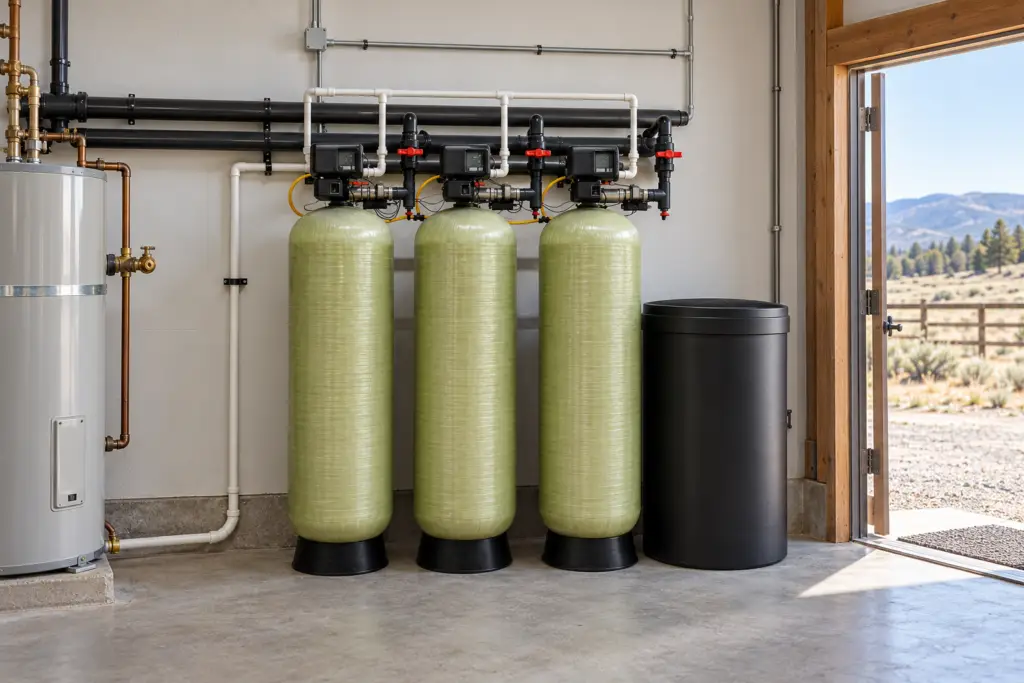
Household water, heaters and shop equipment may justify separate treatment from large stock-water volumes. Keep domestic requirements and service ownership clear.
Ideal Water Solutions can help compare targeted treatment with the source and distribution constraints. Location and upkeep should fit the actual travel, storage and staffing arrangements.
Characterize each relevant source and destination, with animal-water interpretation supplied by qualified livestock advisers and domestic needs assessed separately.
Address identified particles or other treatable constituents using equipment suited to available flow, backwash water and remote service access.
Consider hardness reduction for affected residential or workshop equipment. Do not assume that a domestic softener defines the required animal-water treatment.
Coordinate source yield, storage, distribution and seasonal stock locations before selecting a central system or separate remote installations.
Share well information, test results, storage locations and the points with reported concerns. Include seasonal herd locations, power availability and service travel so the plan accounts for both delivery and upkeep.
PLAN RANCH WATER SAMPLINGDescribe the well or supply, the affected stock-water or building connection and the practical access constraints.
Will a filter fix a trough that refills too slowly?
Not necessarily. Check source yield, pumps, storage, piping and existing restrictions. Any added filter must be evaluated for its effect on available flow.
Can one well’s test represent every ranch water source?
No. Separate sources can have different chemistry and seasonal behavior. Sample the sources relevant to the intended uses and record which destinations each one serves.
Is household-softened water automatically suitable for livestock?
No assumption should be made from the household treatment label. Review the complete delivered-water profile with a veterinarian or qualified livestock adviser for the animals and conditions involved.
How does moving stock between pastures change the plan?
It changes destination demand and may change the source supplying the animals. Reassess refill capacity, storage and water conditions at the newly used points.
What makes a remote treatment installation difficult to maintain?
Limited power, drainage, access and replacement supplies can constrain equipment choice. Evaluate routine service tasks and weather exposure before locating treatment far from staffed buildings.
What should be reviewed when stock water is hauled or held in temporary storage?
Identify the water source, hauling equipment, tank condition and the final delivery points. Source results alone do not describe changes during transport and storage. Have delivered-water suitability interpreted for the animals by the responsible veterinarian or qualified livestock adviser before relying on a new arrangement.
