
Give your nutrient program a defined water baseline across growing zones and changing source conditions.
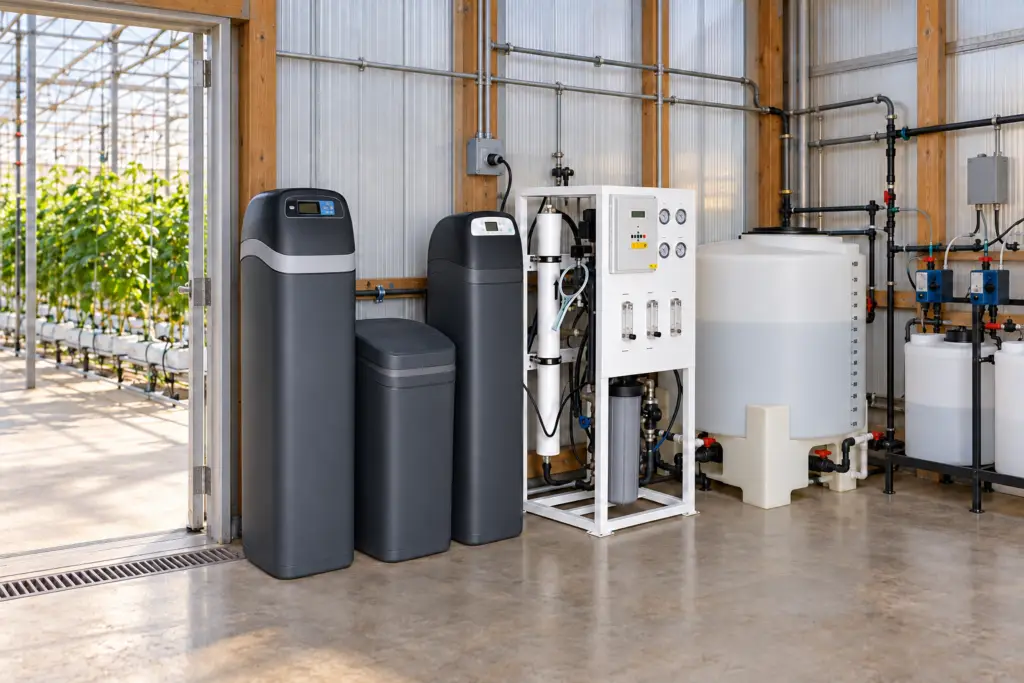
Include source-water alkalinity and nutrient contributions in the recipe review. Compare the source and mixed feed so treatment changes do not silently alter the established nutrient program.
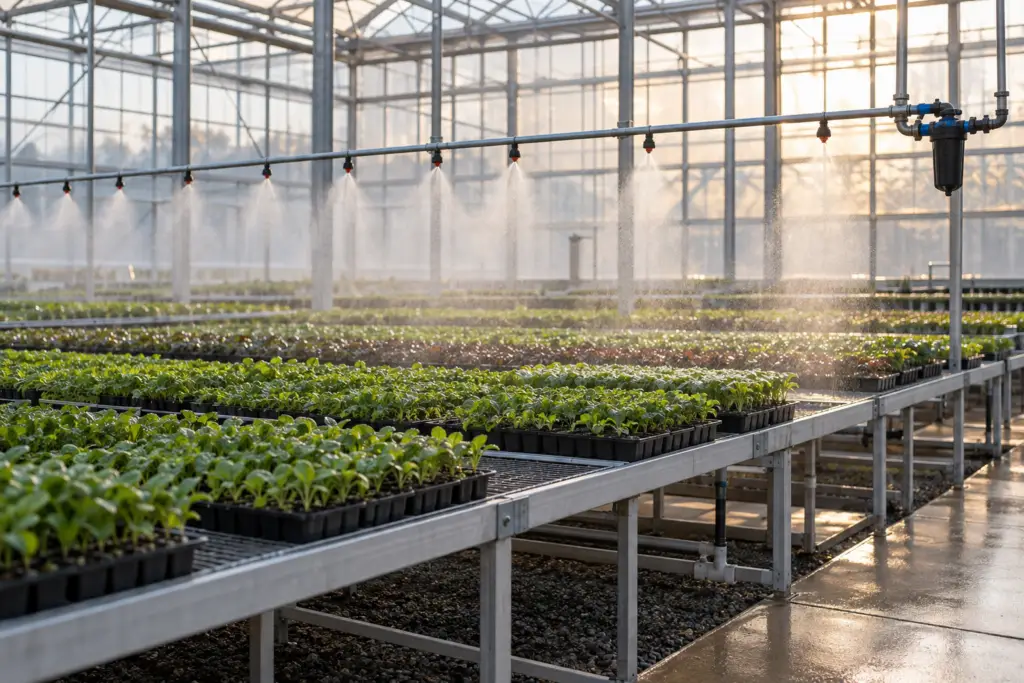
Evaluate nozzle requirements, visible deposits and source particles. A finer filter may address suspended material, while dissolved-mineral concerns need a separate chemistry assessment.
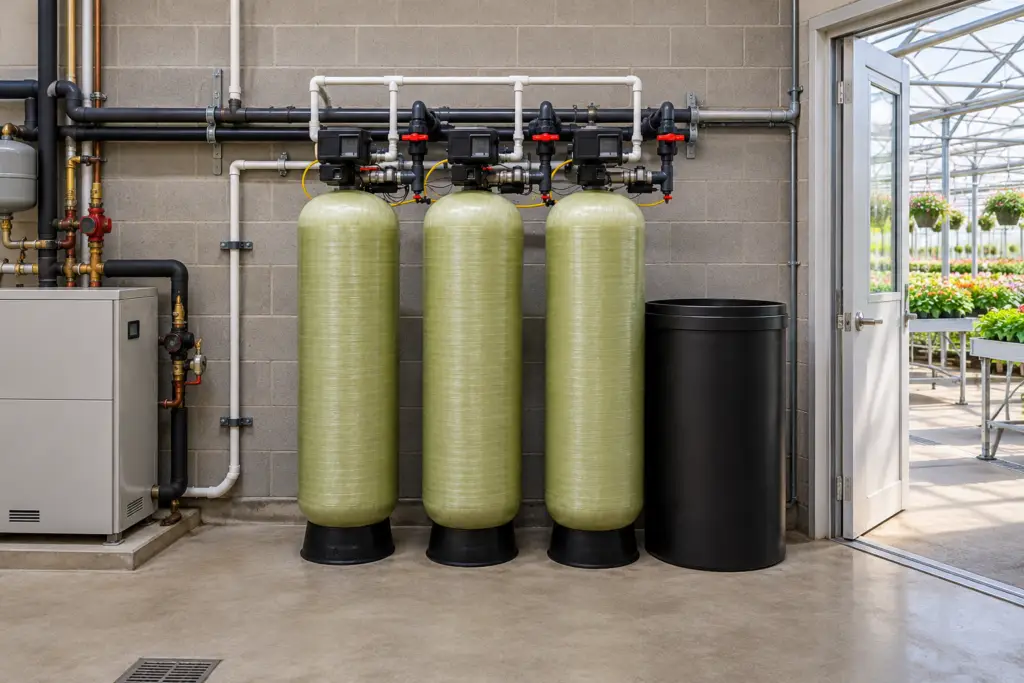
Boiler makeup and climate-control equipment follow their own specifications. Keep these utility feeds distinct from crop irrigation when their treatment requirements differ.
Ideal Water Solutions can help compare water analysis with crop-adviser guidance and equipment requirements. Include seasonal demand, blending, storage and treatment waste streams in the operating plan.
Use irrigation-relevant analysis to characterize alkalinity, salts and other constituents needed by the grower’s nutrient and source-management decisions.
Select particle filtration for measured loading and emitter requirements, with enough flow and a practical cleaning method for the irrigation schedule.
Where source salts or other dissolved constituents require reduction, evaluate RO and controlled blending against the crop target, storage and concentrate arrangements.
Reserve consideration for compatible utility equipment or specified pretreatment duties. Assess the resulting water separately before any connection to crop irrigation.
Share crop and substrate information, irrigation schedules, emitter specifications and existing recipes. Identify seasonal source changes and utility feeds so treatment can support the growing program without confusing crop and equipment requirements.
PLAN IRRIGATION-WATER ANALYSISDescribe the crop program, source water and the deposit, emitter or chemistry concern. Include your grower or crop-adviser contact.
Are pH and alkalinity the same measurement?
No. They describe different water properties. Both can be relevant to irrigation management, and the crop adviser should interpret them with the nutrient program and substrate.
Can a softener replace RO for salty irrigation water?
No. Conventional sodium-cycle softening replaces hardness ions with sodium rather than removing the overall dissolved-salt burden. Evaluate mineral reduction against the crop’s actual requirements.
Does the lowest possible conductivity make the best nutrient water?
Not by itself. The final feed must meet the crop’s nutrient requirements. Consider source treatment and nutrient additions together rather than treating a low reading as the sole goal.
Should the nutrient recipe be reviewed after changing source treatment?
Yes. Treatment can change the constituents contributed by the source. Recheck the delivered profile with the grower or crop adviser before relying on the previous recipe.
Can misting and fertigation use different treated supplies?
Yes, where their targets differ and separate plumbing is practical. Define each requirement and include both streams in production, storage and maintenance planning.
How should collected rainwater be assessed before blending it with well water?
Test the collected and stored water, not just the original well supply. Review collection-surface contamination, particles and the resulting blend’s chemistry with the grower or crop adviser. Blending changes the nutrient baseline and available volume, so its proportions and delivered profile should be recorded.
What additional review is needed before recirculating irrigation drainage?
Evaluate accumulated nutrients and salts, suspended material and plant-disease risks with qualified crop advisers. Establish monitoring and any required reconditioning for the recovered stream. Fresh-water filtration or an acceptable conductivity reading alone does not establish that drainage is ready for reuse.
How should RO production and storage be matched to short irrigation cycles?
Separate the volume needed during each irrigation cycle from the rate at which RO can replenish it. Check usable storage, delivery-pump flow and recovery time between cycles under expected source conditions. Include blending demand and maintenance periods instead of sizing solely from average daily irrigation volume.
