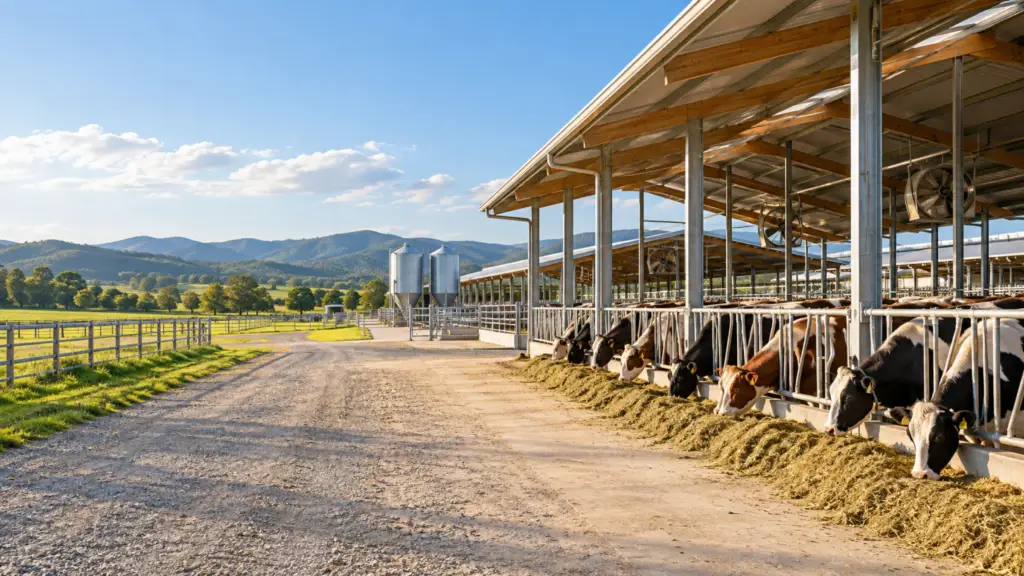
Plan water capacity and quality across drinkers, cooling systems and the cleaning work of a production facility.
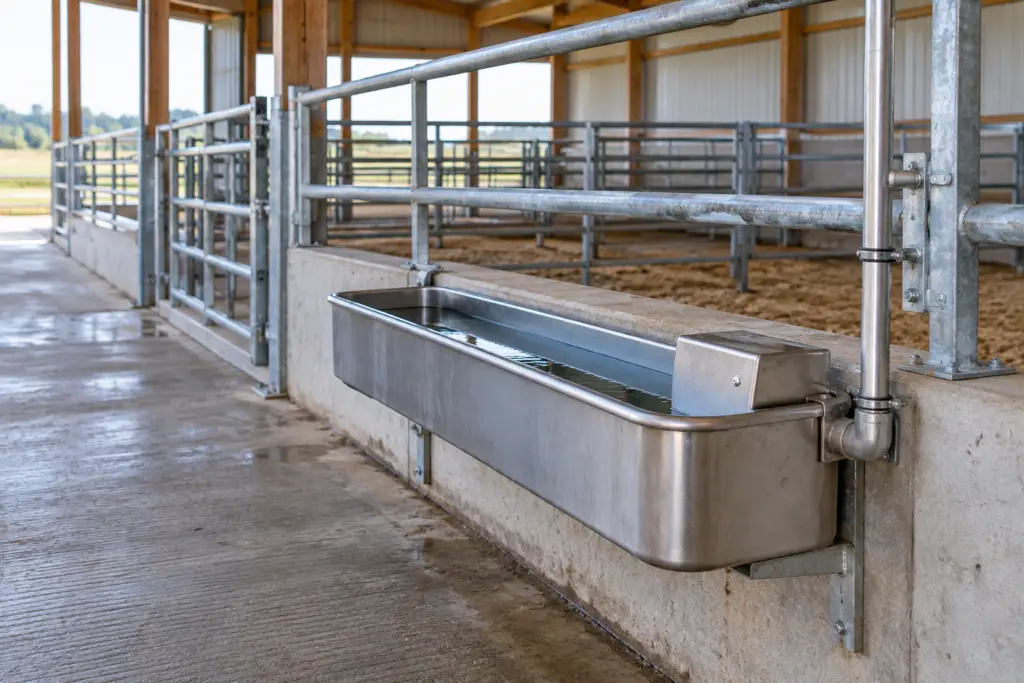
Check delivered conditions and refill performance across drinker locations. Use appropriate water analysis and qualified animal-care interpretation to define any treatment objective.
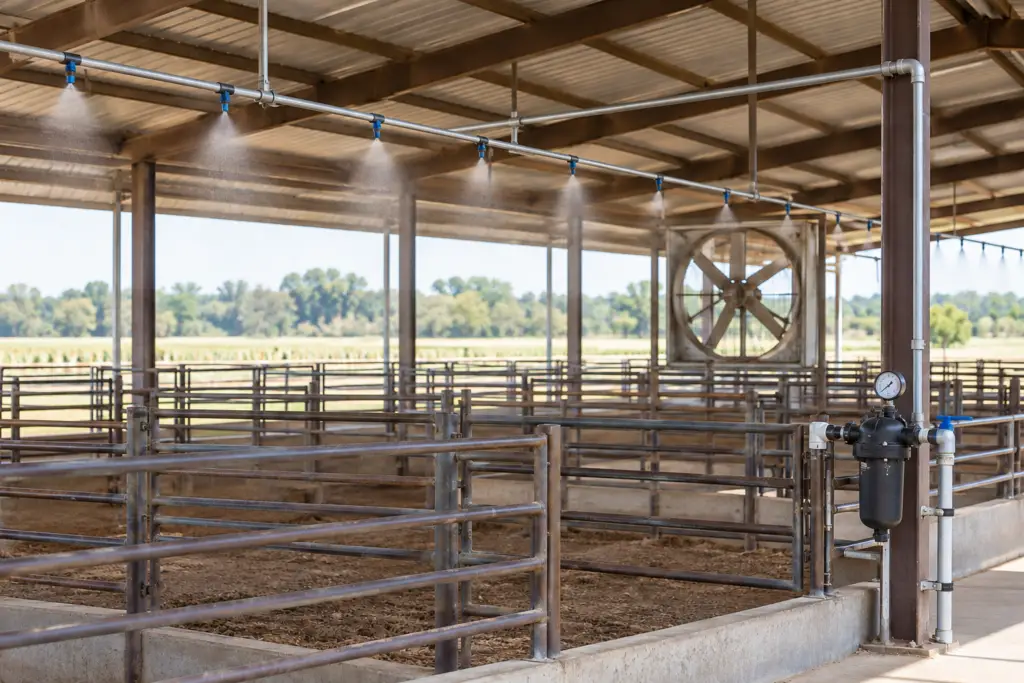
Small passages can be sensitive to particles or deposits. Identify the material and review nozzle requirements so filtration or chemistry changes address the actual restriction.
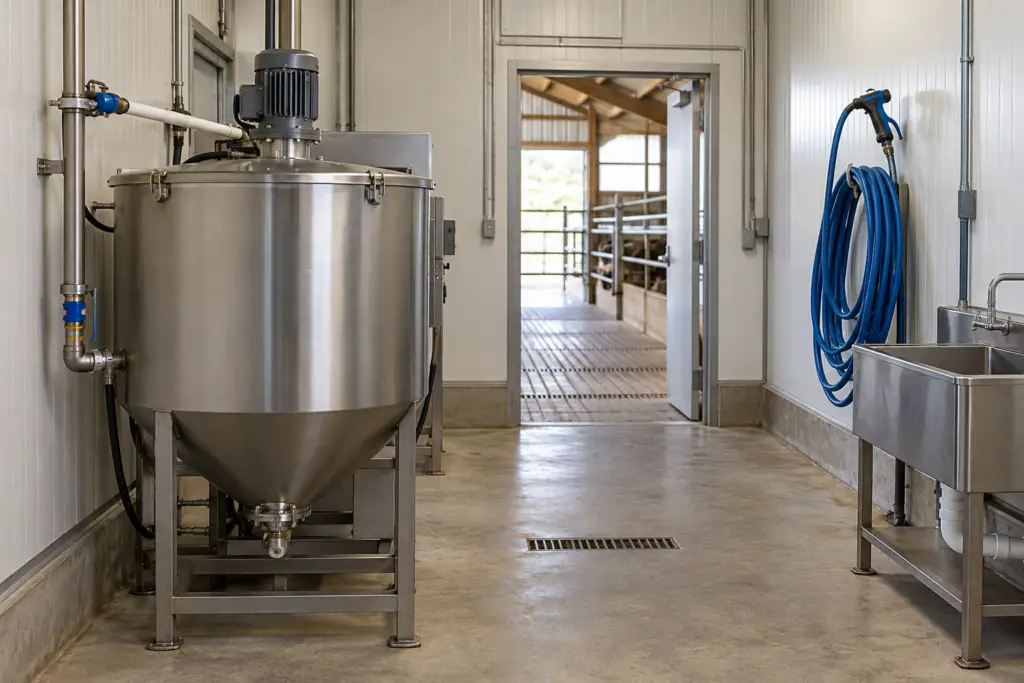
Follow the applicable chemical and equipment requirements for cleaning and mixing. These streams may need a different water profile from drinkers or cooling equipment.
Ideal Water Solutions can assess source conditions and defined equipment duties with the facility team. Decisions affecting drinking water should include the responsible animal-care advisers and the site’s operating procedures.
Characterize source and delivered water for the questions identified by facility staff and qualified livestock advisers.
Select particle control for drinker or cooling equipment where loading and manufacturer requirements justify it, including peak flow and cleaning access.
Consider hardness reduction on specified sanitation or heating-equipment feeds. Evaluate animal-water implications separately before treating a shared supply.
Assess simultaneous drinking, cooling and washdown loads, with maintenance access and continuity suited to the facility’s operating routines.
Share source results, animal groups, drinker and cooling-system details, and cleaning schedules. Identify peak-weather conditions and the animal-care adviser who will interpret drinking-water requirements before treatment is selected.
PLAN FACILITY WATER SAMPLINGDescribe the affected drinkers, cooling or sanitation equipment and when demand or water-quality concerns appear.
Can cooling demand reduce flow at drinkers?
It can where the systems share limited supply or distribution capacity. Assess simultaneous loads and pressure at the relevant delivery points before selecting treatment or changing operating schedules.
Will a nozzle filter address dissolved-mineral deposits?
A particle filter does not remove dissolved minerals. Identify the deposit and source chemistry, then review suitable treatment with the equipment requirements and facility program.
Should animal-water targets be the same for every species?
Do not generalize across species or production stages. Have the results interpreted by a veterinarian or qualified livestock adviser for the animals and conditions at the facility.
Can sanitation chemicals be adjusted after a treatment change?
Review the resulting water with the chemical supplier and the facility’s approved cleaning program before changing dosing. Treatment does not replace the required sanitation process.
What should be reviewed before adding another housing building?
Calculate added drinking, cooling and cleaning demand together with existing loads. Confirm source capacity, distribution and any treatment changes before assuming the current system can serve the expansion.
Where should samples be taken to compare source water with water reaching livestock?
Use a sampling plan that includes the relevant source and representative delivery points, such as near and distant drinkers, with the sampling method agreed by the laboratory or adviser. Record operating conditions and recent maintenance. This helps distinguish a source issue from changes in storage or distribution.
