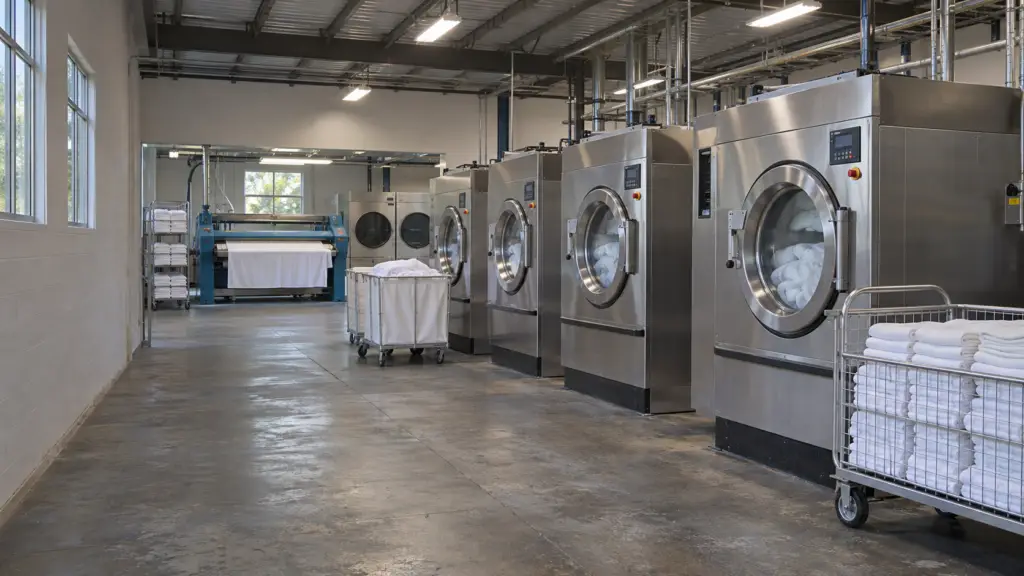
Match water quality and available treatment capacity to the wash formulas and production your plant must deliver.
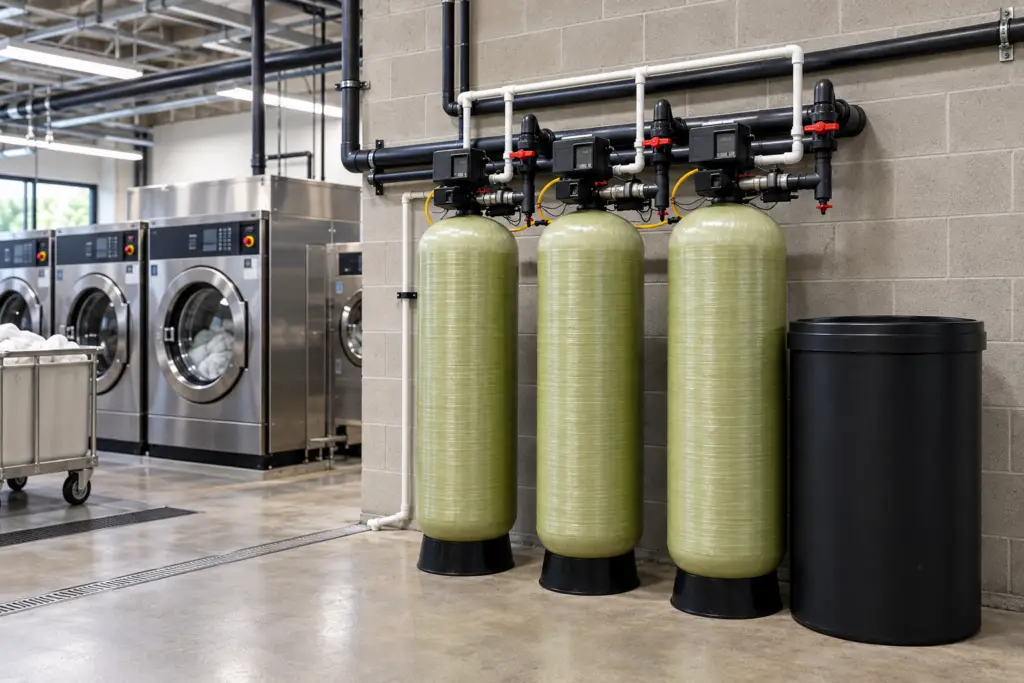
Check delivered hardness during production, not only at startup. Compare results with the wash formulas, chemical dosing and the machines drawing water at that time.
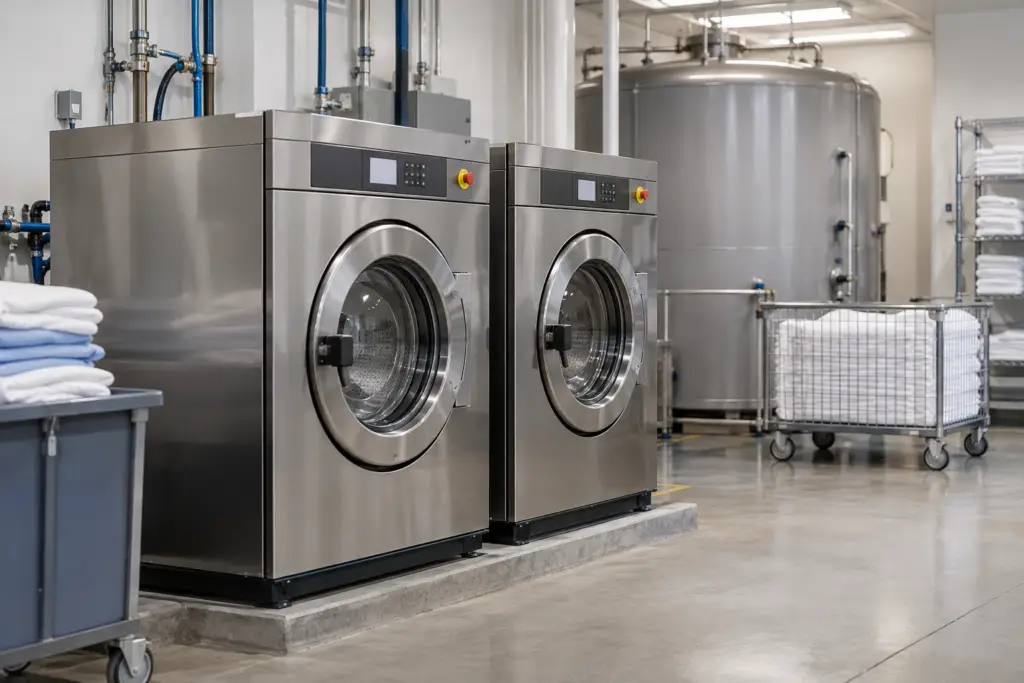
Evaluate the rinse-water requirement against textile type and the laundry’s quality criteria. Where water is recovered or reused, distinguish that stream from fresh feed during troubleshooting.
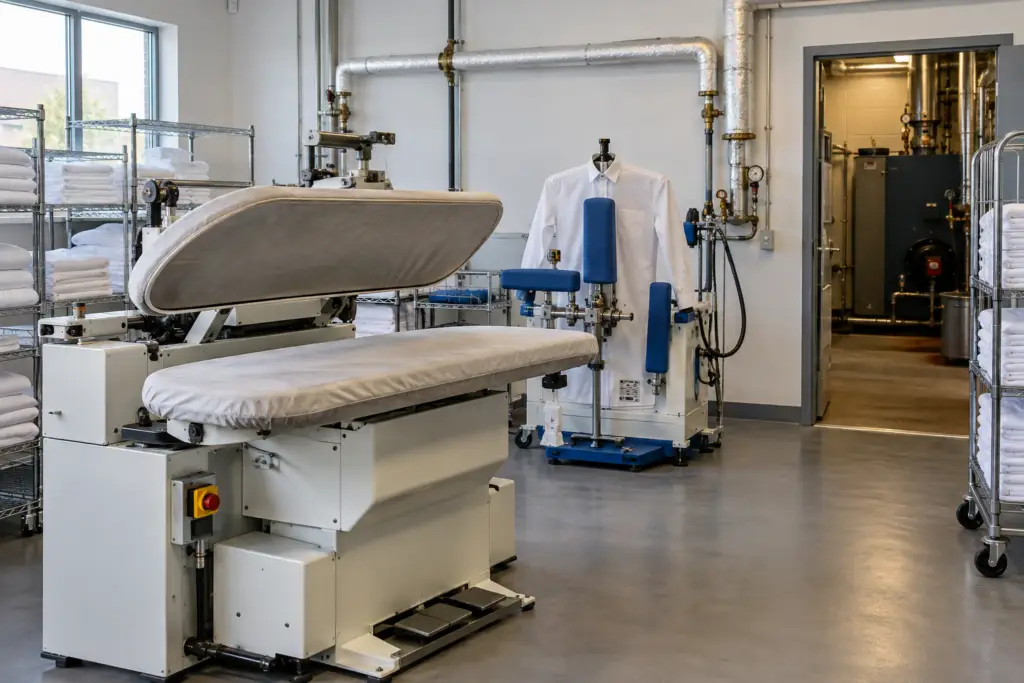
Boiler makeup and water-fed finishing equipment have their own specifications. Assess their loads and operating programs separately from the water entering washers.
Ideal Water Solutions can assess hardness load, peak fills and existing treatment performance with the plant team. Include regeneration sequencing, storage and maintenance access in the production plan.
Where wash formulas or equipment require hardness control, size the system for measured load and required flow, including availability during regeneration.
Select pretreatment for identified particles, iron or other relevant source conditions after suitable analysis and process review.
Align inventory and replenishment with actual softener throughput and regeneration demand across production shifts.
Investigate hardness breakthrough, valve sequencing and flow restrictions when existing equipment delivers inconsistent water during production.
Share machine capacities, fill patterns, shift volumes and source analysis. Include chemical-provider requirements, treated-water readings and any reclaim arrangement. These details establish the quality and capacity the treatment must deliver.
REVIEW WASH-WATER TESTINGDescribe the affected machines, textile result or treatment concern and the point in the production shift when it occurs.
Can detergent changes compensate for a failing softener?
Do not assume that is an adequate response. Confirm delivered hardness and treatment condition with the laundry chemical team before changing formulas or dosing.
Why does water test soft at startup but not later in the shift?
Capacity, regeneration, valve operation or changing load may be involved. Compare readings with throughput and machine fills to identify when and where the delivered quality changes.
Is total daily volume enough to select a softener?
No. Several machines filling at once can create a much higher short-term flow. Evaluate peak delivery and total hardness load as separate sizing requirements.
Does reclaimed water need the same treatment as fresh water?
Its composition and purpose may differ. Evaluate each recovered stream against the intended process and quality criteria rather than applying the fresh-water design automatically.
Should steam-finishing demand be included in washer-water sizing?
Include the boiler’s specified makeup demand where the same treatment supplies both loads. Use actual makeup requirements and overlapping operating periods, while retaining the boiler’s separate feedwater and operating criteria.
How should iron-related linen staining be investigated separately from hardness?
Compare source and washer-feed analysis, inspecting the intervening plumbing and equipment for possible contributions. Review staining patterns with the laundry chemical supplier. A soft-water result does not exclude iron or another cause, and treatment should follow identification of the relevant constituent and where it enters the process.
What operating data can reveal abnormal salt use in a laundry softener?
Compare salt replenishment with treated volume, incoming hardness and recorded regeneration cycles over similar production periods. Check programmed capacity, valve operation and any change in the served loads. A higher salt total during a busier month does not by itself indicate a fault.
