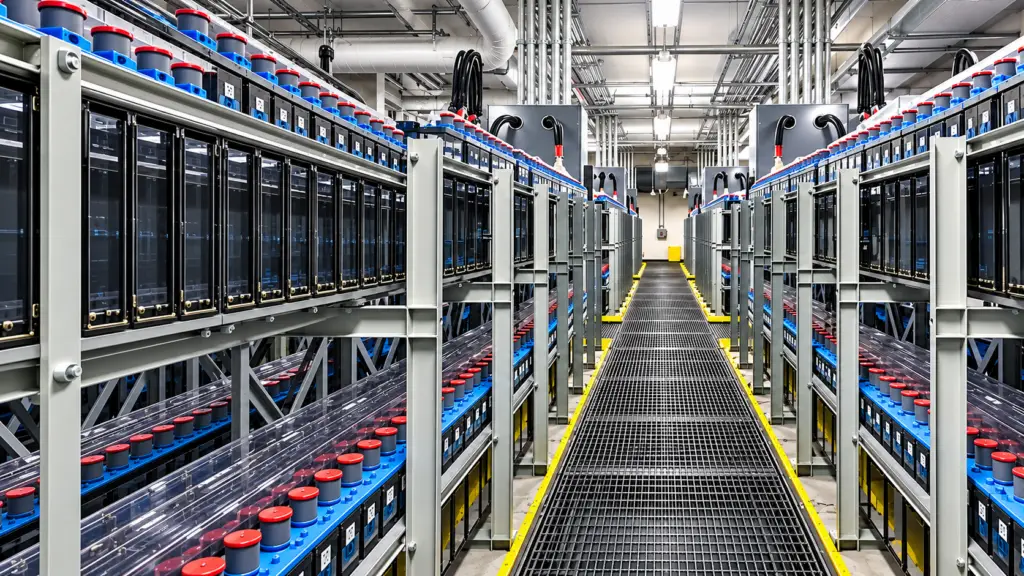
Specify water around your cooling architecture and the operating limits of the equipment it serves.
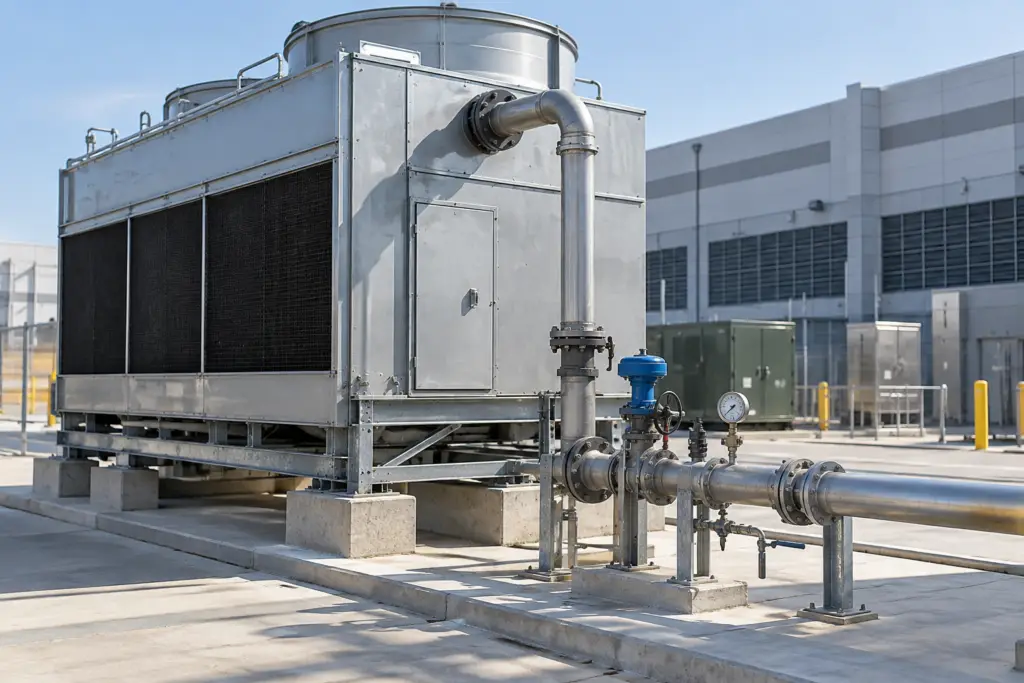
Where installed, review makeup demand and the cooling-water program across expected operating conditions. Pretreatment decisions must account for source chemistry and the program’s concentration and discharge controls.
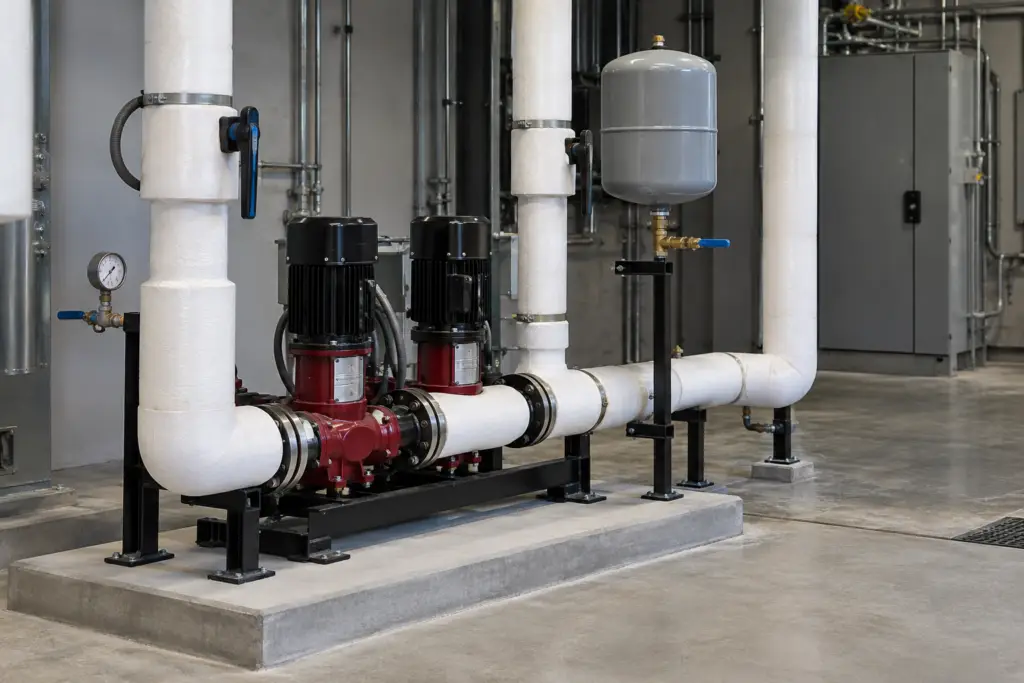
Use the equipment vendor’s requirements for fill water and fluid chemistry. Confirm materials and approved additives before connecting a low-mineral or softened supply to the loop.
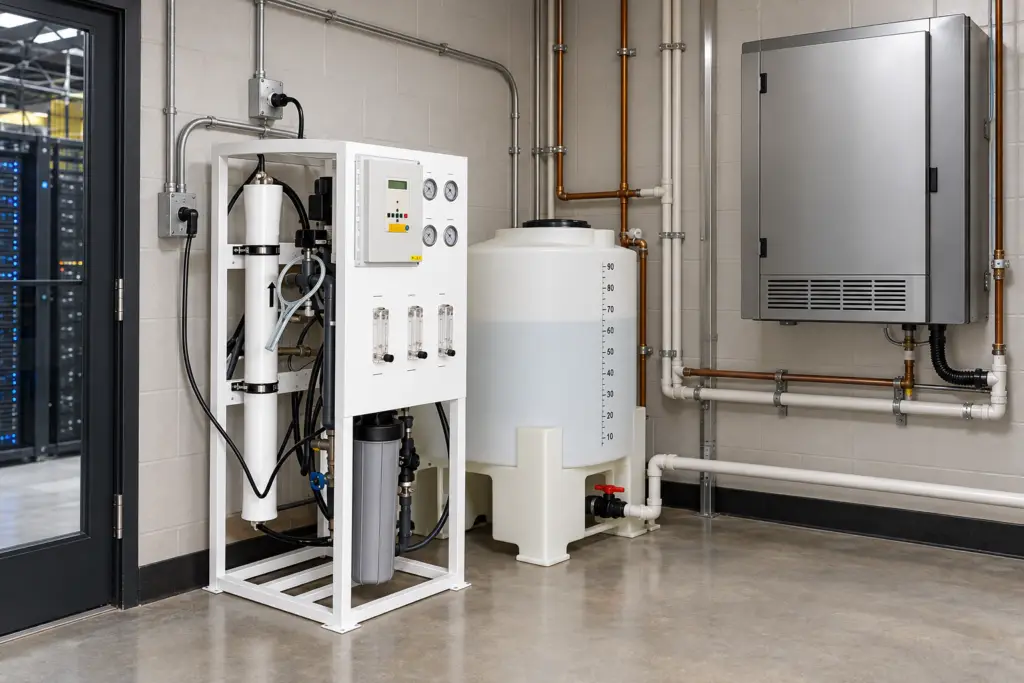
If present, identify the humidifier type and its water limits. Mineral management, delivery flow and drainage requirements depend on the installed technology and operating conditions.
Ideal Water Solutions can help compare defined feed requirements with source conditions and available utilities. Assess treatment water consumption, maintenance and service continuity alongside the quality target.
Consider a configured system where vendor specifications require controlled chemistry, monitoring or integration beyond ordinary building treatment.
Select particle or other targeted filtration for the specified feed or circuit, with design pressure and service access reviewed by the responsible engineering team.
Evaluate hardness reduction only where the relevant cooling or equipment program supports it. Confirm compatibility with the complete operating chemistry.
Coordinate redundancy, alarms, isolation and change-control requirements before adding treatment or connecting a new cooling load.
Provide source results, system boundaries, makeup and fill requirements, and expected operating loads. Include water-availability constraints and approved maintenance procedures so the review covers quality, consumption and continuity together.
DEFINE FEED-WATER TESTINGIdentify the cooling or humidification equipment, written specifications and whether the project is new construction, expansion or a change to an operating facility.
Do all data centers need cooling-tower water treatment?
No. Confirm the installed cooling architecture first. A facility without an evaporative system will have a different water-use profile and treatment scope.
Can RO water be assumed suitable for a liquid-cooling loop?
No. Confirm the vendor’s complete fluid specification, materials compatibility and approved additives. Low dissolved minerals alone do not establish suitability for a particular loop.
Does additional treatment always reduce total water consumption?
No. Some technologies use water for regeneration, backwashing or concentrate discharge. Compare the complete facility water balance and operating goals before claiming a reduction.
How should a new cooling module be added?
Review its specifications and demand through the site’s engineering and change-control process. Include treatment capacity, redundancy and the effect on existing equipment before connection.
What should a maintenance bypass plan establish?
It should define the approved supply to each affected system and any operating restrictions, monitoring or shutdown requirements. A bypass valve alone does not establish an acceptable continuity arrangement.
Is reclaimed water interchangeable with the existing cooling makeup supply?
No. Compare the proposed source’s chemistry and variability with equipment materials, vendor limits and the cooling-water program. Review supply conditions, monitoring and any applicable use restrictions with the engineering team. Treatment and operating changes must be established before the alternate source is accepted.
