
Define water requirements for automotive plants, chemical manufacturers and other factories, from parts washing to chemical makeup and plant utilities.
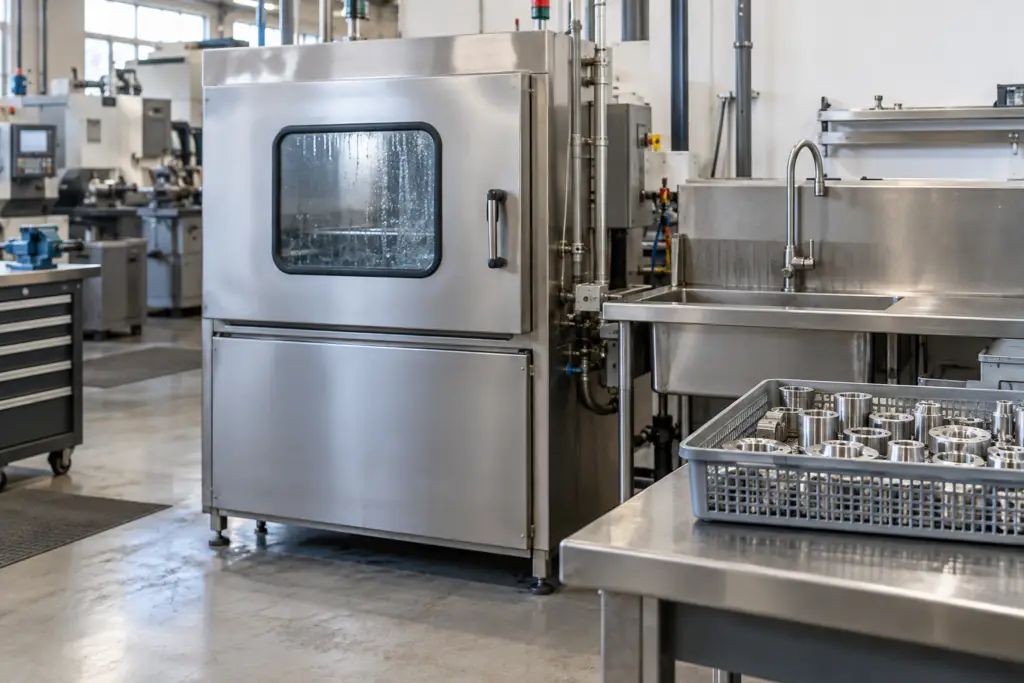
Identify the cleaning chemistry, rinse requirement and residue concern. Compare fresh feed with the water in the operating stages so bath contamination is not mistaken for an incoming-water issue.
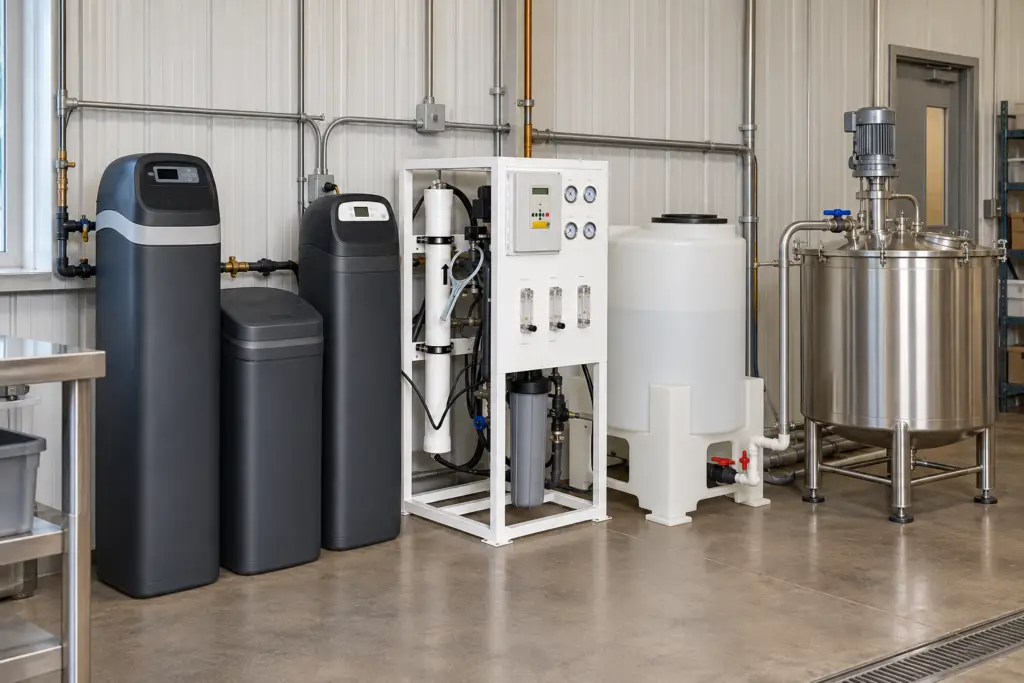
Obtain the formulation’s water specification and mixing sequence from the process owner. Dissolved minerals or other source characteristics may matter differently for each product or batch.
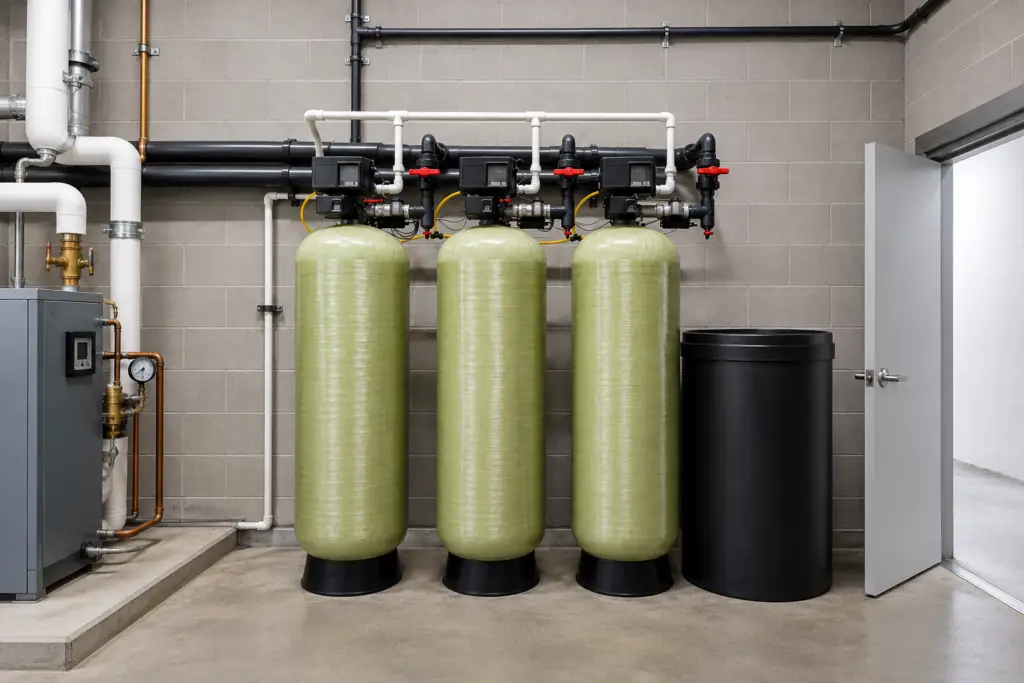
Boilers and cooling circuits operate under their own chemistry programs. Establish makeup quality and demand separately from production water, even where both originate at the same source.
Ideal Water Solutions can help compare measured water with production and utility requirements. The design should identify delivered quality, flow, monitoring and service access for each selected stream.
Choose media and capacity for identified source particles or constituents that matter to a defined process or downstream treatment stage.
Use hardness reduction where specified for cleaning, utility feeds or pretreatment, after confirming compatibility with process chemistry.
Consider RO for a documented low-mineral rinse or formulation requirement, including pretreatment, production rate, storage and concentrate handling.
Coordinate branch segregation, line expansions and wastewater implications before adding a new water grade to the plant.
Provide source analysis, product or equipment specifications, batch volumes and peak fills. Include quality observations and existing treatment diagrams so the review can locate the problem and define measurable acceptance criteria.
PLAN PROCESS-WATER ANALYSISDescribe the water stream, required quality and production concern. Include the process or maintenance lead responsible for the specification.
Can a product defect be attributed to water from appearance alone?
No. Compare water results with process conditions and the plant’s quality investigation. Controlled evaluation is needed before changing treatment or promising a product-quality result.
Should chemical makeup use the same water as equipment washing?
Only if the formulation and cleaning requirements agree. Establish the chemical supplier’s or process owner’s limits before combining the feeds.
Can a new production line use spare treatment capacity?
Check quality as well as volume and peak flow. Spare capacity on a system does not establish compatibility with the new line’s water specification.
How does RO affect the plant’s discharge planning?
Its concentrate and maintenance streams need to be included in the site water balance and discharge review. Evaluate these with the plant team before selecting recovery or storage arrangements.
Where should process-water acceptance be verified?
At the location defined by the process specification, accounting for intervening storage and distribution. A treatment-skid reading may not describe the water delivered to the production equipment.
What should be recorded when process water falls outside its approved specification?
Identify the affected connection, result, time and production runs, along with treatment alarms or recent changes. Notify the designated process and quality owners under the plant’s procedures. Keep troubleshooting and product disposition separate; restoring the water supply does not by itself resolve questions about affected production.
