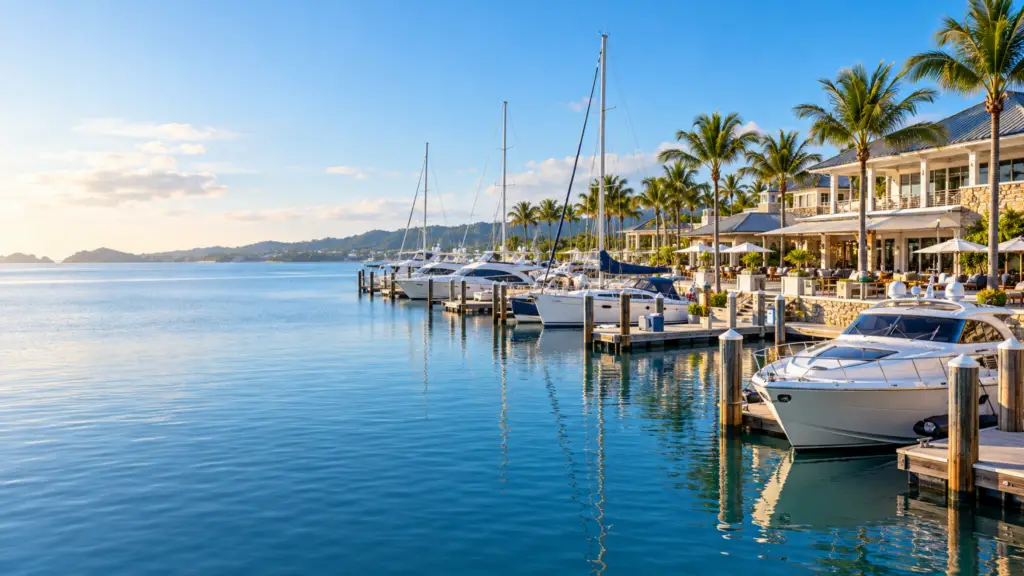
Plan water service from the shore connection to the farthest dock, with separate requirements for washdown and guest facilities.
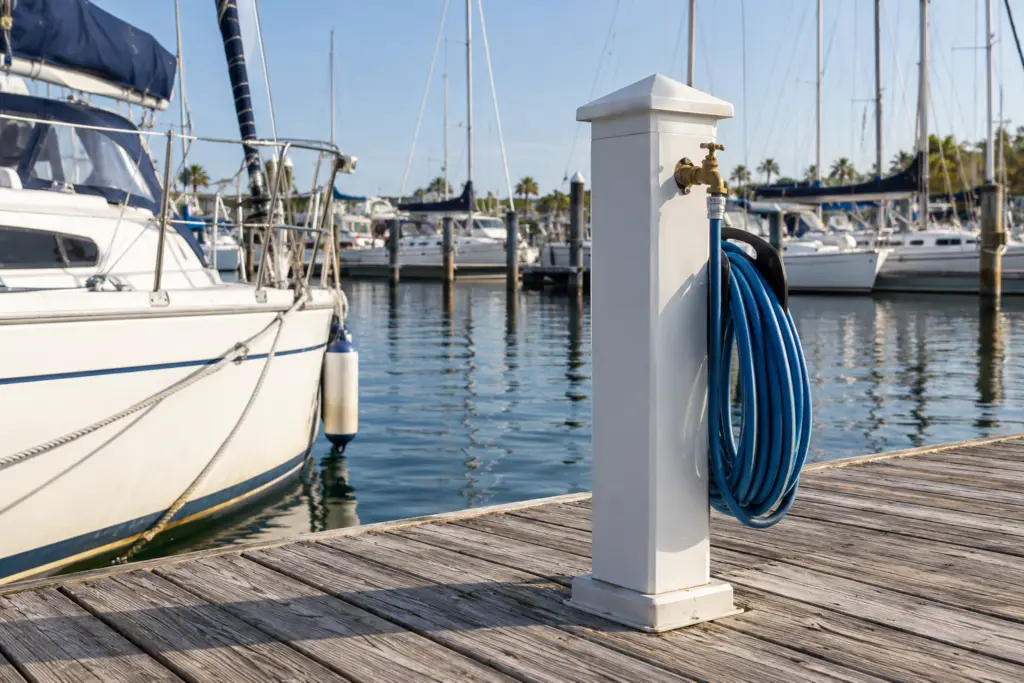
Check pressure during simultaneous draw at near and distant slips. Inspect the supply route and relevant connection protections rather than assuming a filter will resolve every dockside complaint.
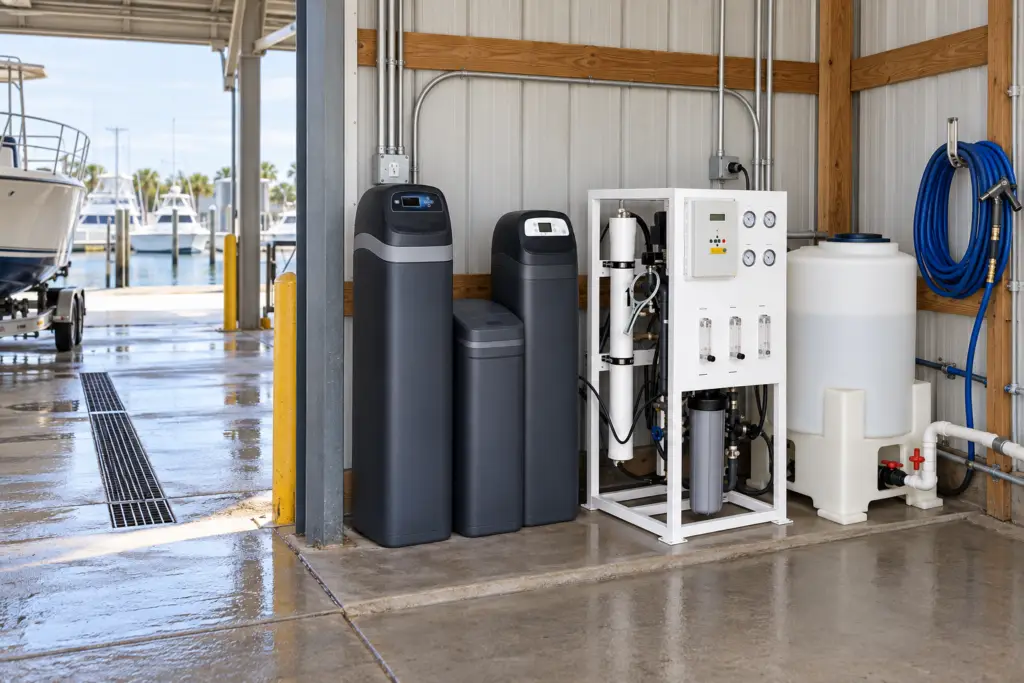
Define whether the aim is ordinary washing or a specified low-residue final rinse. Source mineral results and the desired finish determine whether separate rinse-water treatment merits evaluation.
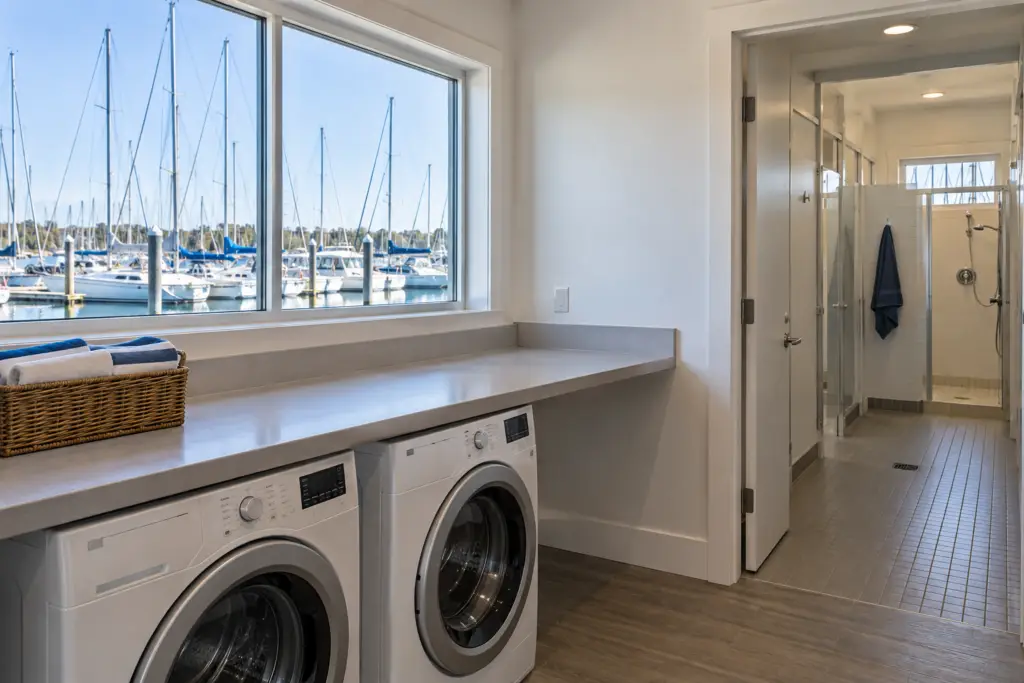
Assess hardness, heater condition and washer requirements at the shore building. A seasonal occupancy peak may set a different treatment load from the dock system.
Ideal Water Solutions can compare shore and dock needs with source conditions and installation constraints. Equipment placement should account for weather, service access and the marina’s seasonal operating plan.
Address identified particles or other treatable conditions on the relevant supply, with suitable flow and protection for the installation environment.
Consider hardness control for shore-building heaters or laundry where testing and deposits support it, using peak-season demand for sizing.
A dedicated lower-mineral rinse supply may be useful for a defined washdown goal. Evaluate source salinity, production, storage and discharge before choosing equipment.
Coordinate outdoor siting, dock pressure, winterization and separate water uses before installing a central or dockside treatment station.
Provide a site plan, source analysis, slip count and shore-facility equipment details. Identify distant-connection complaints, washdown goals and seasonal shutdown practices so the design addresses both chemistry and delivery.
ASSESS THE MARINA’S SOURCE WATERDescribe the source, affected connections and peak season. Include any specific washdown or rinse-water goal.
Does being near salt water mean the marina needs desalination?
No. Test the actual supply. A municipal or well source may have very different chemistry from surrounding coastal water, and treatment must be selected for that source.
Will softening alone produce a spot-free boat rinse?
It does not remove all dissolved minerals. Define the rinse-water target and assess source chemistry before considering a separate low-mineral supply or promising a finish result.
Can shore-facility treatment also serve every dock?
Only if intended uses, chemistry requirements and total flow are compatible. Long runs and simultaneous dock demand require their own hydraulic assessment.
What should happen to treatment during winter closure?
Follow the equipment manufacturer’s shutdown and freeze-protection instructions and the marina’s reopening procedures. Include outdoor piping and stored water in the seasonal plan.
Can a washdown hose double as a potable-water connection?
Do not assume the uses are interchangeable. Follow applicable plumbing, connection and backflow requirements and the marina’s designated potable-water procedures.
Does a passing shore-side sample establish water quality inside a vessel?
No. A shore-side result represents the sampled supply and conditions. Hoses, onboard tanks, plumbing and treatment introduce a separate system boundary. Keep marina connection responsibilities distinct from the vessel owner’s inspection, maintenance and verification of the onboard supply.
