
Understand the water reaching each pretreatment and rinse stage before it reaches the coated part.
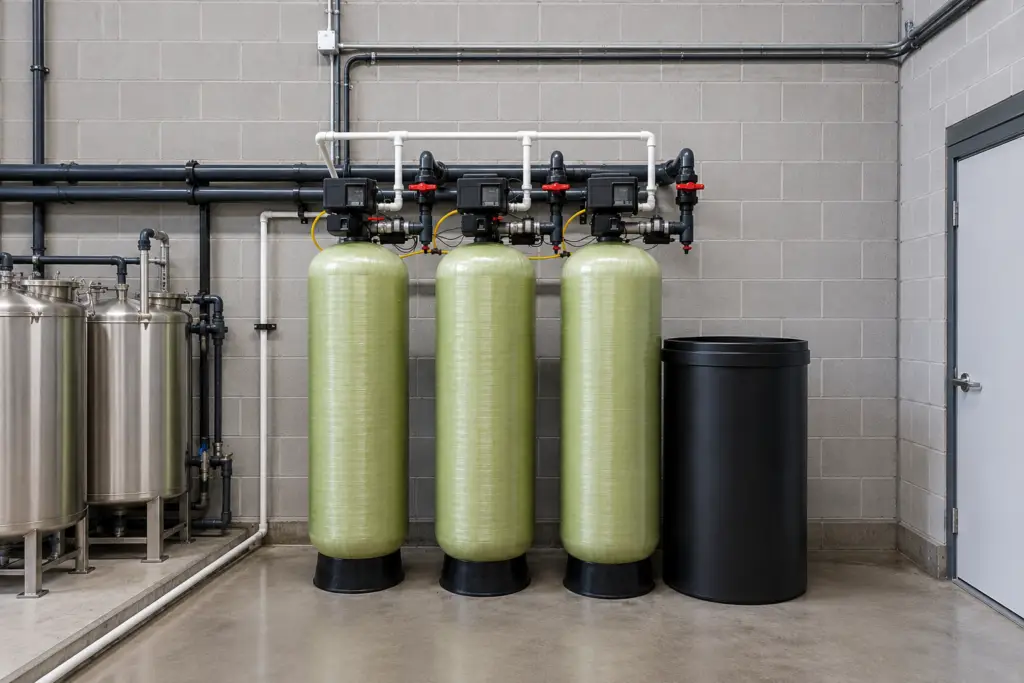
Use the chemical supplier’s water limits when filling or replenishing baths. Review hardness and other relevant constituents with concentration, temperature and the approved bath-control procedure.
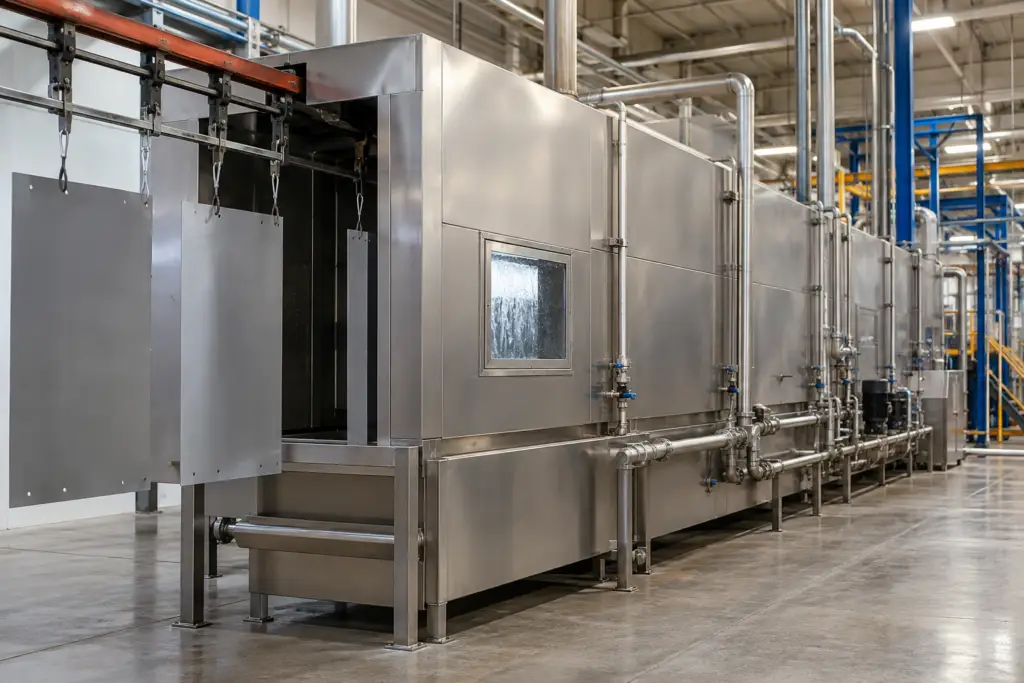
Check rinse flow, overflow arrangements and carryover from the previous stage. Water in an operating rinse can differ substantially from its fresh makeup supply.
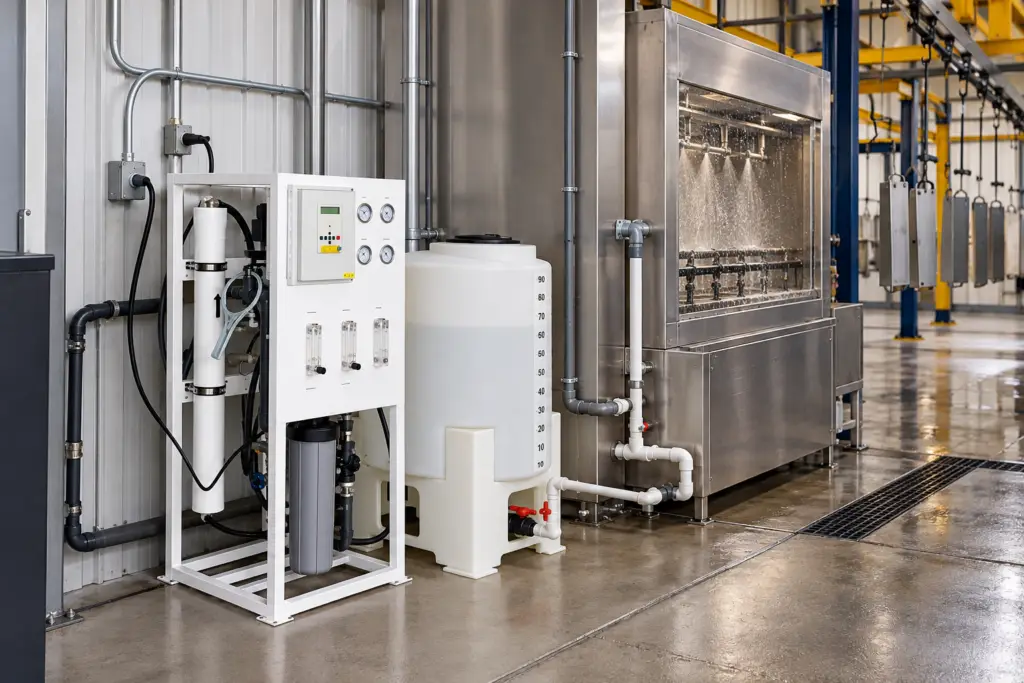
Define the final-rinse target and where it is measured. Compare delivered water with the stage condition and the part’s surface outcome before specifying additional purification.
Ideal Water Solutions can assess incoming chemistry and the required delivered water with your pretreatment and quality teams. Keep treatment performance separate from the line controls that govern bath and rinse conditions.
Compare source, treated feed and agreed process-stage samples to identify where the water profile departs from the required condition.
Consider particle removal for a characterized load, with the correct duty defined for incoming feed or a process circuit.
Use hardness reduction where compatible with the pretreatment chemistry. It does not establish a low-dissolved-solids final-rinse supply.
RO may support a specified low-mineral rinse. Confirm whether the final requirement calls for additional polishing, along with production, storage and verification needs.
Share the line sequence, substrates, chemical-supplier specifications and rinse flow. Include source results and defect observations so the assessment can distinguish feed-water treatment from bath control, carryover or nozzle maintenance.
PLAN STAGE-BY-STAGE WATER ANALYSISIdentify the pretreatment or rinse stage, the required water target and the quality team or chemical supplier involved in the investigation.
Will lower-mineral final-rinse water guarantee adhesion?
No. Adhesion depends on the full preparation and coating process. Evaluate water as one variable through the line’s quality procedures and controlled trials.
Is a high rinse conductivity reading proof that the source water is wrong?
No. Carryover and stage conditions can affect the reading. Compare fresh feed and operating rinse results before deciding whether incoming-water treatment needs to change.
Can softened water replace deionized water in a specified final rinse?
Not without an approved specification change. Softening and deionization produce different water characteristics, so verify the required final-rinse quality rather than substituting by equipment name.
Should every rinse stage receive the same purified supply?
Only if the stage specifications support it. Earlier and final rinses may have different requirements, and the design should account for flow, carryover and process controls.
What should be checked when the chemical pretreatment changes?
Obtain the new supplier’s water limits and control requirements. Review bath makeup and all affected rinses before assuming the existing treatment remains suitable.
How should RO and deionization be compared for a specified final rinse?
Compare the required delivered-water quality, incoming mineral load and rinse volume. RO reduces dissolved material; deionization removes dissolved ions and may serve a different or additional duty. Evaluate the complete arrangement, monitoring and servicing against the pretreatment supplier’s final-rinse specification rather than selecting by technology name alone.
Where should conductivity be checked to distinguish supply quality from rinse-stage contamination?
Compare fresh treated feed with the operating rinse at the locations defined by the line’s control plan, recording when samples were taken. A satisfactory feed with a rising stage reading points the investigation toward stage conditions such as carryover or replenishment, rather than automatically adding purification upstream.
