
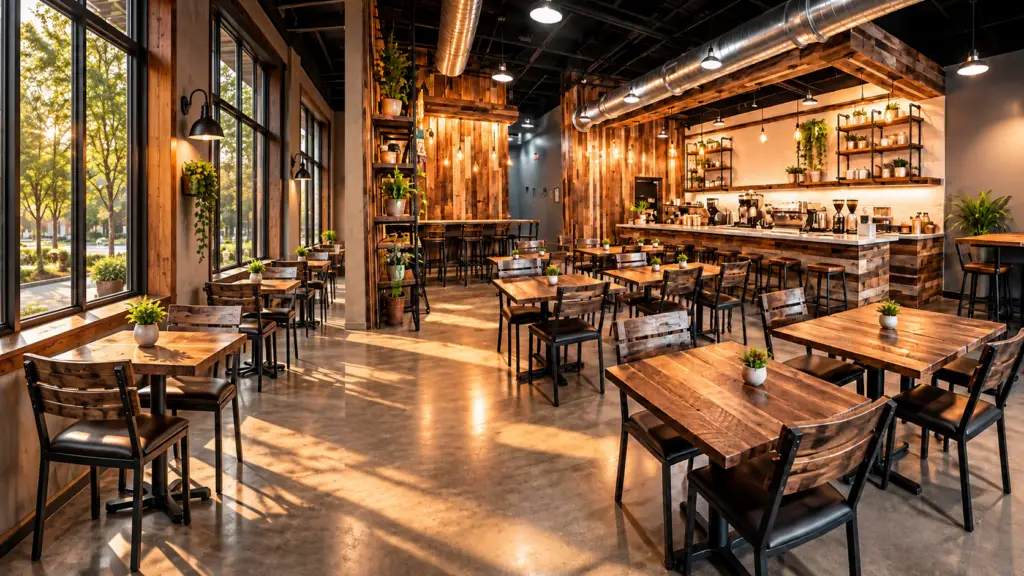
Water Treatment for Cafés
Build a repeatable water profile for the coffee you serve and the machines your baristas depend on.
What water should a café use for espresso and brewed coffee?
REVIEW YOUR CAFÉ’S WATERConnect the water profile to the bar workflow
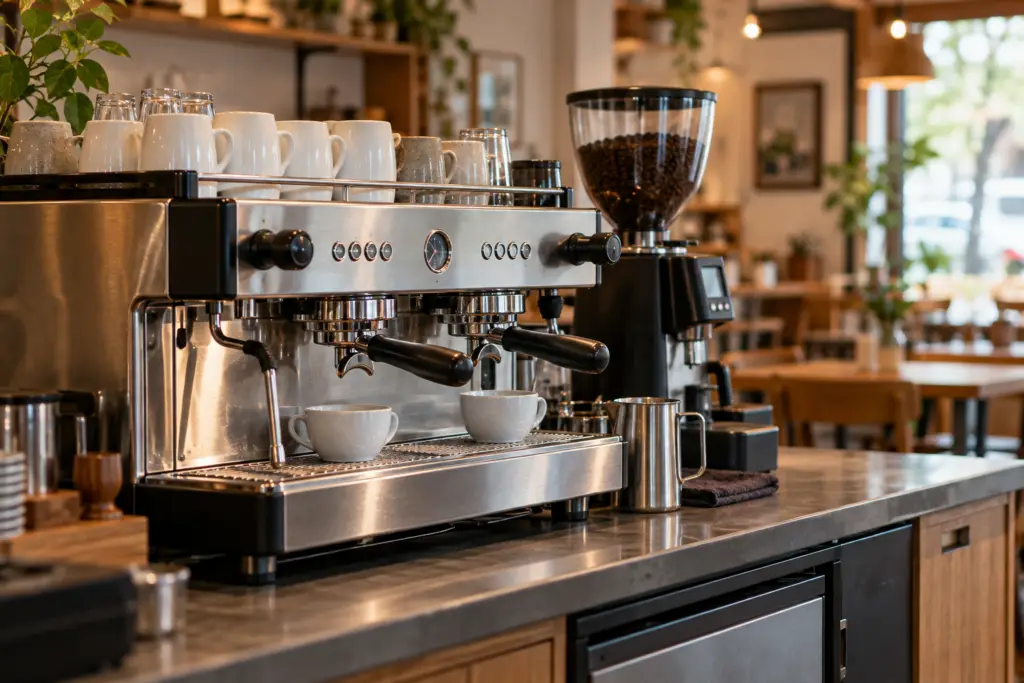
Espresso machines
Check inlet chemistry against the machine’s written limits, including any requirements beyond hardness. Boiler deposits and service history provide context, but treatment does not remove the need for prescribed maintenance.
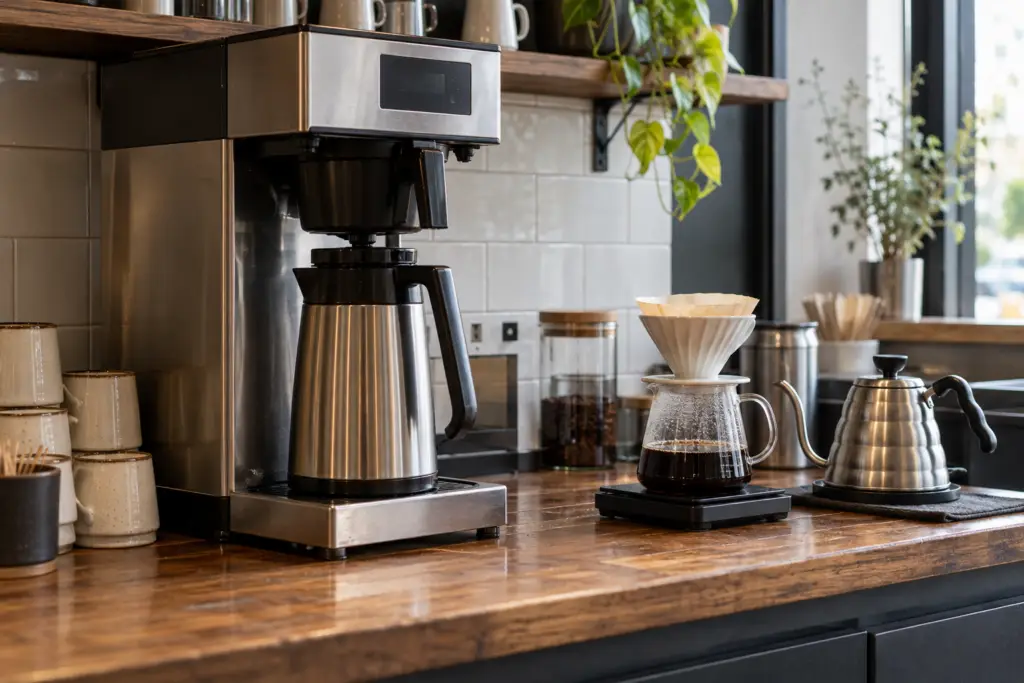
Batch & manual brewing
Record the water profile used for recipe development. When the source or treatment changes, compare the new water and the brewed result before making permanent recipe adjustments.
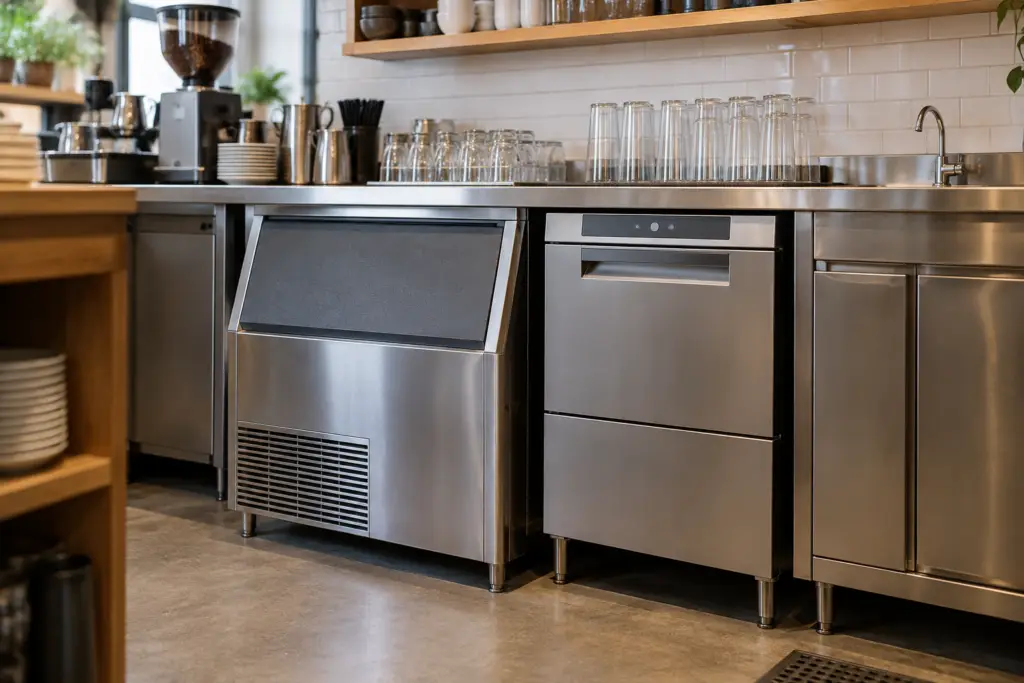
Ice & bar cleanup
An ice maker and an under-counter washer can pull water while espresso service peaks. Their separate specifications and flow requirements should be included in the bar’s plumbing plan.
Choose treatment around the agreed brewing target
Ideal Water Solutions can review the source report with your machine requirements and available bar space. The finished arrangement should make sampling, adjustment and cartridge changes straightforward.
Filtration
Target an identified chlorine, chloramine or particle concern with appropriate media and contact time, rather than selecting a cartridge by size alone.
Water softening
Consider hardness reduction when machine limits require it. Verify the resulting water profile with the equipment partner before adopting it for brewing.
Reverse osmosis
RO with appropriate blending or remineralization may provide a controlled starting profile where source minerals exceed the agreed brewing range.
Maintenance & repair
Review exhausted cartridges, bypass settings and pressure changes when the water at the brewer no longer matches the established profile.
Bring the recipe target and machine limits together
Share your source-water report, espresso and brewer models, current cartridges and busiest service period. Include the water profile used for recipe development so changes can be checked against both beverage goals and equipment requirements.
SEE WATER TESTING OPTIONSTell us what changed at the coffee bar
Describe the taste, deposit or flow concern and list your espresso machine and brewers. Let us know if you are opening a new location.
Coffee-water questions for café teams
Is the lowest possible mineral content best for coffee?
No single mineral level suits every recipe and machine. Use the agreed brewing profile and manufacturer limits to determine whether mineral reduction, blending or another adjustment is appropriate.
Can a TDS meter tell us which filter to buy?
No. Total dissolved solids is an aggregate reading. It does not separately establish hardness, alkalinity or disinfectant conditions, which may lead to different treatment decisions.
Should we change the espresso recipe after a filter replacement?
Check the delivered water first. Confirm the cartridge type, flushing procedure and bypass setting, then compare against the established profile before changing grind, dose or yield.
Can we reuse the same treatment specification at another café?
Use it as a starting requirement, then test the new location’s supply. Different source chemistry, pressure or beverage volume may require different equipment or settings to reach that profile.
Where should we sample water when checking brew consistency?
Sample the incoming supply and the treated feed serving the relevant brewer, following suitable sampling procedures. This comparison helps show whether the change originates upstream or within the treatment arrangement.
How can we tell when a cartridge is exhausted before coffee quality changes?
Track its service limit and test the water characteristic it is intended to control, using the supplier’s recommended method. A hardness-control cartridge and a carbon filter do different jobs. Taste, pressure and a TDS reading alone cannot verify every treatment function.
Who should set and verify an RO blending adjustment for coffee?
Have the equipment or treatment specialist establish the setting against the agreed brewing profile and machine limits. Record the resulting water measurements and setting, then assign routine checks. Adjusting blend controls by taste alone can produce a profile that falls outside equipment requirements.