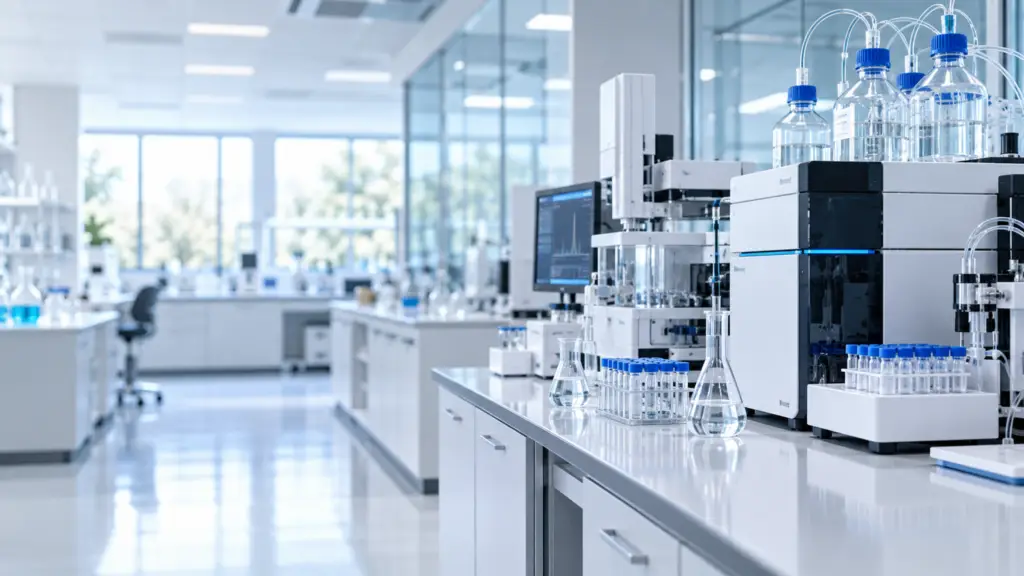
Deliver the specified water to the instrument, with the monitoring and service plan your laboratory requires.
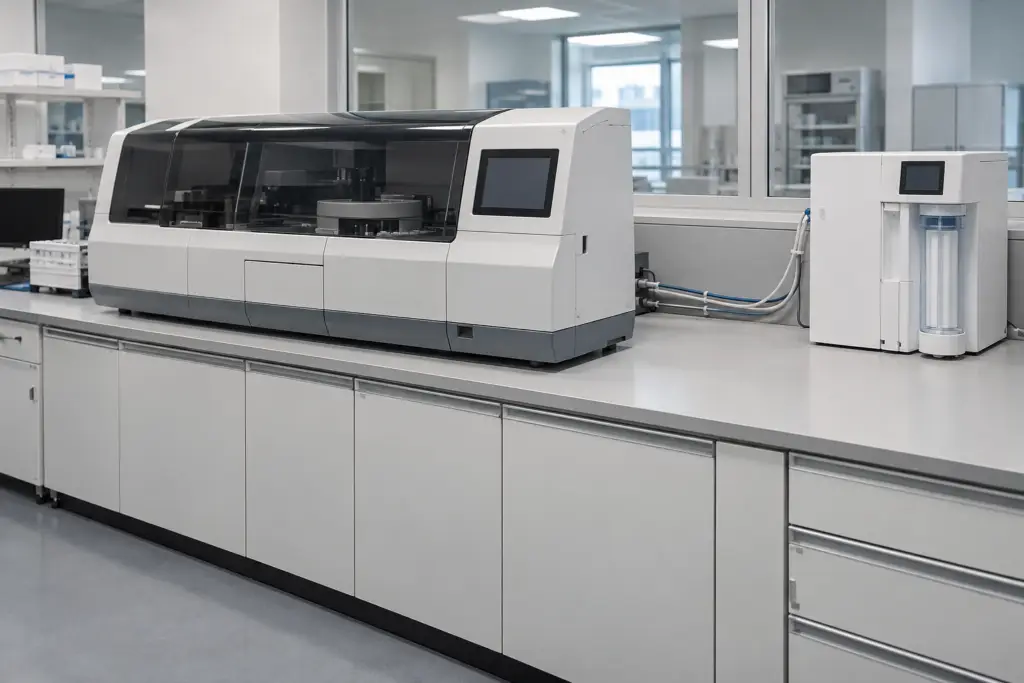
Obtain the specific model’s current inlet requirements and draw pattern. Include startup, washing and standby modes when calculating delivery pressure and peak flow.
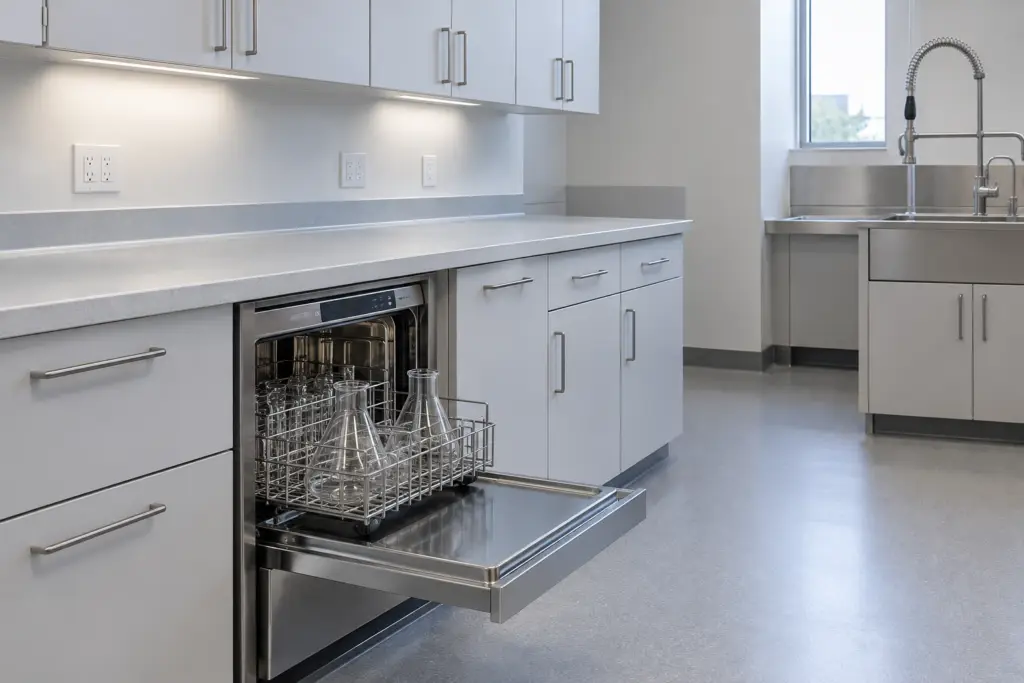
Reagent preparation and glassware washing may call for different water qualities. Assign requirements by approved method or equipment instruction instead of extending the analyzer specification to every sink.
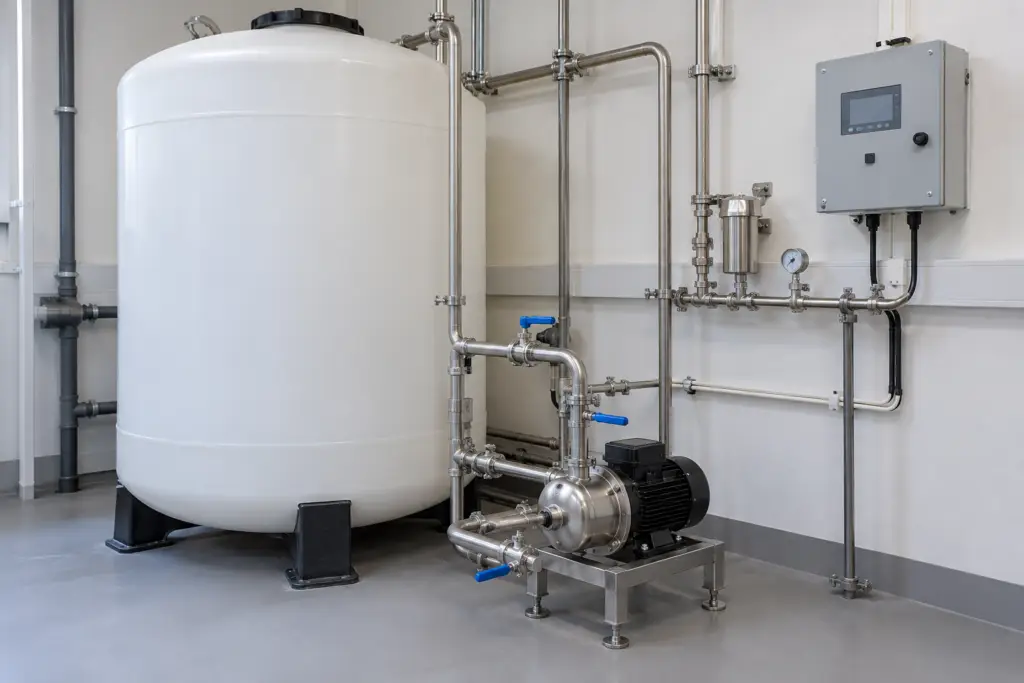
Tank capacity, pipework and circulation affect the delivered supply. Include materials, sanitization provisions, sampling access and monitoring within the qualified system design.
Ideal Water Solutions can help assess source water and infrastructure against the laboratory’s documented requirements. Final selection and acceptance should involve the instrument supplier and the laboratory’s responsible qualified personnel.
Evaluate integrated purification and distribution for the required water specification, with appropriate monitoring and a defined verification process.
RO may provide a pretreatment stage where source chemistry supports it. Additional purification may be needed to meet the instrument’s full specification.
Define sampling and analytical requirements with the laboratory so source characterization and delivered-water verification answer the relevant questions.
Coordinate analyzer changes, delivery pressure, reserve capacity and service procedures before committing to a new instrument connection.
Provide model numbers, water requirements, demand data and the current system diagram. Identify quality-program owners, required monitoring and acceptance tests. Include planned instruments so future demand is considered without assuming every device can share one supply.
DEFINE WATER-ANALYSIS NEEDSShare the models, required water specifications and whether the project involves a new installation, expansion or existing-system concern.
Is conductivity enough to confirm analyzer-water suitability?
Not necessarily. An instrument may specify additional chemical, organic or microbiological parameters. Verify the complete written requirement using the laboratory’s approved methods and sampling locations.
Can a new analyzer connect to the existing water loop?
Compare its full specification, pressure and demand with the loop’s verified capabilities. Include the effect on current instruments and obtain the required approvals before connection.
Does a larger storage tank always improve continuity?
No. Capacity must be balanced with turnover, distribution and the system’s maintenance requirements. The qualified design should establish how stored water will remain within specification.
Can general laboratory rinse water replace reagent water?
Only if it meets the requirement for the specific method or instrument and is approved under the laboratory’s quality procedures. Labels such as filtered or purified are not sufficient specifications.
What happens after purification equipment is serviced?
Follow the manufacturer’s procedures and the laboratory’s documented verification and release process. Physical completion of service does not establish that the supply is ready for analytical use.
What information is needed when analyzer feed water falls outside its specification?
Record the affected instrument, sampling location, time, result and relevant system alarms, then notify the laboratory’s designated quality and technical personnel. They determine the response and release requirements under the approved program. A passing result at another outlet does not resolve the affected connection’s finding.
