
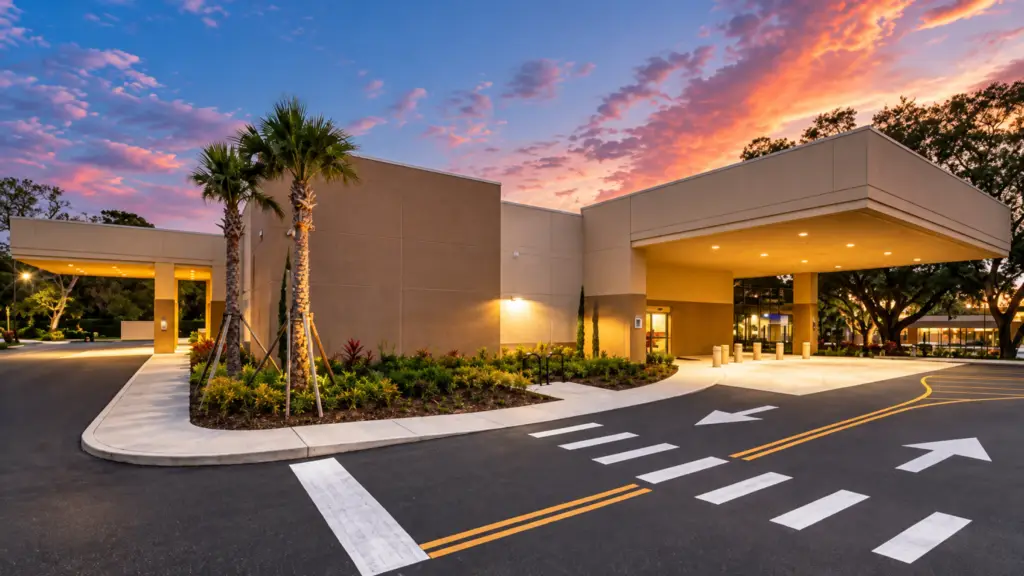
Water Treatment for Emergency Departments
Plan water-system work around an emergency department that cannot rely on a predictable quiet period.
How can an emergency department plan water treatment without routine downtime?
REVIEW EMERGENCY-DEPARTMENT WATER NEEDSIdentify the support functions behind continuous care
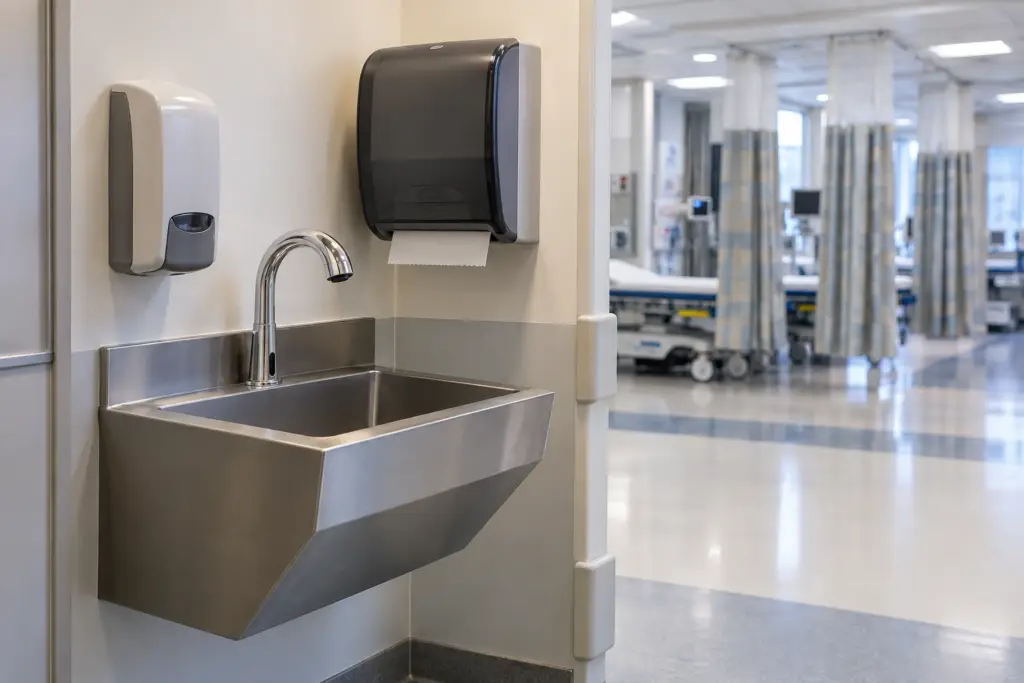
Handwashing fixtures
Record whether low flow or deposits affect one fixture or an entire zone. Findings should be reviewed within hospital procedures, including the implications of any proposed change to the supply.
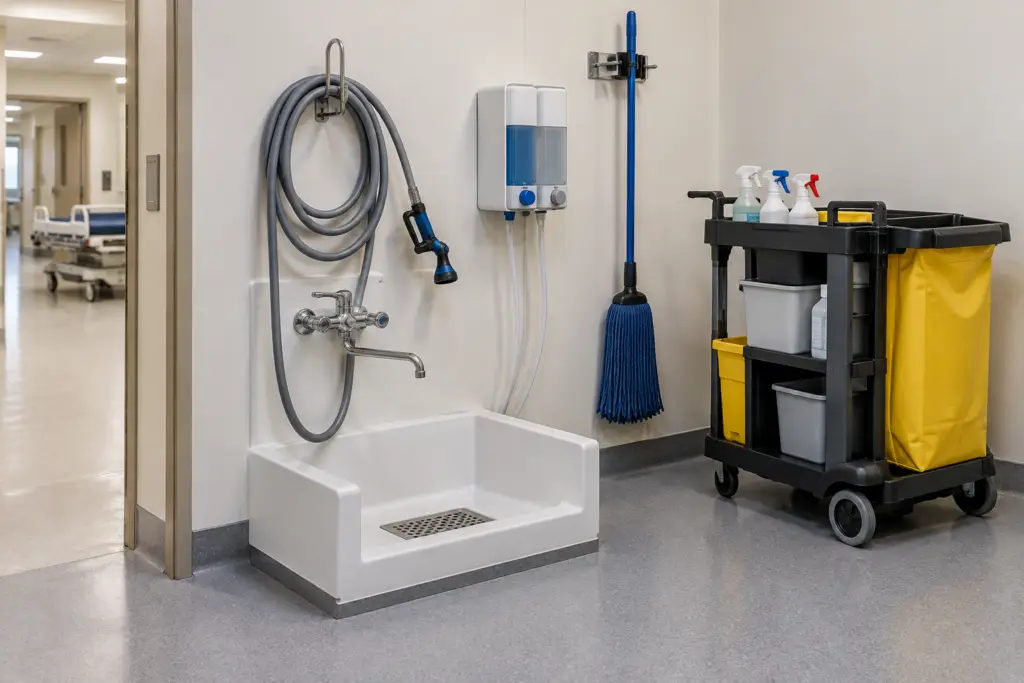
Environmental-services support
Cleaning stations and utility sinks may serve multiple care areas. Confirm chemical-system requirements, available flow and which support rooms remain accessible during a planned isolation.
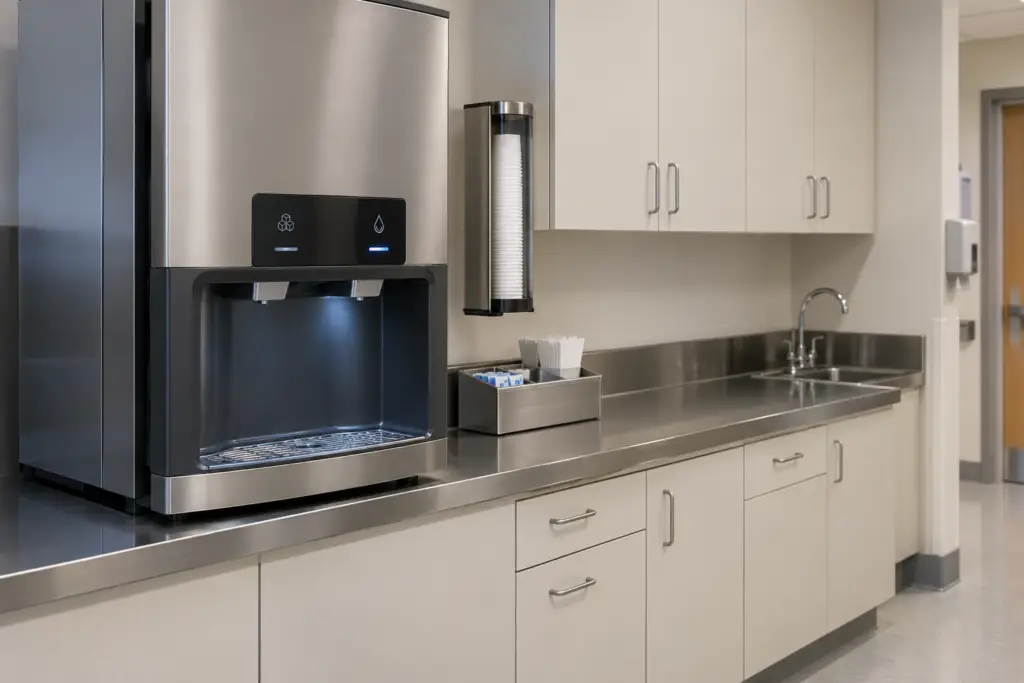
Nourishment & ice equipment
Ice and drinking-water equipment have their own maintenance and water specifications. Investigate reported quality changes with the designated facility teams rather than applying a general-purpose filter by default.
Make service continuity part of the treatment scope
Ideal Water Solutions can help the facilities team investigate a defined water concern and plan accessible equipment. The hospital retains control of water-program decisions and operational release.
Water testing & results
Agree on sampling locations and the specific chemistry question so results distinguish an incoming-water issue from a local branch or equipment problem.
Filtration
Where a support machine requires it, evaluate an appropriate filter and its maintenance implications through the hospital’s approved water-management process.
Maintenance & repair
Inspect existing treatment restrictions, valves and service condition when the problem appears during simultaneous fixture use or surge demand.
Consulting & planning
Document access routes, isolation limits, contingency arrangements and verification responsibilities before scheduling work in an active department.
Walk the isolation route before scheduling work
Share the affected zone, branch diagrams, surge-use pattern and equipment details. Identify the department contact who can authorize access and the facility teams responsible for alternate service and release after maintenance.
PLAN TARGETED WATER TESTINGDescribe the affected emergency-department area
Tell us where the concern occurs, whether it changes with demand and which facilities contact is coordinating the investigation.
Questions about water work in an active emergency department
Can a low-arrival period be treated as a shutdown window?
Arrival volume can change quickly. Use the department’s approved continuity plan and escalation arrangements rather than assuming a quiet period will remain available throughout the work.
Should a local ice-machine concern trigger whole-department treatment?
Not automatically. Compare the incoming supply, branch and machine findings. The issue may be specific to equipment condition or maintenance, which requires a different response from a source-water problem.
What should be recorded before temporarily closing a water branch?
Identify every served fixture and machine, the operational impact, approved alternatives and restoration requirements. Facilities and department leadership should confirm that the isolation boundary is understood.
Can a replacement filter be chosen only by connection size?
No. Confirm the machine specification, treatment function, rated flow and the hospital’s approved maintenance requirements. Similar-looking cartridges can have different purposes and operating characteristics.
How should work be handed over between shifts?
Use the facility’s handover process to record system status, isolated connections, outstanding checks and the responsible contacts. Staff should not infer that a connection is ready simply because physical work has ended.
What water connections need review when temporary surge-care spaces are activated?
Inventory the fixtures and water-connected equipment being brought into service, trace their supplies and identify any previously unused branches. Facilities and clinical program owners should confirm intended uses and required readiness checks. A nearby tap does not establish that a new device’s water requirements are met.