
Plan essential water maintenance with respect for the patients, families and staff sharing the building.
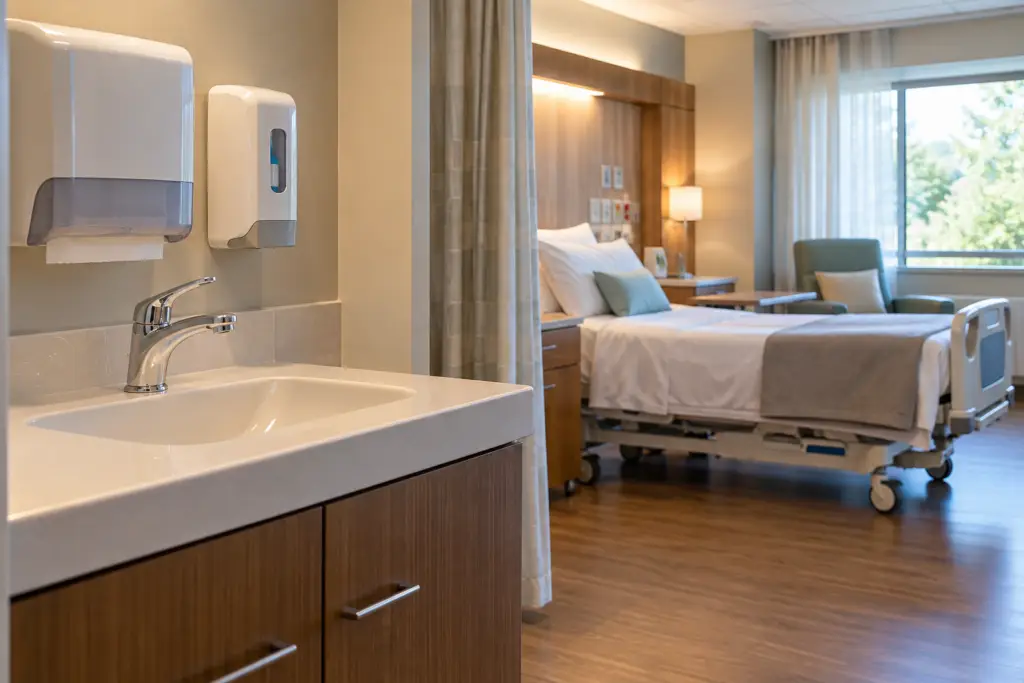
Locate recurring deposits or flow concerns and confirm the branch involved. Plan inspection with care staff so the timing and access route suit the room’s current use.
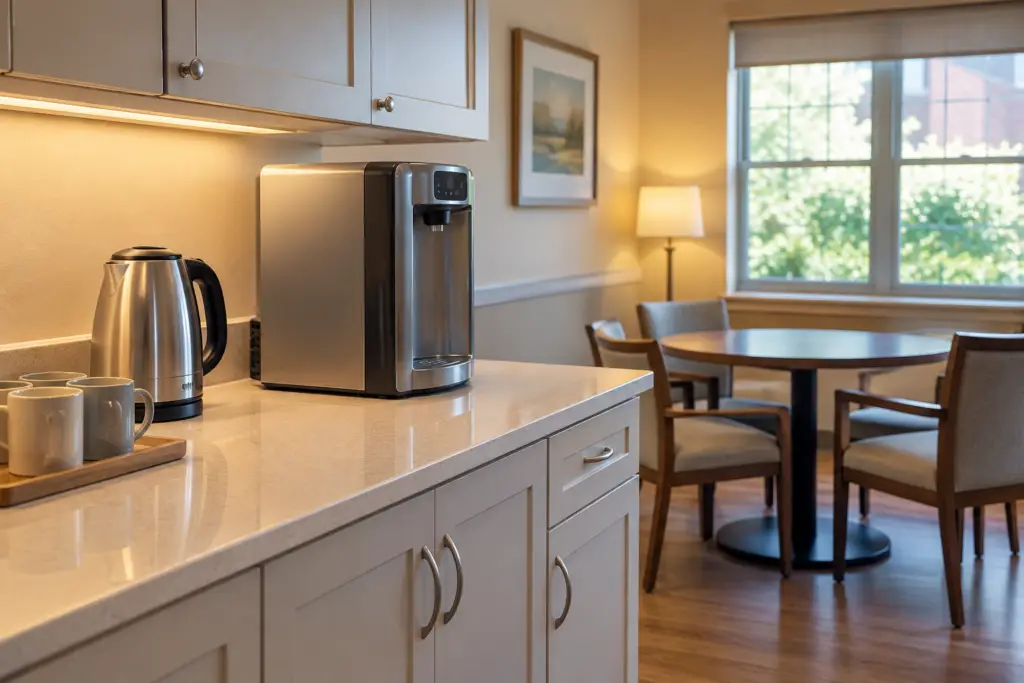
Kettles, beverage stations and ice equipment serve visitors as well as staff. Investigate a reported taste or deposit concern at the relevant appliance and review its maintenance instructions.
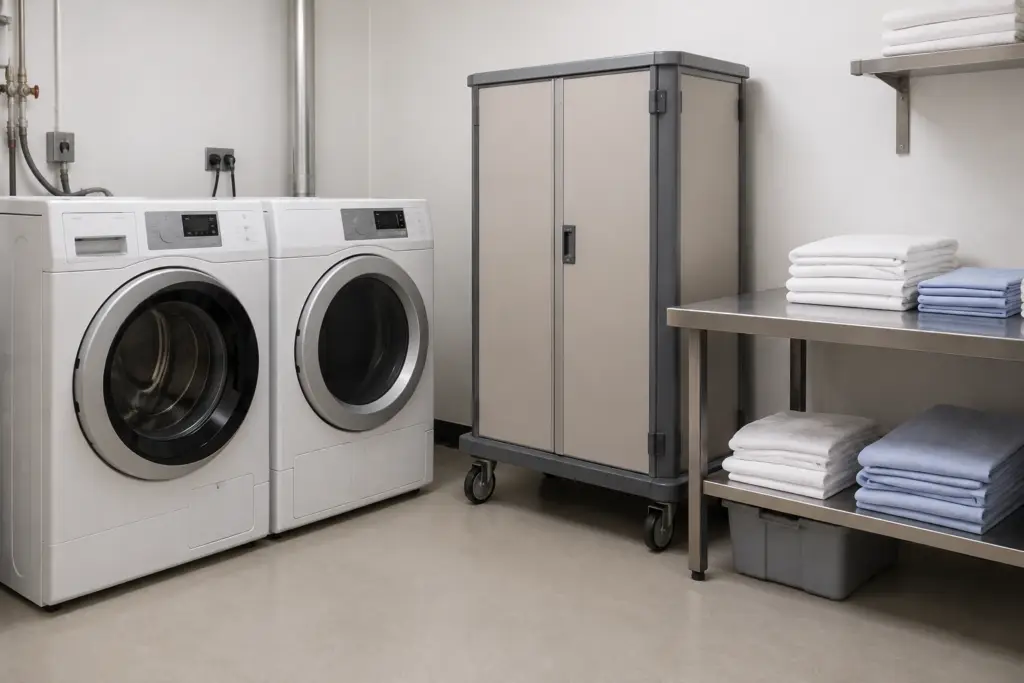
On-site laundry and hot-water equipment need their own demand assessment. Consider where deliveries, regeneration and service activity occur in relation to quiet occupied spaces.
Ideal Water Solutions can help define a focused scope and access plan with the hospice coordinator. Treatment should solve a documented need with routine tasks that the facility can accommodate.
Inspect an existing filter, softener or control before replacing it when a localized performance issue may have a repairable cause.
Consider dedicated filtration for an identified family-refreshment or support-equipment concern, with an accessible replacement location.
Where hardness affects on-site laundry or water-heating equipment, assess capacity and the location and timing of regeneration and salt handling.
Agree on access, noise-sensitive periods, isolation and staff communication so work can adapt to changing room availability.
Share the affected location, existing treatment and relevant service records. Identify the hospice coordinator and any noise or circulation constraints. Water results and equipment details help narrow the work to the necessary connections.
DISCUSS TARGETED WATER ANALYSISIdentify the affected room or support service and the staff contact who can coordinate an appropriate assessment time.
Does a hospice facility need building-wide water treatment?
Not always. A concern may be limited to one fixture, appliance or plumbing branch. Water testing, equipment requirements and maintenance history help determine whether a repair, targeted treatment or a central system is appropriate. Coordinate any changes with the facility’s water-management and care procedures.
Can equipment be placed away from patient and family rooms?
That depends on plumbing, drainage and available space. Review alternative utility locations and service routes before settling on a design that requires frequent access through occupied areas.
Can maintenance pause if a room becomes unavailable?
Plan that possibility with the coordinator before work. Identify safe stopping points and how any isolated service will be managed under facility procedures.
Will new treatment require more routine staff activity?
It can introduce cartridge changes, inspections or salt replenishment. Define those tasks and their owners when comparing options so the operating burden is understood before installation.
How should a family-lounge taste complaint be investigated?
Check the appliance, its maintenance history and the supplied water. A comparison with other outlets helps establish whether the concern is local or extends to the building supply.
