

Water Treatment for Hospitals
Coordinate water quality across the campus, with clear requirements for the systems and departments each supply serves.
How should a hospital organize its water-treatment systems?
DISCUSS YOUR HOSPITAL WATER SYSTEMSMap where a central change will travel
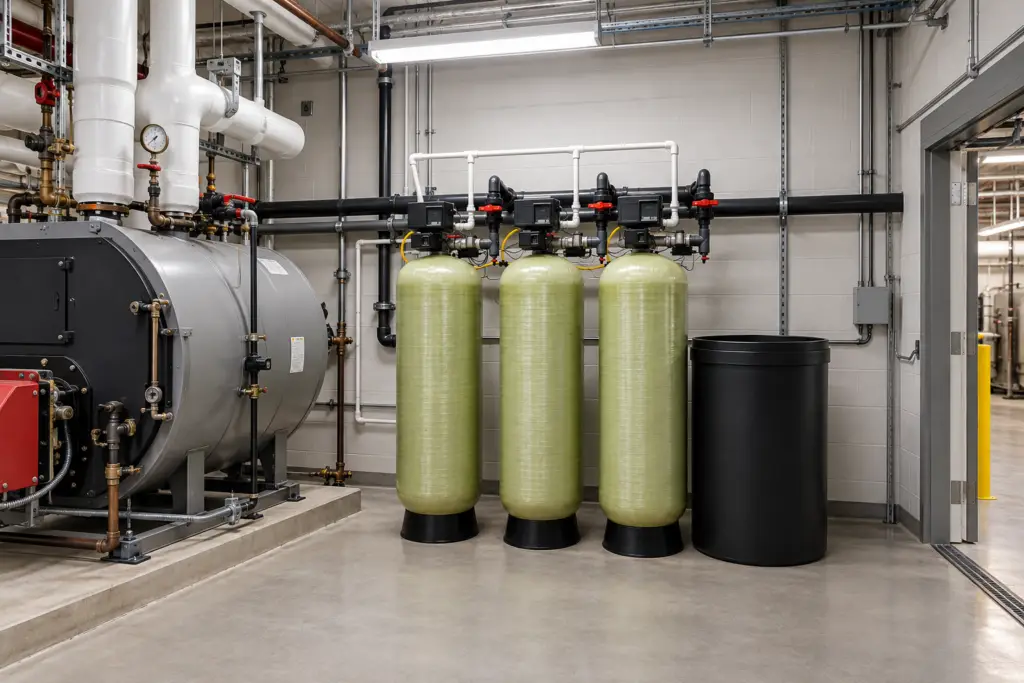
Central utilities
Boiler makeup, heating equipment and cooling systems have separate chemistry requirements. Review their operating programs and makeup loads before extending a central softening or filtration system.
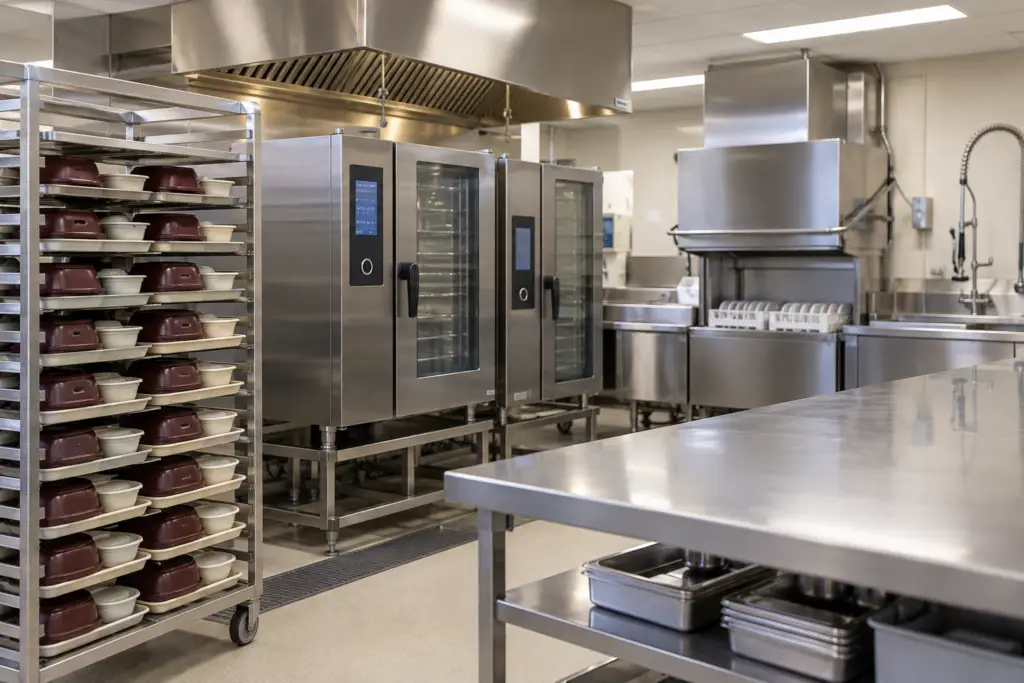
Dietary & laundry services
Kitchen equipment and on-site linen processing can create substantial demand. Compare their specifications, chemical programs and schedules so utility changes do not overlook these support services.
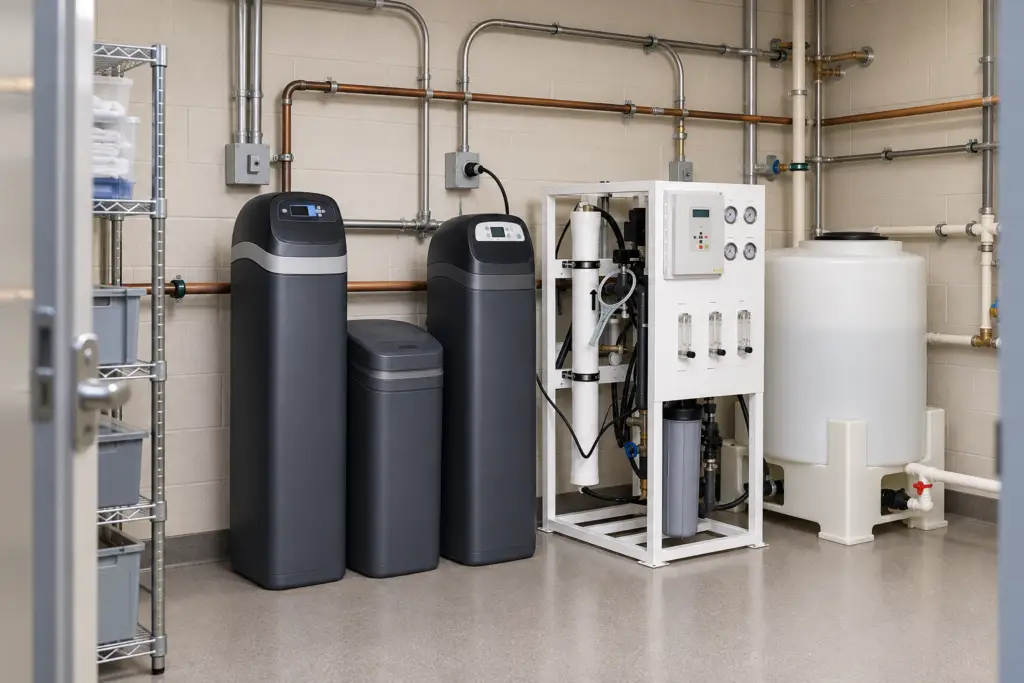
Specified departmental feeds
Laboratory, sterile-processing and other specialized connections need documented water requirements. Trace pretreatment, storage and distribution to the receiving equipment, with qualified departmental oversight of verification.
Coordinate the treatment plan across departments
Ideal Water Solutions can support a defined infrastructure scope with the hospital’s engineering and program owners. Each recommendation should identify the affected stream and how the facility will verify it.
Water softening
For utility or support-service feeds with a documented hardness limit, evaluate capacity and regeneration under simultaneous campus demand.
Filtration
Address identified particulate or other source-water conditions with a design reviewed for its effects on downstream systems and the hospital water program.
Specialized water treatment systems
Evaluate dedicated treatment where a department has written purity requirements, including the specified monitoring, distribution and acceptance process.
Consulting & planning
Coordinate isolation, redundancy, phased installation and stakeholder sign-off before changes to shared campus infrastructure.
Define the boundaries of the proposed change
Provide current diagrams, sampling results, equipment specifications and the departments served. Include shutdown restrictions, existing redundancy and the facility’s approval and return-to-service procedures so the assessment addresses the full affected system.
DISCUSS SAMPLING REQUIREMENTSTell us which hospital system is under review
Identify the affected buildings or departments, the current concern and the engineering or water-program contact coordinating the project.
Hospital infrastructure planning questions
Does central treatment establish water quality at every department?
No. Downstream storage, piping and dedicated equipment remain part of the system. Verify quality at the locations and intervals required by the facility program and the receiving equipment specifications.
Can a treatment upgrade replace the hospital water-management program?
No. Equipment is one component of the facility’s overall approach. Program responsibilities, monitoring, maintenance and corrective actions remain under the hospital’s designated qualified oversight.
How should a new wing be added to existing treatment?
Check the added flow and daily volume, but also review its departmental specifications, distribution route and effect on existing service. Establish acceptance requirements before connecting the new wing.
Can untreated bypass water be used during maintenance?
That decision belongs to the facility’s responsible teams and applicable procedures. Some receiving equipment may not accept bypass water. The maintenance plan must identify approved alternatives before isolation.
Who should participate in the initial system assessment?
Include engineering, the water-management lead and owners of affected departmental equipment. Infection-prevention, clinical and other qualified stakeholders should participate where the proposed change affects their responsibilities.
How should construction or utility work be assessed for its effects on hospital water?
Route planned work through the hospital’s facilities and water-management teams before affected connections change. Identify interruptions, altered flow paths and departments served. The facility’s program should establish precautions, monitoring and release requirements, with updated diagrams and communication to the responsible departments.
What treatment records should support the hospital’s water-management program?
Retain current system diagrams, served departments, equipment settings, monitoring results, alarms and service or component-change records. Link each record to its location and responsible owner. The hospital’s program determines required documentation and review; an installer’s service ticket is only one part of that record.