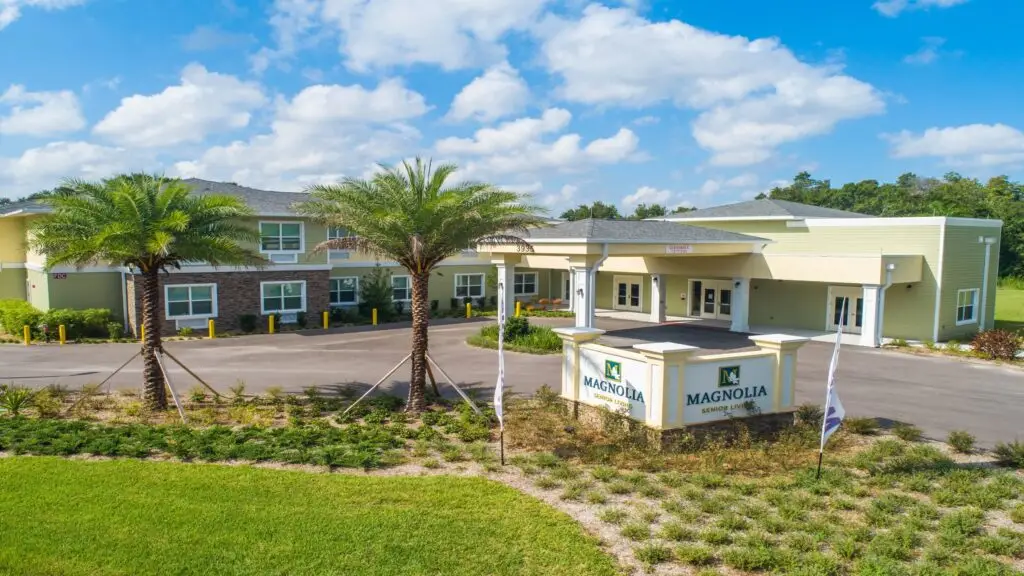
Plan water-system renewal around residents who continue to live in the building throughout the work.
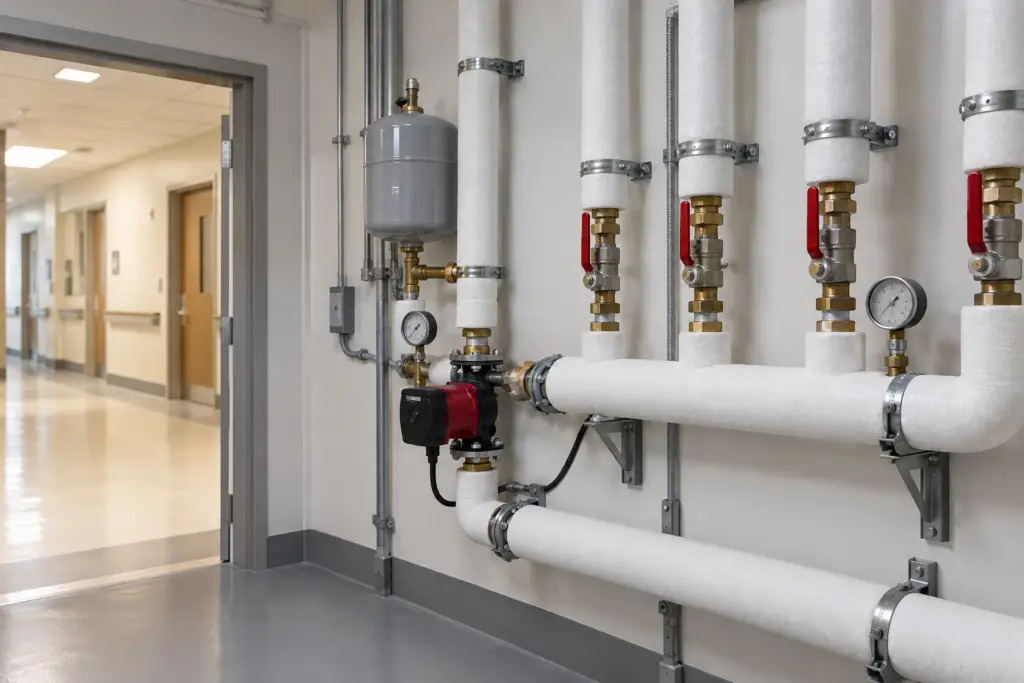
Trace the wings and fixtures served by each branch. Recurring deposits, pressure issues and temperature complaints require distinct investigation within the facility’s operating procedures.
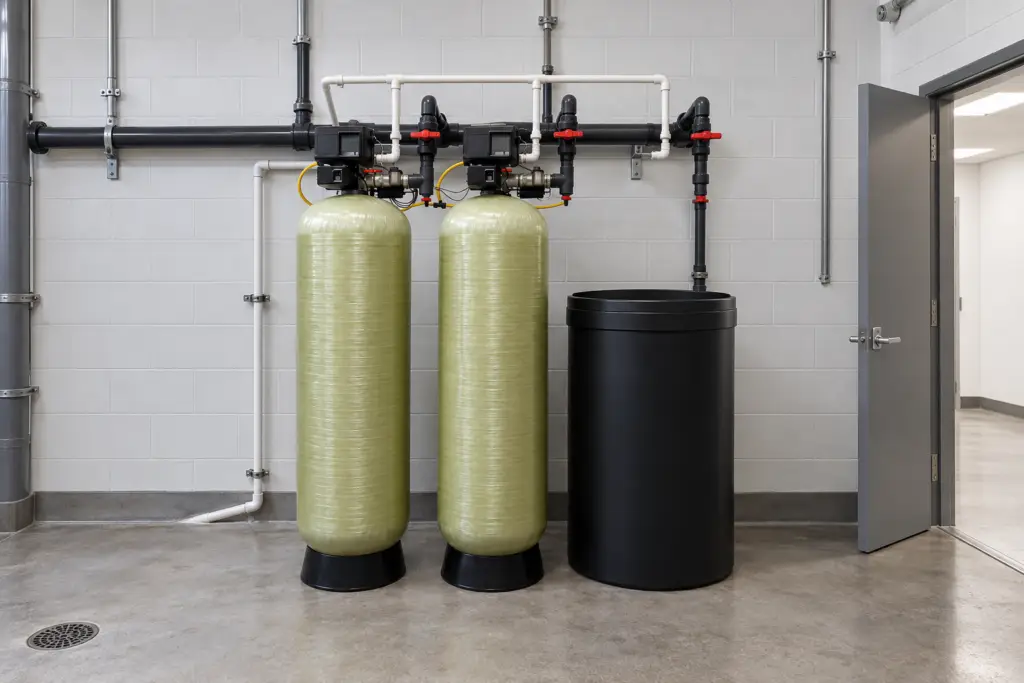
Compare incoming and treated-water results with valve condition, settings and service records. Age alone does not show whether a system needs repair, resizing or replacement.
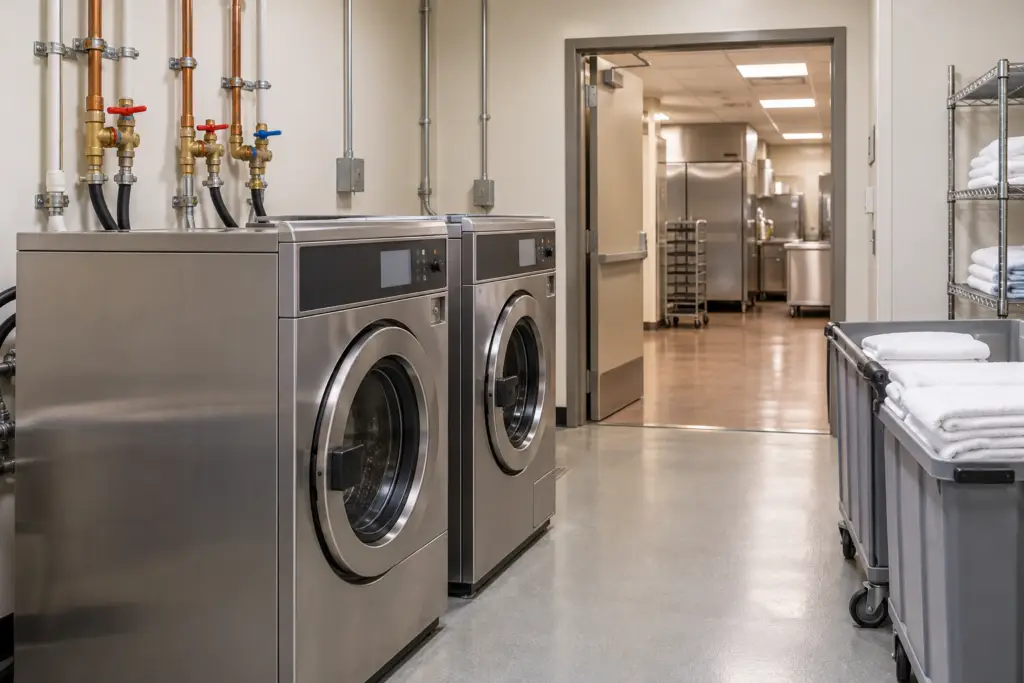
Verify current equipment feeds and demand, especially where kitchens or laundry arrangements have changed. Critical support services need an agreed operating plan during each phase of work.
Ideal Water Solutions can help identify repairable components, justified replacements and installation constraints. The plan should address how staff will operate the finished system over its service life.
Assess valves, controls and treatment performance to determine whether a defined repair can restore an otherwise suitable installation.
When replacement hardness control is warranted, reassess present demand and regeneration arrangements rather than copying the old equipment rating.
Review storage and delivery access during renewal so a required softener can be replenished without adding avoidable handling in occupied wings.
Develop the isolation sequence, temporary-service arrangements and verification schedule with facility leadership before retiring existing equipment.
Share equipment age and service history, current diagrams, recurring concerns and capital-project timing. Identify resident wings and support services affected by each isolation, along with the facility’s approval and restoration requirements.
REVIEW CURRENT WATER CONDITIONSDescribe the existing treatment, the recurring issue and the services that must remain available while work takes place.
Should replacement equipment match the existing size?
Only after current demand and water chemistry are checked. Renovations, outsourced laundry or occupancy changes may have altered the load since the original system was installed.
Can the work be divided by resident wing?
Possibly, if verified plumbing and isolation arrangements support it. Confirm actual branch boundaries and approved service alternatives before committing to a phased schedule.
What if the plumbing drawings are incomplete?
Allow for tracing and verification before equipment selection or shutdown planning. Unconfirmed connections can change the scope and the number of services affected by an isolation.
Does a temporary bypass provide an acceptable replacement supply?
Not automatically. The facility’s responsible teams must assess the water delivered to each affected use and approve temporary arrangements within applicable procedures and equipment requirements.
How should staff prepare for the new system?
Define inspection tasks, consumables, alarms, service contacts and recordkeeping before handover. Training should cover the installed configuration and the facility’s approved response procedures.
When is repairing existing treatment more appropriate than replacing it?
Compare the diagnosed fault, equipment condition, parts availability and current capacity with the facility’s needs. A serviceable system with a correctable valve or control problem may warrant repair. Repeated failures, changed demand or an unsuitable layout can justify evaluating replacement and its full operating cost.
What records should be retained after replacement equipment is commissioned?
Keep the final connection diagram, equipment settings, baseline water results, capacity information, operating instructions and required acceptance records. Include staff training and maintenance responsibilities. These provide a reference for future troubleshooting and prevent later shifts from relying on undocumented startup settings.
