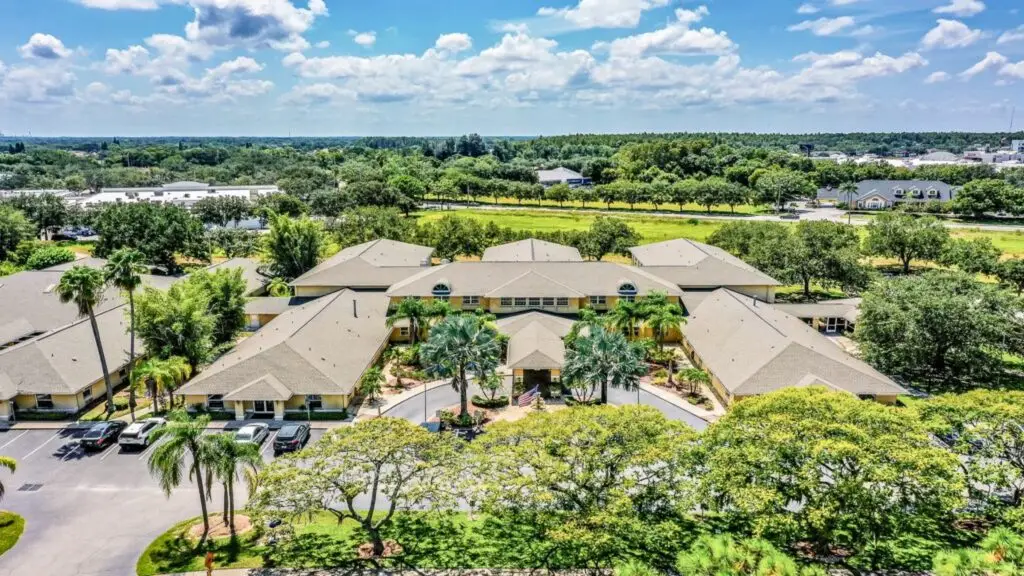
Match water infrastructure to the therapy schedule and the services your center provides.
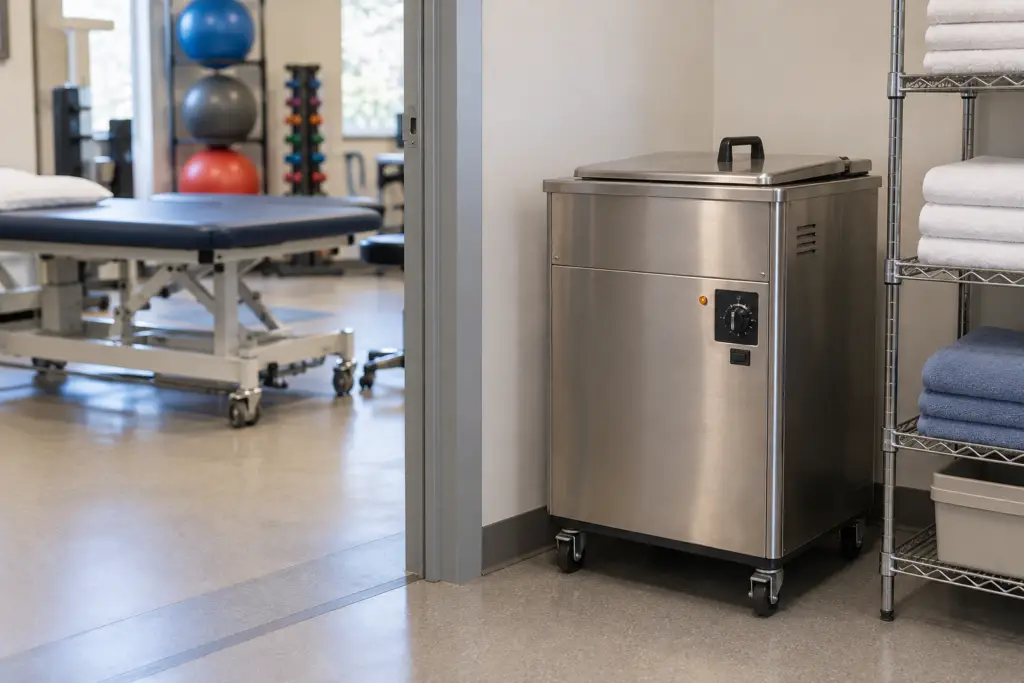
Identify which devices actually connect to water and obtain their written requirements. Do not infer a purification need from the therapy type or equipment name alone.
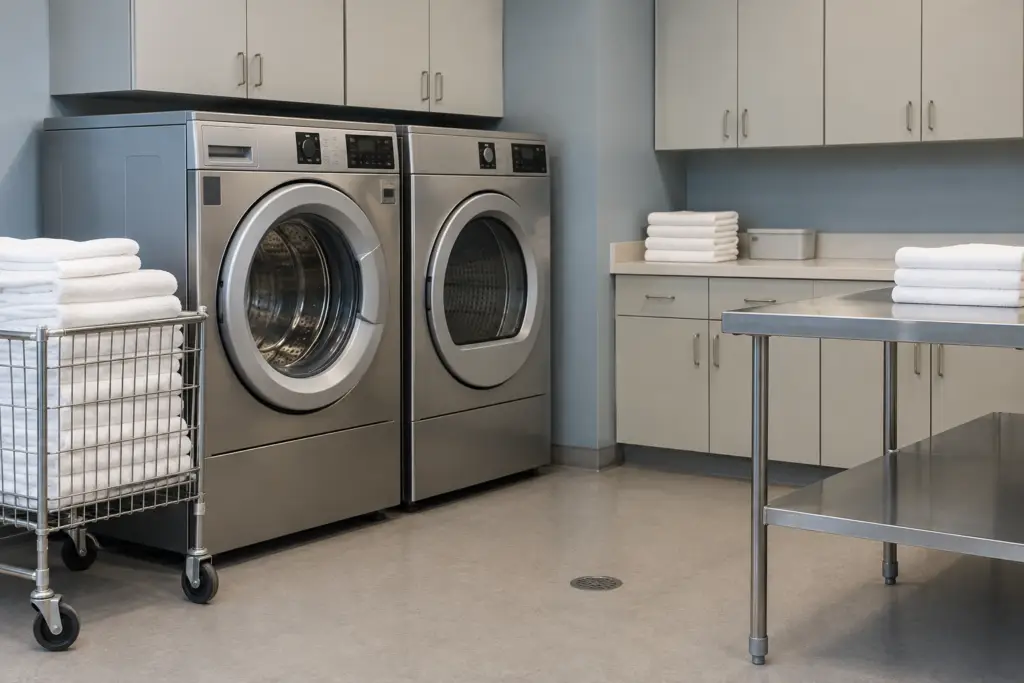
Record towel volume and washer timing around sessions. If hardness is affecting washing, coordinate treatment with the textile and chemical program and the available hot-water capacity.
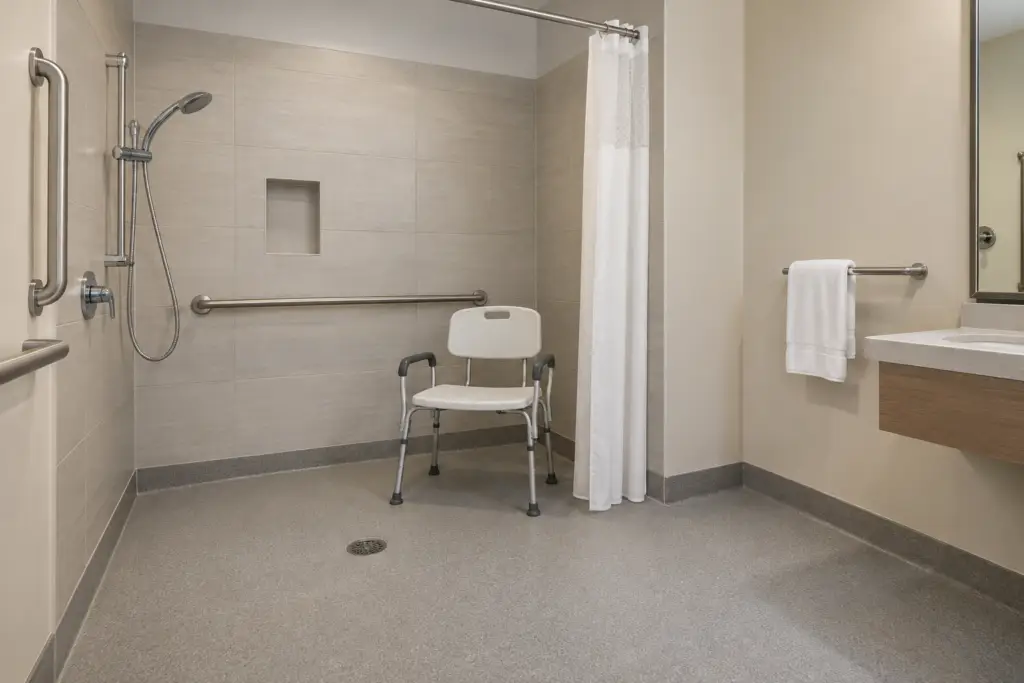
Assess showers, dining and resident-room supplies according to the center’s service model. Map the routes that must remain accessible when maintenance affects an occupied or mobility-sensitive area.
Ideal Water Solutions can help compare water requirements with the daily timetable and physical layout. Treatment capacity and service access should reflect what happens on site, including any planned service changes.
Characterize the supply for the documented equipment concern, with specialized testing defined by the relevant device or facility program.
Consider hardness control for towel washing or specified hot-water equipment where testing and maintenance findings support it.
Where therapy equipment has a defined water specification, assess a dedicated supply with its required operating and verification procedures.
Coordinate isolation and access around therapy sessions, residential services and accessible circulation routes before installation.
Provide the therapy equipment list, session schedule, laundry arrangement and overnight occupancy where applicable. Include water specifications and any aquatic-system program so each requirement is assigned to the correct system.
DISCUSS YOUR SAMPLING NEEDSShare whether you serve day patients, overnight residents or both, and identify the equipment or support service causing concern.
How should portable therapy equipment be included in the water plan?
Identify its required water profile, fill location, batch volume and operating schedule from the manufacturer’s instructions. Equipment without a permanent connection can still create a defined demand at the fixture used to fill it.
Does building softening treat an aquatic therapy pool?
It is not a substitute for the pool’s required water-management and operating program. Any makeup-water treatment must be evaluated within that separate system by the responsible qualified team.
How does an outpatient-only center differ from a residential program?
It may have session-related peaks without overnight bathing or dietary demand. Use its real operating hours and equipment loads rather than borrowing a residential facility’s capacity assumptions.
Should towel laundry run between therapy sessions?
Review available flow and hot-water recovery first. Moving wash cycles may help manage overlap, but required textile handling and care procedures remain controlling.
What should be reviewed before adding a new therapy service?
Obtain the proposed equipment’s water and utility requirements, operating schedule and maintenance procedures. Confirm both supply capacity and access before adding it to existing infrastructure.
What maintenance responsibilities should be agreed for leased therapy equipment with water treatment?
Document who services the treatment unit, supplies consumables, performs required checks and responds to faults. Identify the boundary between the leased device and facility plumbing. Keep the relevant instructions and service records accessible to the center; ownership alone does not define every maintenance responsibility.
