
Define the water each processing stage requires and plan the system around your center’s surgical schedule.
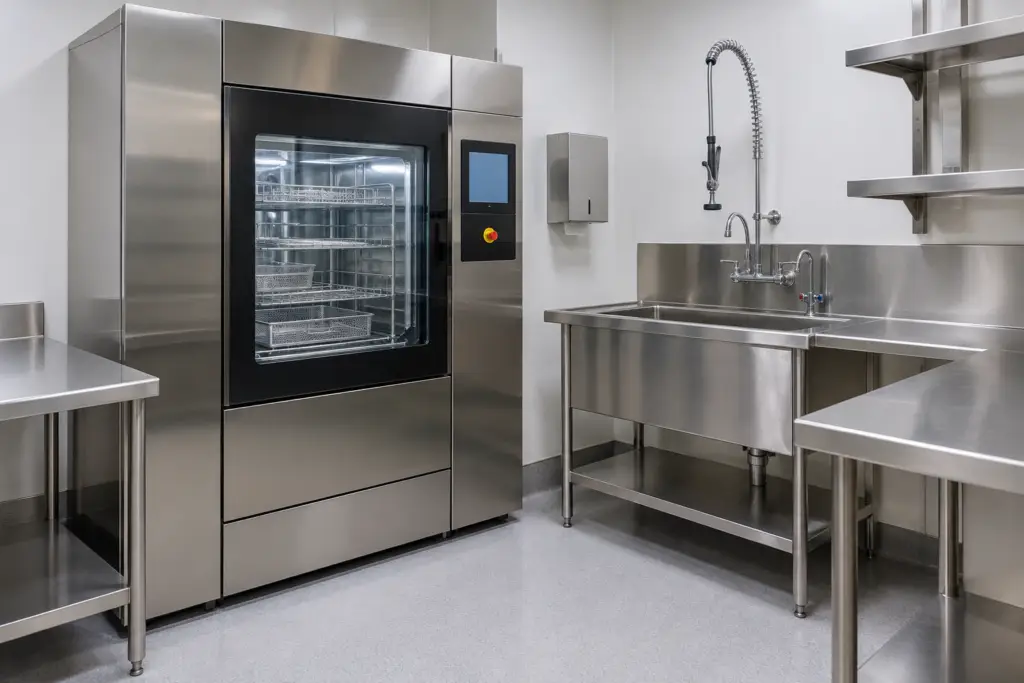
Identify the required water quality and fill demand for each washer or cleaning station. Include the cleaning chemistry and prescribed process conditions in the assessment.
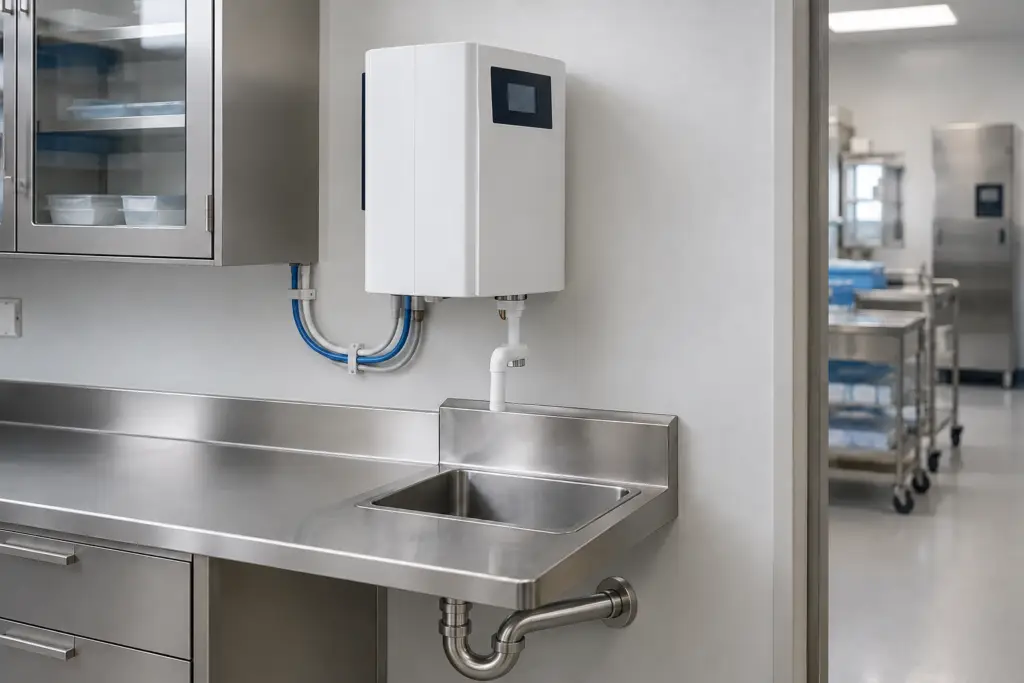
Where a specified final-rinse supply is required, define the quality at the connection and the verification method. Storage and distribution must be included in that system boundary.
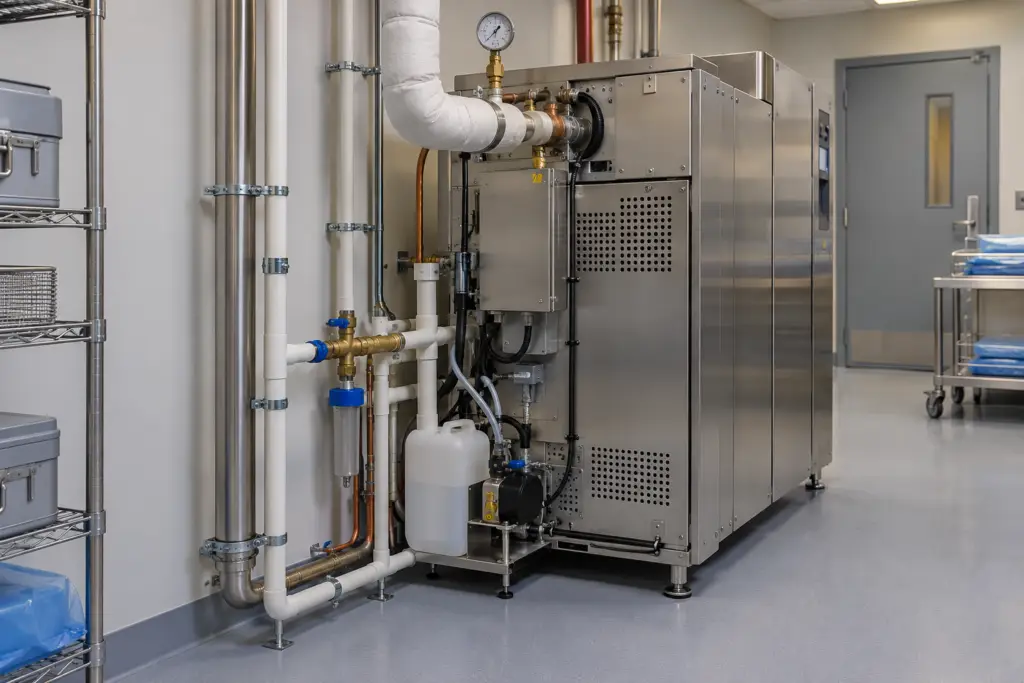
Review the sterilizer’s feed requirements and whether steam is generated locally or supplied centrally. Makeup treatment must align with the complete equipment and steam-quality program.
Ideal Water Solutions can help evaluate treatment infrastructure within a scope agreed with the center’s qualified team. Capacity and ongoing maintenance should support the processing schedule as well as the written water specification.
Consider a dedicated system where processing specifications require controlled purification, distribution and monitoring beyond ordinary building treatment.
Use hardness reduction where specified for pretreatment or equipment feed. Softening alone does not establish final-rinse or other critical-water suitability.
Coordinate source characterization and required verification with the responsible team, including appropriate analytical methods and delivery-point samples.
Plan installation and service around case schedules, processing capacity and the time needed for required verification before release.
Provide the processing equipment list, device instructions, applicable water specifications and system diagram. Include case volumes, cycle timing and the designated acceptance authority so infrastructure changes can be evaluated within the center’s operating program.
DISCUSS VERIFICATION TESTINGIdentify the affected equipment, whether processing occurs on site and the specifications your qualified team requires the system to meet.
Does installing RO establish compliance with processing requirements?
No. A technology name does not verify the delivered water. The complete design, operation, monitoring and documented testing must address applicable specifications and manufacturer instructions under qualified oversight.
Is purified water automatically sterile water?
No. Do not substitute purified water where instructions require a sterile product. Follow the exact device and process requirements and the center’s approved procedures.
What if our instruments are processed off site?
Define the water-connected activities that remain at your center. Do not assume you need an on-site processing-water system for work performed by another facility.
Can treatment maintenance be completed over a weekend?
Possibly, but the window must include required cleaning, verification and release activities. Confirm the full schedule with processing leadership before booking the next affected cases.
What changes when a washer-disinfector is replaced?
Review the new model’s water requirements, cycle fills and connections. The previous system’s suitability does not automatically carry over, even when the replacement fits the same space.
What should be investigated when processed instruments show recurring spotting or residue?
Review water results at the relevant processing connections alongside cleaning chemistry, dosing, equipment condition and the prescribed processing cycle. Document when the finding appears and which loads are affected. Processing leadership should direct the investigation; appearance alone cannot identify a water-treatment fault or establish instrument acceptability.
